
Key facts: Cast iron drain pipe problems
- Cast iron was widely used for drain and sewer piping and can corrode internally over time [1].
- A drain-waste-vent system relies on gravity flow and venting, so a narrowed pipe slows every fixture above it [2].
- Clearing a stoppage needs no permit in Massachusetts, but replacing pipe is permit work for a licensed plumber [3].
- Many Somerville homes date from building booms that ran through the nineteen-forties [4].
Short answer
What goes wrong with cast iron drain pipes as they age?
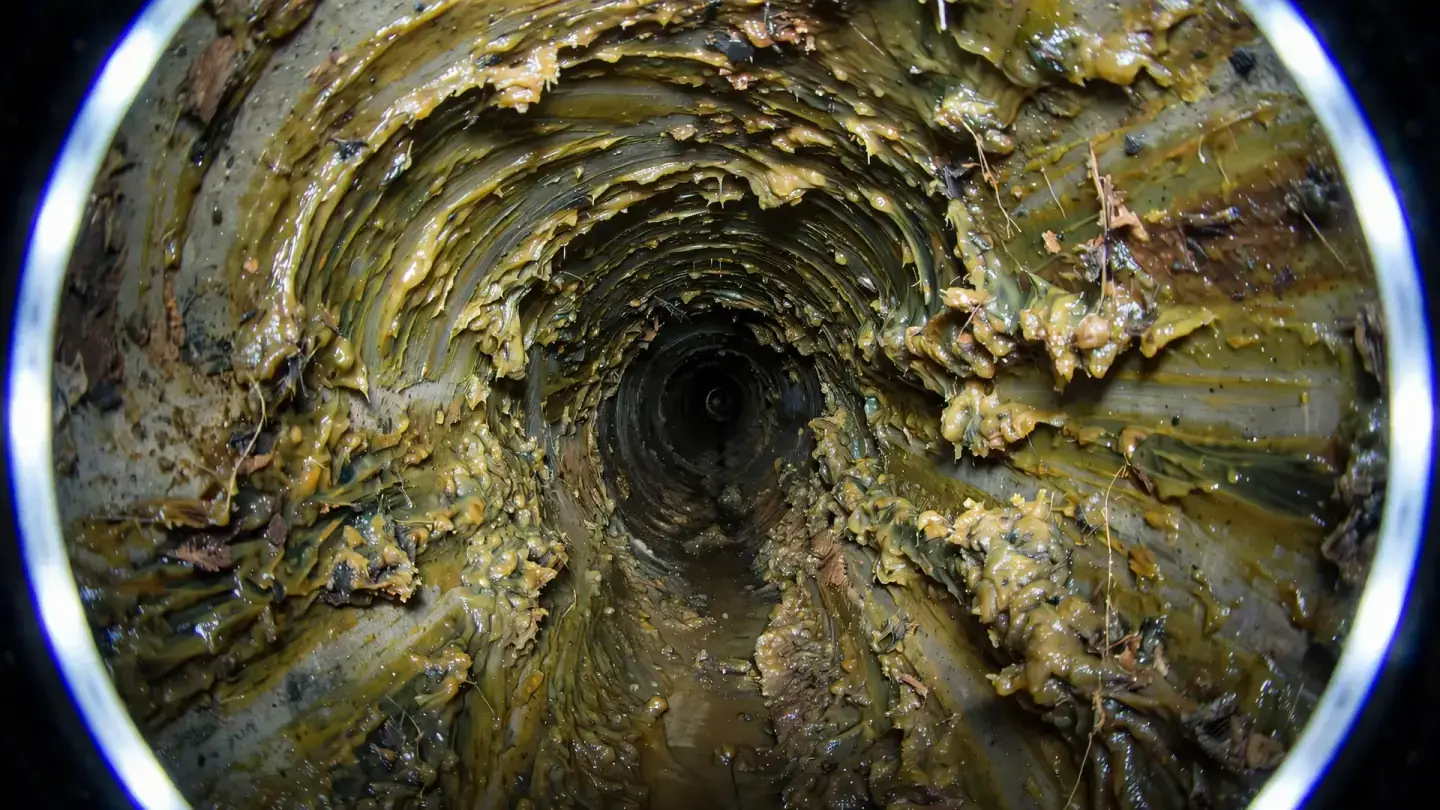
Iron pipe does not fail all at once. Water, air and the gases in a drain slowly corrode the inside wall, and the rust forms a rough crust called tuberculation or scale [1]. That crust shrinks the opening and gives grease, hair and paper something to cling to. Over years a stack that once swallowed a full tub without complaint begins to drain slowly, gurgle and back up at the lowest fixture.
The bottom of a horizontal run usually wears thinnest, because that is where water and debris sit. Eventually a channel can rot through, a hub joint can crack, or a section can split along its length. At that point cleaning only buys time, and a drain camera inspection is the honest way to decide what comes next.
Reading the signs
Cast iron warning signs, their usual cause and the next step
| What you see | Likely cause | What to do |
|---|---|---|
| Several fixtures on one stack drain slowly | Scale narrowing the stack or building drain | Have the line cleared and ask for a camera look |
| Rusty flakes come up when a clog is cleared | Interior corrosion breaking loose | Ask whether descaling suits the pipe's condition |
| Damp or stained spot along a horizontal pipe | Pinhole or crack on the underside | Keep a bucket under it and call a plumber |
| Sewer smell near a stack with no visible leak | Hairline crack or failed joint letting gas out | Ventilate and have the joint checked |
| Clogs return weeks after being snaked | Rough walls catching debris again | Discuss jetting, descaling or pipe repair |
Safe checks
Things a homeowner can check on an old iron stack without tools
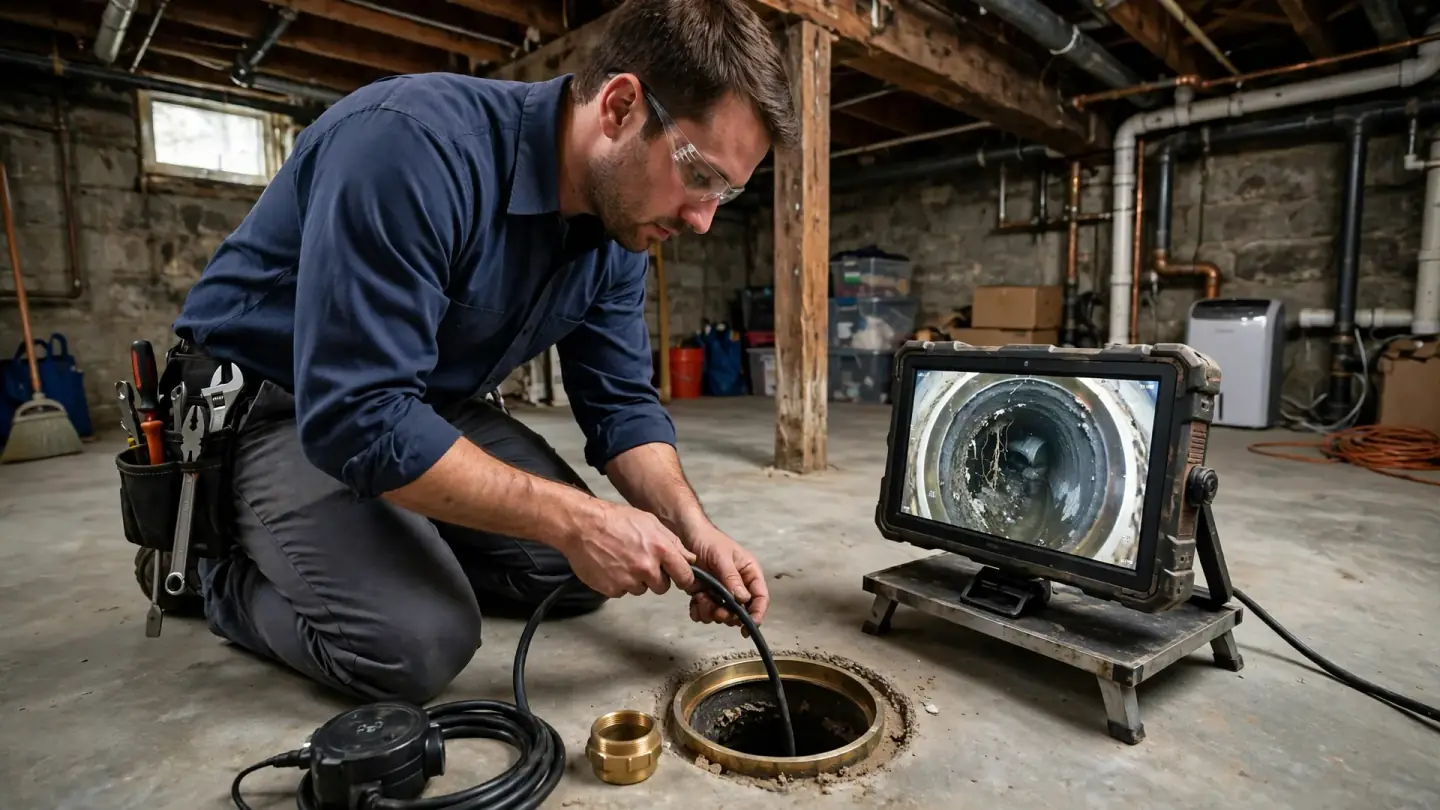
- Walk the pipe with a flashlightLook along the exposed stack and building drain in the cellar for wet streaks, white mineral crust, orange stains or bulging rust on the underside.
- Notice which fixtures misbehave togetherIf the kitchen and bathroom on the same side of the house slow down together, the shared iron stack is a stronger suspect than any one trap.
- Smell near joints after a flushA faint sewer odor at a hub joint right after someone upstairs flushes suggests the joint is no longer tight.
- Leave the pipe alone physicallyDo not tap, pry or tighten old iron. Corroded walls can be thinner than they look, and a crack is much worse than a slow drain.
Cause one
Scale and tuberculation slowly closing the iron bore
Scale is the most common iron complaint, and it is the one cleaning can help. A cable with a cutting head opens a path through the crust, and a properly sized water jetter can scour the walls more evenly. Some contractors use chain knockers or descaling heads made for iron. The tradeoff is that aggressive descaling on a thin pipe can expose weak spots, so the camera should come first and the method should match what the pipe can handle.
In a two-family or three-family house, scale in the stack affects everyone above it. The triple-decker shared stack guide explains how one narrowed riser can send water back into a lower unit.
Cause two
Channel rot along the bottom of horizontal iron runs
Horizontal building drains carry water along the bottom of the pipe, and that is where iron wears through first. On camera it looks like a groove or trough cut into the floor of the pipe, sometimes with soil visible beneath. Water can leak into the ground or into a crawl space, and debris catches on the ragged edges.
Channel rot is not something a cable fixes. A plumber may suggest replacing the section with plastic pipe, or lining it, depending on access and how much of the run is affected. Either option alters drain piping, which makes it permit work under Massachusetts plumbing rules [3].
Cause three
Cracked hubs and failed joints in a century-old drain
Older iron drains were joined with hub-and-spigot connections packed with oakum and lead. Settling, vibration and freeze-thaw cycles can loosen those joints or crack the hub. A cracked joint may leak only when the line runs full, which is why a stain sometimes appears after a heavy wash day and then dries out.
Where the iron building drain leaves the house, it often meets an older clay lateral, and that transition is a common weak point. The tree roots in clay sewer laterals guide covers what happens on the clay side.
Diagnosis
How a drain contractor sizes up an aging cast iron line
- 1
Hearing the symptom history
Which fixtures slow down, how often clogs return, whether rust came up last time, and whether any stains appear on the pipe.
- 2
Clearing enough to get a camera through
A heavily scaled line may need a pass with a cable before a camera can travel past the worst section.
- 3
Keeping the cast iron camera footage
The footage shows scale thickness, any channel along the bottom, cracks, offset joints and where iron changes to clay or plastic.
- 4
Matching the cleaning method to the pipe
Sound but rough iron may suit hydro jetting or descaling; thin or cracked iron may only tolerate gentle cleaning until it is repaired.
- 5
Separating cleaning from repair
Clearing the line is drain work; replacing or lining a section goes to a Massachusetts-licensed plumber with a permit [3][5].
Clean or replace
Is it worth cleaning cast iron or should it be replaced?
It depends on what the camera shows. Iron that is rough but structurally sound can serve for a long time if it is cleaned and kept free of grease. Iron with a channel worn through the bottom, long cracks or collapsing sections is past the point where cleaning does much. Many owners end up doing both: clearing the line now so the house works, and planning a section repair before the next failure.
Ask for the camera footage and for the location and depth of any problem spots. That record makes it easier to talk with a licensed plumber about repair and to plan the work around tenants or neighbors.
Prevention
Habits that slow down wear on old iron drain pipe
- Keep grease and wipes outRough iron catches grease and fibers faster than smooth pipe, so the what not to pour down drains list matters more in an older building.
- Skip harsh chemical openersStrong drain chemicals sit in a clog and can attack iron, and they make the job riskier for whoever clears the line next.
- Put the line on a cleaning scheduleA planned cleaning through preventative drain maintenance can keep a scaled stack from closing up between visits.
- Watch stains after heavy useCheck the cellar pipe after laundry day or a houseful of guests, when the drain runs fullest.
On the call
Details about your iron drains worth sharing with the contractor
- Age and layout of the buildingSingle-family, two-family or triple-decker, and roughly how many kitchens and bathrooms drain down the same stack.
- What came out last timeRust flakes, grease, paper or roots each point the diagnosis in a different direction.
- Any stains or leaks you have seenWhere they were and when they appeared, especially after heavy water use.
- Where the cast iron cleanout sitsIf you are not sure, the sewer cleanout guide shows where to look.
Iron pipe questions
Questions people ask about old cast iron drains
How do I know if my cast iron drain pipe is failing?
Repeated slow drains on one stack, rust flakes after clearing, stains under horizontal runs and sewer odors near joints are the usual signs. A camera inspection confirms whether the pipe is just scaled or actually thinned and cracked.
Is hydro jetting safe for old cast iron drain pipes?
Often yes, when the contractor inspects first and sets pressure and nozzle to suit the pipe. Rough but sound iron usually handles jetting well. Badly thinned or cracked iron may need gentler cleaning until a section is repaired.
Can rust in an iron stack cause clogs in the apartment above me?
It can. Scale narrows the shared stack, and the water from upper units backs up at the lowest opening it reaches. In a multi-family house that is often the first-floor tub or kitchen sink.
Do I need a permit to replace a section of cast iron drain in Somerville?
Yes. Replacing or altering drain piping is plumbing work that needs a permit and a Massachusetts-licensed plumber. Simply clearing a stoppage does not need a permit.
Why do the clogs keep coming back after my cast iron line is snaked?
A cable punches a hole through the blockage but leaves rough scale on the walls, which catches grease and paper again. Ask whether jetting or descaling suits your pipe, and whether a camera shows damage.
Should I pour drain cleaner into an old cast iron pipe?
It is better not to. Harsh chemicals rarely clear a scaled stack and can sit against the iron. They also create a hazard for anyone who opens the line afterward, so mention any chemicals used.