Key facts: Toilet Drain Clearing
- Every toilet has a trap formed inside the porcelain that holds water to block sewer gas; most toilet clogs lodge in that curve [1].
- A closet auger is a short, guarded plumber's snake made to pass through a toilet trap without scratching the bowl [2].
- In Massachusetts, clearing a stoppage does not need a plumbing permit, but replacing pipe or a closet flange is plumbing work done under one [3].
- Toilets drain into the building's drain-waste-vent system, so a blockage in a shared stack can show up at a toilet first.
The path a flush takes
How a stopped toilet drain gets cleared, from bowl to closet bend
When you flush, a rush of tank water pushes the bowl contents up and over a curved channel cast into the porcelain. That curve is the toilet's trap, and it always holds a little water so sewer gas stays in the pipe instead of in your bathroom [1]. Past the trap, the waste drops through the floor into a short elbow called the closet bend, then runs along a branch to the vertical stack. In many older Somerville homes that stack is cast iron and the closet bend may be lead or cast iron set in the floor framing a century ago.
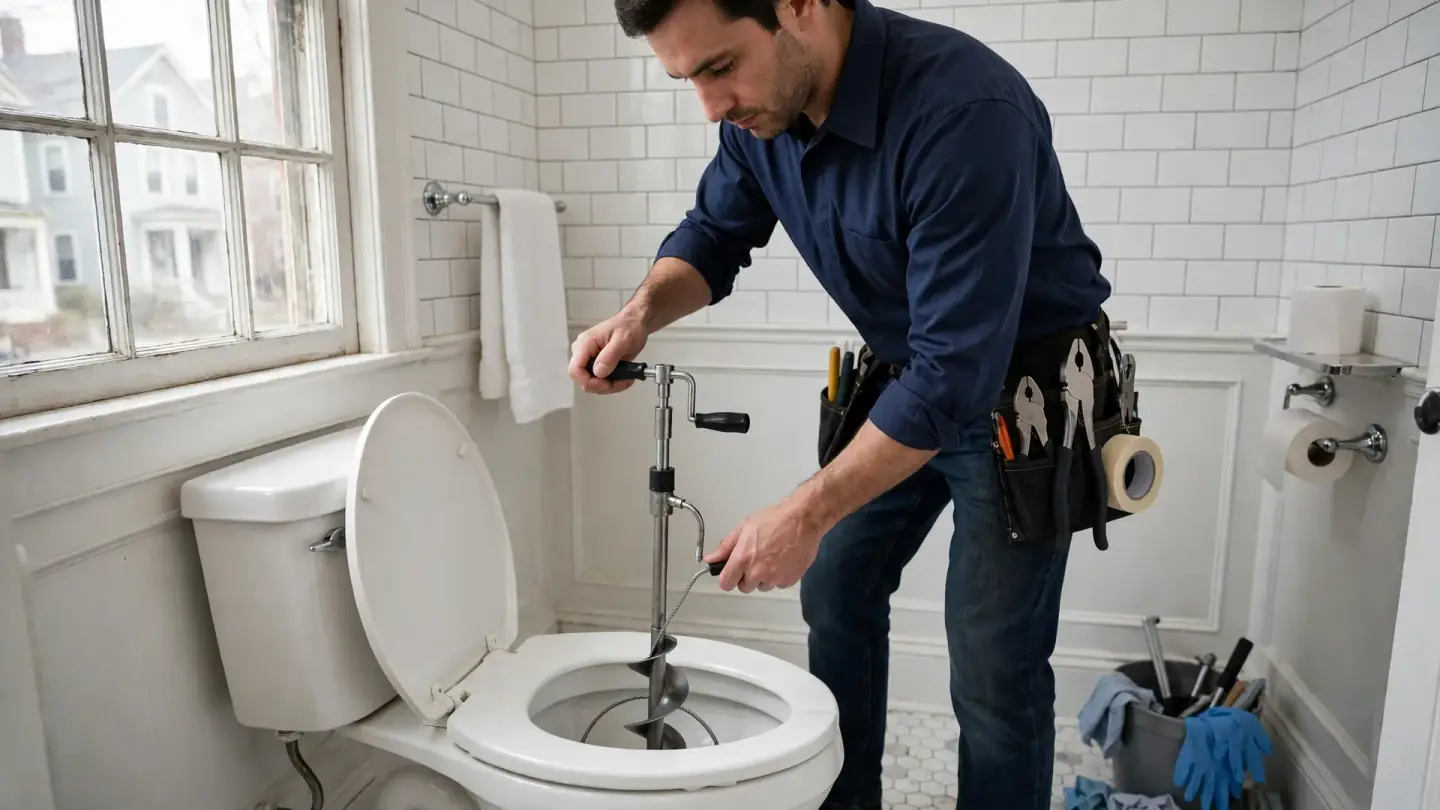
Most toilet clogs stop in the porcelain trap itself. The opening there is narrower than the pipe below, and the curve is tight, so a wad of paper, a toy, a hairbrush or a cluster of so-called flushable wipes can catch on the upper bend. A properly fitted plunger usually moves a paper clog. When it does not, the next tool is a closet auger: a short cable inside a curved, sleeved shaft that guides the cable through the trap without chipping the glaze [2].
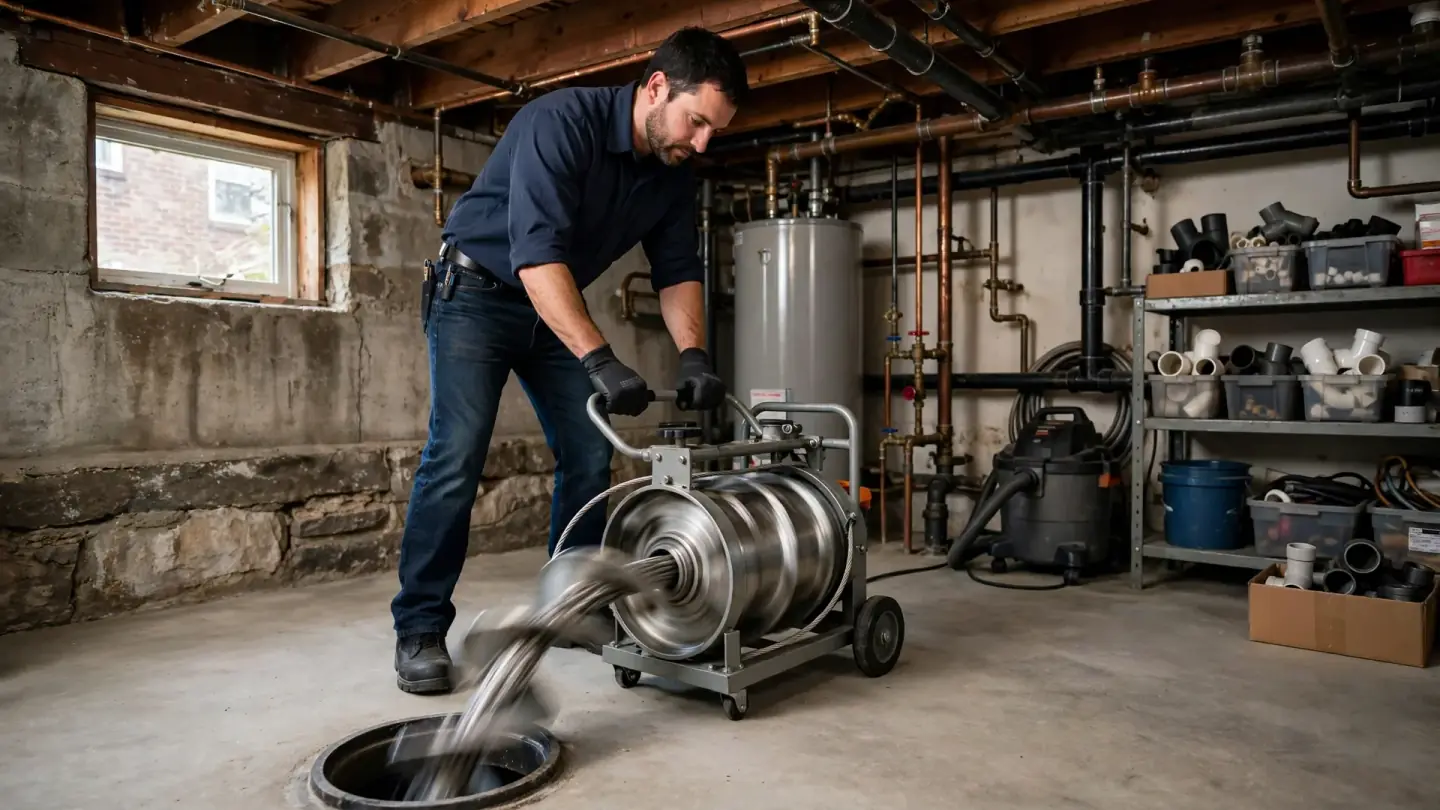
If the auger passes cleanly and the bowl still drains slowly, the stoppage is further along. That is when the drain contractor on the call will usually pull the toilet from the floor, which gives straight access to the closet bend and the branch beyond. With the toilet off, a longer drum machine can be run toward the stack, and anything lodged in the bend can be pulled back out instead of pushed deeper. The toilet then goes back down on a new wax ring or foam seal, and the bolts are snugged evenly so the bowl sits level.
One more possibility deserves mention early. If the toilet is the lowest fixture on a shared line, it can be the place where a blockage in the building drain first appears. Clearing the toilet in that case only moves the symptom. The contractor will look at what else in the building is draining slowly before deciding where to put the cable.
What the toilet is telling you
What are the warning signs of a toilet drain clog?
These are the patterns worth noticing. Each points to a different place along the drain.
Bowl rises, then slowly drops back
A partial stoppage in the trap or closet bend. Water seeps past the clog over several minutes. A plunger or closet auger usually reaches it.
Toilet bubbles when the washing machine drains
Air pushed back up the branch means the shared drain below is restricted. Read about gurgling drains before treating it as a toilet problem.
First-floor toilet fills when upstairs flushes
Waste from above is meeting a blockage in the stack or building drain. See the guide on triple-decker shared drain stack clogs.
Water around the base after each flush
Often a failed wax ring rather than a clog, though a partial blockage can force water out at a weak seal. Either way the toilet needs to come up.
Sewer odor near the toilet
A dry trap, a broken seal or a venting issue. If the smell is strongest downstairs, the guide on sewer smell in the basement covers the usual causes.
On the visit
Step by step: clearing a toilet clog in an older Somerville bathroom
- 1
Asking which fixtures are acting up
Before any tool comes out, the contractor asks whether the tub, the bathroom sink, the kitchen or the laundry are also slow, and whether other units in the building have noticed anything. One fixture points to the toilet; several point to the stack or the line out to the street.
- 2
Protecting the floor and stopping the water
The supply valve is closed and the tank is drained down. Old valves in Somerville bathrooms sometimes seep or refuse to turn, which is worth knowing before the toilet is moved.
- 3
Running the closet auger through the trap
The guarded cable is fed through the bowl's built-in trap and turned until it either grabs the obstruction or breaks it apart. Paper clogs and many wipes come back on the auger head.
- 4
Pulling the toilet when the clog is past reach
If the auger runs clean but the drain stays slow, the bolts come off, the bowl is lifted, and the closet bend is checked directly. Hard objects stuck in the trap are often easier to push out from underneath.
- 5
Cabling the branch toward the stack
With the opening exposed, a drum machine can run along the branch line. If the stoppage turns out to be in the shared stack or building drain, the job shifts to the main sewer line cleaning approach from a basement cleanout.
- 6
Resetting on a fresh seal and test flushing
A new wax ring goes on, the bowl is set level and bolted evenly, the supply is reopened, and the toilet is flushed several times while the base is watched for any seepage.
Choosing the tool
Should I use a plunger or a toilet auger?
Each tool has a range. Using the wrong one is how bowls get scratched and clogs get packed tighter.
| Tool | What it reaches | Good for | Where it falls short |
|---|---|---|---|
| Flange plunger | The porcelain trap | Soft paper clogs and too much tissue in one flush | Wipes, toys, or anything past the trap |
| Closet auger | Trap and the first part of the closet bend | Wipes, paper wads, small items caught on the bend | Stoppages in the branch or stack |
| Drum machine with toilet pulled | Closet bend, branch line, sometimes the stack | Packed debris beyond the bowl, hard objects | Heavy scale or roots in the building drain |
| Sectional machine from a basement cleanout | Building drain and the lateral toward the street | Toilets backing up because the main line is blocked | Not used through the toilet itself |
Chemical drain openers are not on this list for a reason: they rarely move a toilet clog and leave a caustic bowl for whoever works on it next.
Before you call
What you can safely try on a clogged toilet, and when to put the plunger down
A few things are reasonable for any homeowner or tenant. Past them, you are more likely to make the clog worse.
- Close the supply valve firstTurn the oval handle behind the toilet clockwise. That stops a second flush from overflowing the bowl while you work out what is going on.
- Use a flange plunger, not a sink cupThe flange seals into the outlet of the bowl. Push gently first to get air out, then work it firmly a dozen times. Sharp strokes splash; steady strokes move water.
- Try a closet auger if you own oneKeep the sleeve against the bowl, crank slowly, and never force it. A home auger used carefully will not scratch the porcelain.
- Stop if other fixtures reactIf the tub gurgles or a downstairs drain fills while you plunge, you are pushing against a blockage further down. More plunging only moves water into someone else's fixture.
- Skip the chemicalsCaustic drain cleaners are poorly suited to toilets. They sit in the bowl, do little to wipes, and can harm older cast-iron or lead piping.
- Do not pull the toilet unless you can reseat itLifting the bowl is simple, setting it back without a leak takes a new wax ring and a level floor. A slow seep under the floor rots subflooring quietly.
Somerville specifics
Toilet backups in Somerville triple-deckers and the city sewer behind them
Somerville packs more people into its four square miles than any other municipality in New England, and much of that housing is the two- and three-family stock built before the Second World War [4]. A triple-decker stacks three nearly identical flats, so the three bathrooms usually sit one above another and drain into the same vertical stack [5]. That design is efficient, and it means a stoppage low in the building affects everyone above it. The first-floor toilet, being lowest, is commonly where it shows up.
Below the house, the building drain carries everything out to the street sewer. Most of Somerville is served by a combined system, in which household wastewater and street runoff share the same pipes and normally flow to the MWRA's Deer Island Treatment Plant [6]. During a heavy storm those pipes run full. A toilet that only acts up during downpours may be reacting to a surcharged city line rather than anything in the bathroom, and that is worth reporting to the city through 311 so the Water and Sewer Department knows about it.
On permits: snaking or augering a stopped toilet is the clearing of a stoppage, which Massachusetts plumbing rules exempt from a permit [3]. Replacing a cracked closet bend, a rotted flange set in the floor, or a section of stack is different. That is plumbing work for a Massachusetts-licensed plumber, under a permit from Somerville's plumbing inspector. Digging is rarely part of a toilet job, but if a problem traces all the way to the yard, any excavation needs a Dig Safe call to 811 first.
Clearing or fixing
When clearing the toilet drain is enough and when the bend or flange needs work
A single clog with a clear cause, such as a child's toy or a wad of wipes, is solved once the obstruction comes out. If the toilet then flushes cleanly for weeks, nothing else needs doing. It is worth a short conversation with everyone who uses the bathroom about what goes in the bowl.
A toilet that clogs every few weeks with nothing unusual flushed is a different story. Common causes in older buildings include a closet bend with heavy scale inside, a flange that has settled so the bowl rocks and the wax ring no longer seals, or a branch with too little slope. Low-flow toilets installed on old, rough cast iron sometimes struggle because there is less water to carry waste past the rough spots. In those cases the contractor may suggest a camera look down the branch, described on the drain camera inspection page, before anyone talks about replacing pipe.
If the problem is the building drain rather than the bathroom, repeated toilet clearing is the wrong fix. The useful step is to clean the main line from a basement cleanout and find out why it keeps narrowing. If a toilet is overflowing right now and you cannot stop it, the emergency toilet drain cleaning page covers what to do while you call to check emergency availability.
Questions about toilets
Somerville toilet drain clearing questions people ask on the call
Why does my toilet gurgle when the washing machine empties?
A washer dumps a lot of water at once. If the drain both fixtures share is partly blocked, that surge pushes air back up the line and out through the toilet trap. It usually means the clog is downstream of the toilet, not in it.
Are flushable wipes actually safe for an old Somerville toilet?
They do not break apart the way toilet paper does. In older cast iron with rough interior walls, wipes snag and collect paper behind them. Putting them in the trash avoids most repeat toilet clogs in older buildings. Treat wipes as trash, even when labeled flushable.
Does a toilet need a new wax ring every time it is pulled?
Yes. A wax ring compresses once and does not reseal reliably. Whenever the toilet comes off the floor to reach a clog, it should go back down on a fresh ring or foam seal so it does not seep. Not always, but it is usually replaced whenever the toilet is lifted.
Can a downstairs toilet overflow because of something upstairs?
It can. In a triple-decker the bathrooms usually share a stack. If the stack or building drain is blocked, waste from the upper units collects at the lowest opening, which is often the first-floor toilet. Yes, if the shared stack below is blocked, the lowest toilet overflows first.
Is toilet drain clearing in Somerville something that needs a permit?
Clearing a stoppage is exempt under the state plumbing code. Replacing a closet bend, flange or piping is not, and that work is done by a licensed plumber under a local permit. No, clearing a stoppage is exempt from permits under Massachusetts rules.
Why does my toilet clog every time it is flushed?
Repeat clogs usually point to something stuck in the trap, a low-flow toilet with weak flushes, or buildup further down the line. A closet auger can pull out a hidden object. If several fixtures are slow, suspect the main sewer line. See also the services hub.
What should I do if the toilet is about to overflow?
Lift the tank lid and push the flapper closed, then turn the supply valve behind the toilet clockwise. That stops more water entering the bowl. Then try a plunger, or call to be connected with a contractor. See what not to pour down drains to avoid a repeat.