Key facts: Winter Hill
- Winter Hill sits between Magoun Square and McGrath Highway, north of Medford Street, and rises to about 120 feet [1].
- The neighborhood mixes restored homes with older triple-deckers [1].
- Somerville's combined sewer overflow plan includes sewer separation in Ten Hills and Winter Hill [2].
- Gilman Square station on the Green Line's Medford branch opened in December 2022 [1].
Homes on the hill
What Winter Hill homes are like, porch to cellar
Winter Hill is one of the seven hills Somerville is known for, rising to roughly 120 feet north of Medford Street, with McGrath Highway on its east side and Magoun Square to the west [1]. Broadway crosses the top of the hill, and the side streets fall away from it in both directions.
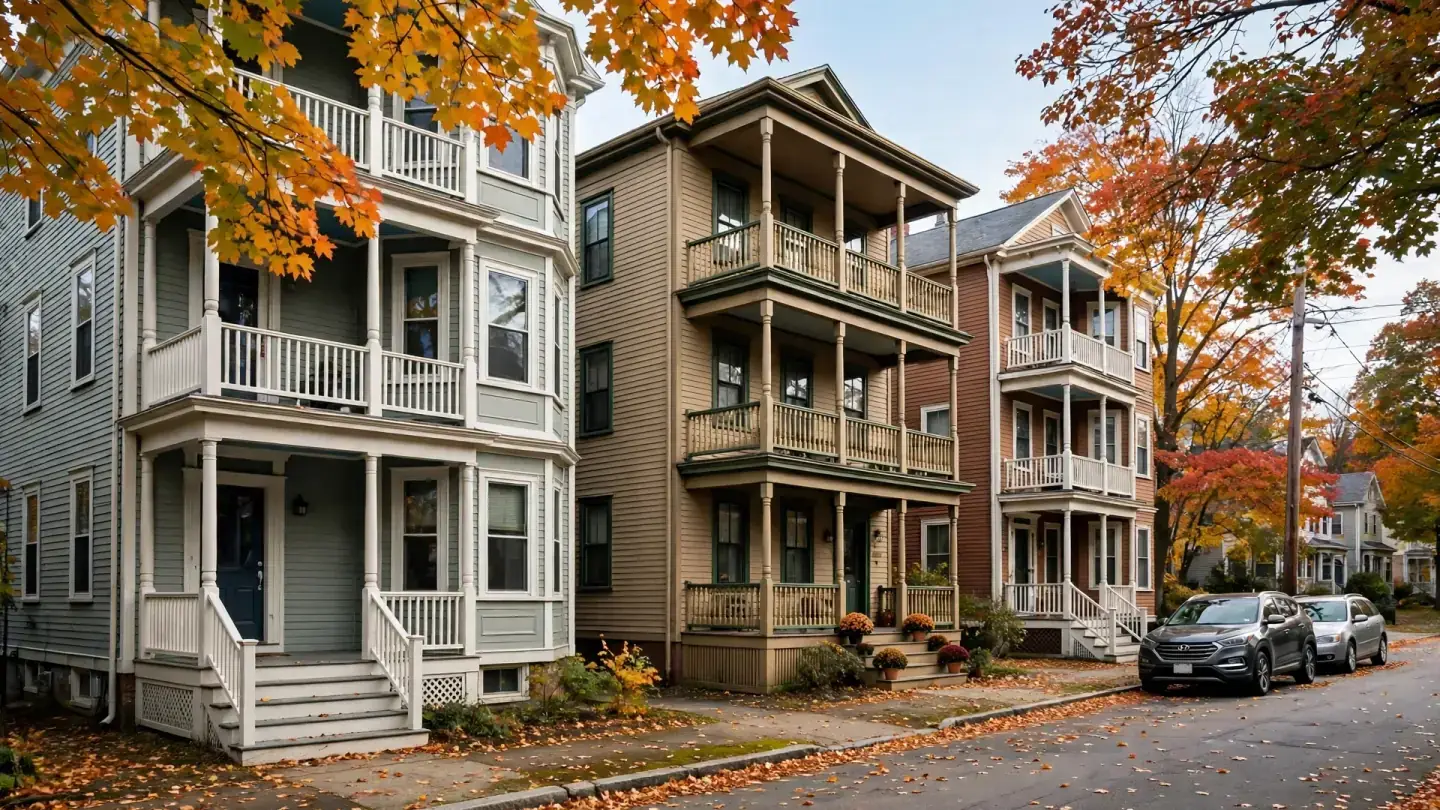
The housing is a mix. Some streets keep larger older homes that owners have restored with care, while others are lined with triple-deckers built for working families in the late 1800s and early 1900s [1][4]. A triple-decker puts three full flats on top of one another, each with its own kitchen and bathroom stacked over the one below [4].
Below grade, a Winter Hill house usually has a stone or brick foundation and a basement that has been used for coal, then oil, then laundry and storage. The building drain crosses that basement and leaves through the front or side wall. Many of these houses have a floor drain in the basement floor, sometimes original and sometimes added when a boiler or washer went in.
Because the hill slopes, houses on the same street can sit at quite different heights relative to the sewer in the road. A house on the uphill side may have plenty of fall to the street; one on the downhill side may have a basement close to or below the level of the main it drains into. That difference matters a great deal when the street sewer is running full.
What contractors run into
Common Winter Hill drain issues in houses of this era
Storm-day backups in low Winter Hill basements
Homes of this era on combined sewers commonly see basement floor drains gurgle or back up when heavy rain fills the street pipe.
Triple-decker stacks along the Broadway side streets
Three kitchens and three bathrooms share one riser, so a clog at the base of the stack shows up in the first-floor fixtures.
Original drains under restored Winter Hill homes
A restored house can have new bathrooms upstairs and a century-old iron building drain in the cellar that has never been replaced.
Downspouts and areaways tied into the sewer
Older houses commonly have roof drains or basement stairwell drains piped into the building sewer, adding storm water to the line.
Combined sewers
Why does a Winter Hill basement back up during heavy storms?
Most of Somerville drains into a combined sewer, laid between the late 1800s and the early 1900s, in which household wastewater and street runoff travel in the same pipes [2]. Most of the time that flow goes to the regional treatment plant at Deer Island. In a large storm, the pipes can fill and overflow, which is what a combined sewer overflow is [2][3].
For a Winter Hill household, the practical effect is simple. When the street sewer is full, water in it has a harder time leaving your building drain, and in the worst cases it can push back into the lowest openings in the house. A basement floor drain that only misbehaves during heavy rain is a strong hint that the problem is at least partly in the public system, not just in your pipe.
That does not mean your own line is blameless. A partly blocked building drain or lateral will back up more easily under that pressure, and roots or grease can turn a minor storm-day gurgle into a flooded floor. The usual approach is to clear and, if needed, inspect your own line first; if it is clean and the backups still track the rain, report it to the city through 311.
Separation plan
The city's sewer separation plan for Winter Hill and Ten Hills
Somerville's long-term plan for combined sewer overflows aims to eliminate them in a typical year by 2050. Among the projects it lists are a storage tank in Assembly Square and sewer separation in Ten Hills and Winter Hill [2]. Separation means building a second set of pipes so that storm runoff and sewage travel apart, which reduces the load on the sanitary line during storms.
Separation is a public project and its timing is the city's to announce, so check Somerville's sewer overflow pages for current information rather than relying on any date you hear second-hand. What a homeowner can do now is make sure their own house is not adding storm water to the sanitary pipe and that the basement is protected.
Some older houses send roof downspouts or a basement stairwell drain into the building sewer. When separation work happens on a street, property connections may come up in conversation, and it helps to know what your house sends where. A contractor with a camera can often trace where a downspout or areaway drain ends up.
Protecting the basement
Can a backwater valve protect a Winter Hill basement?
A backwater valve is a check valve fitted to the building drain that lets wastewater leave the house but closes when water tries to flow back in [6]. In a basement that sits low relative to a combined street sewer, it can stop the street from emptying into the house. It needs to be the right type, in the right place and maintained, because a valve that sticks or fills with debris can cause its own problems.
Installing one involves cutting into the building drain, so in Massachusetts it is plumbing work for a licensed plumber under a permit from the local inspector [5]. A drain contractor clearing your line can tell you whether the layout makes a valve practical and point you toward a plumber for the installation.
Simpler steps help too. Keep the basement floor drain clear and its trap filled with water, avoid running laundry in the middle of a big storm, and move valuables off the basement floor near any drain. The guide to a basement floor drain backing up covers what to do in the moment.
Broadway
Broadway, Gilman Square and change on Winter Hill
Broadway is Winter Hill's main street, with small businesses, restaurants and apartments along it. The Green Line's Gilman Square station opened in December 2022 at the hill's southern edge, bringing rapid transit within walking distance of much of the neighborhood [1].
As with other stops on the extension, improved transit has encouraged renovation. When a triple-decker is updated unit by unit, the new kitchens and baths often connect to an old stack in the walls and an old drain in the basement. If you are renovating, a look at the building drain while things are open is time well spent, and the main sewer line cleaning page explains what a full-line clearing involves.
Permits and boundaries
Permits and neighboring towns for Winter Hill drain work
- Clearing a clog on Winter HillClearing a stoppage is not permit work under 248 CMR 3.05 [5].
- Backwater valves, cleanouts and pipe replacementThese involve altering the plumbing and need a Massachusetts-licensed plumber with a permit from Somerville Inspectional Services [5].
- Public sewer and separation questionsQuestions about the street sewer or separation work go to the City of Somerville, which publishes its overflow plan online [2].
- Near the Medford lineWinter Hill is not far from Medford; a property with a Medford address falls under Medford's own plumbing inspector, not Somerville's.
Planning a visit
Arranging a Winter Hill drain visit on steep, narrow streets
Several side streets off Broadway are steep and narrow, with cars parked on both sides. Tell the contractor on the call whether there is a driveway, how many steps lead down to the basement and whether the cellar is reached from inside or through an outside bulkhead.
In a triple-decker, the basement is often shared and each unit has its own storage. Clear a path to the cleanout and floor drain and let the other households know when the work is happening. If the trouble only comes with storms, say so, and if you can, take a photo or video of the floor drain while it is backing up; it helps the contractor understand what the line is doing.
Restored homes
Restoring an older Winter Hill home without neglecting the drain
Some of Winter Hill's larger older houses have been carefully restored, with period details brought back and kitchens and bathrooms modernized. Restoration usually focuses on what people see. The drain under the cellar floor and the lateral under the front yard are easy to overlook until a backup forces the question.
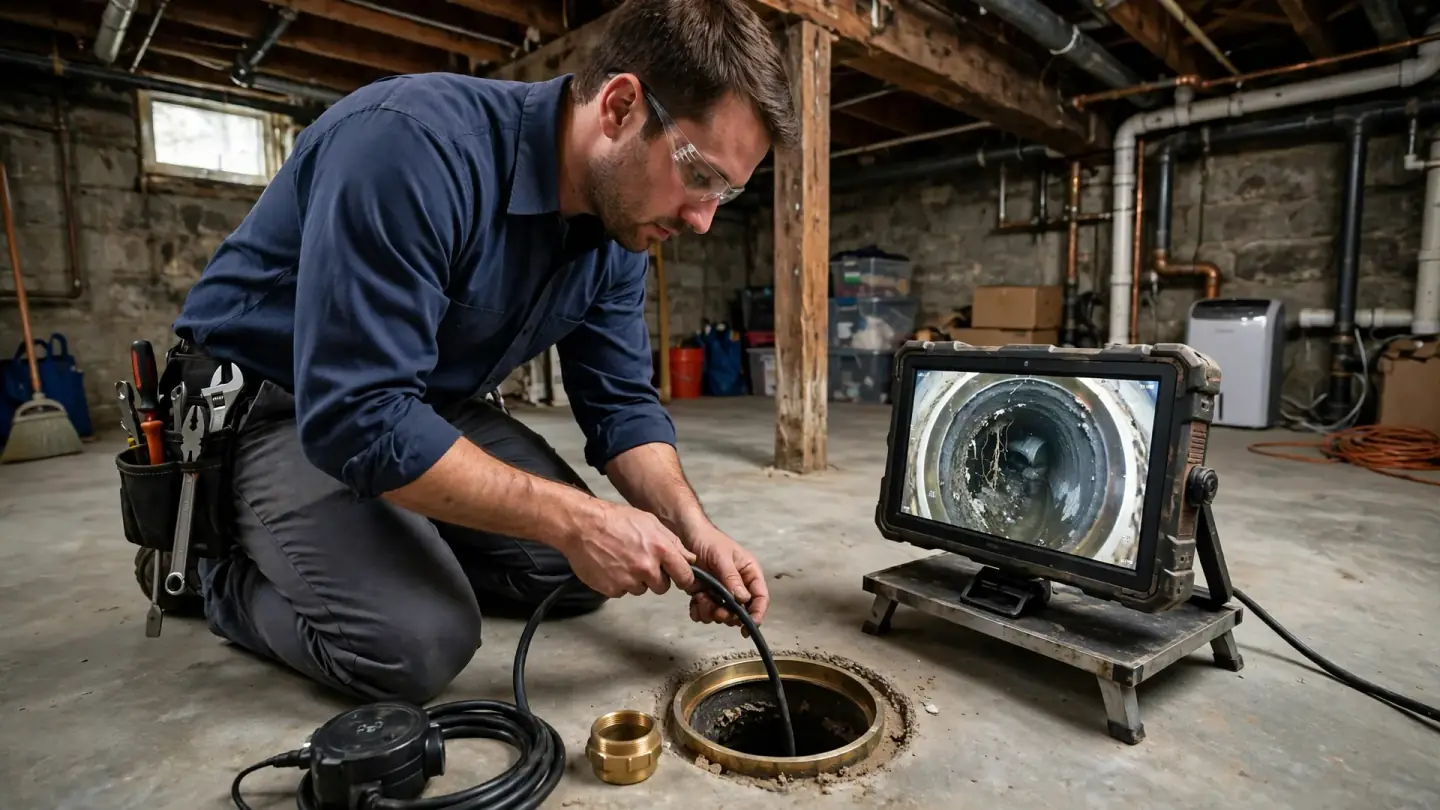
If you are restoring a house here, include the drain in the plan. A camera inspection before the work starts tells you whether the old iron building drain and the lateral are sound, scaled or broken. Replacing a failing section while the basement is open is much less disruptive than doing it after new floors are laid, and it is the right time to add a cleanout in a reachable spot.
Restored houses also tend to gain fixtures: a second or third bathroom, a larger kitchen, a laundry on the upper floor. All of that adds flow to the same exit pipe. Telling the contractor on the call what has been added helps them judge whether the line is simply clogged or is now carrying more than it comfortably can.
FAQ
Winter Hill drain questions about storms, stacks and separation
Why does my Winter Hill floor drain only back up when it pours?
Most of Somerville uses combined sewers that carry rain and wastewater in one pipe. When the street sewer fills in a storm, water can push back toward low basement openings like floor drains. Have your own line checked first; if it is clear, report the pattern to the city through 311.
Will the city's separation work fix my basement backups on Winter Hill?
It should ease storm load on the sewer, but it will not clear or repair your own building drain. Somerville's overflow plan includes sewer separation in Ten Hills and Winter Hill. Keeping your line in good shape still matters, and the timing of public work is up to the city.
Can a backwater valve be added to a Winter Hill house?
Often, if the building drain layout allows it. Installing one means cutting into the drain, so a Massachusetts-licensed plumber does it under a Somerville permit. The contractor clearing your line can tell you whether it looks practical, and the basement floor drain guide explains how storms and valves interact.
What does drain cleaning on Winter Hill usually involve for a triple-decker?
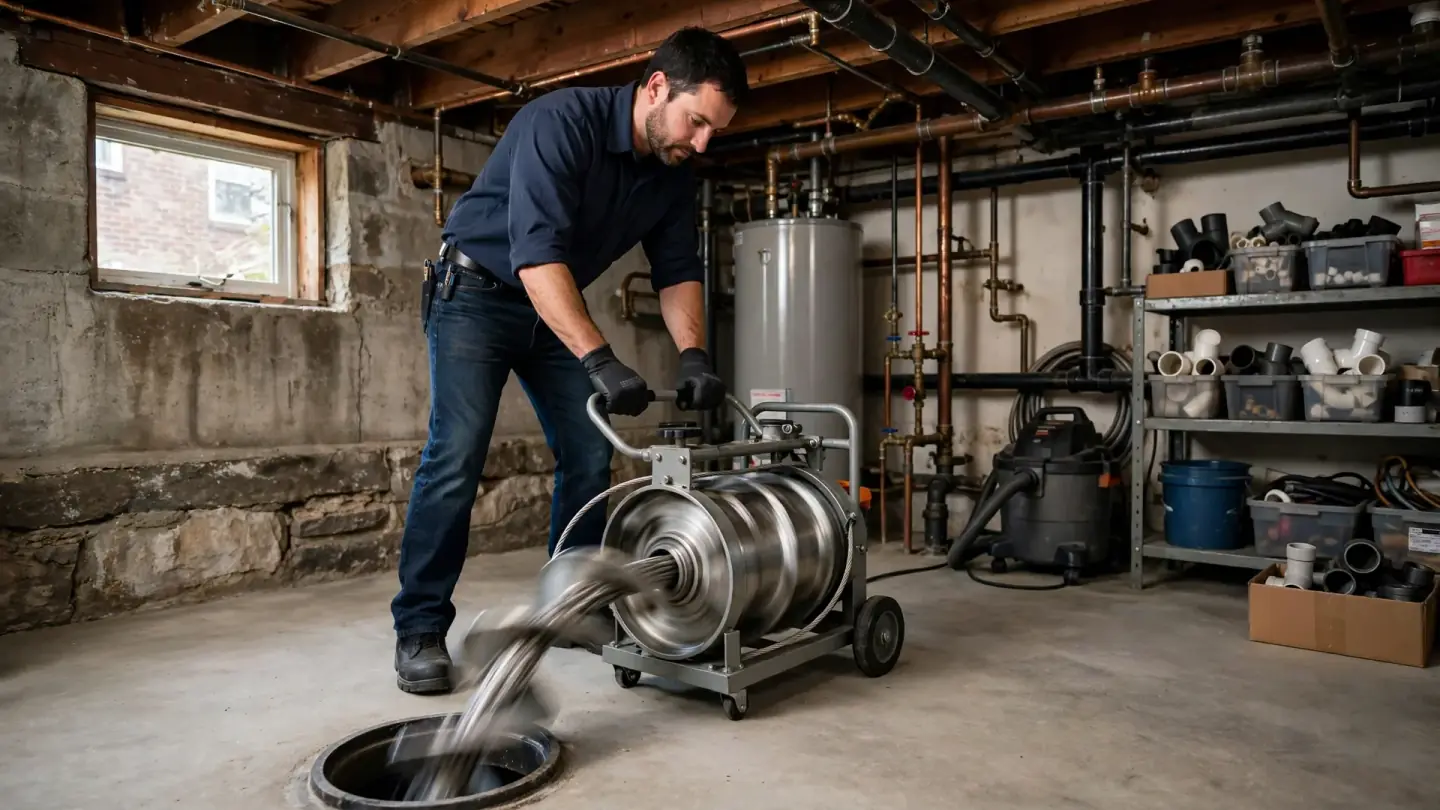
Usually the contractor clears the building drain from the basement cleanout and checks the base of the stack. That is where most whole-building backups start in a triple-decker. Single slow fixtures upstairs are handled at the fixture, but only after the main run is known to be open.
Should the downspouts on my Winter Hill house go into the sewer?
Many older houses were piped that way, which adds storm water to an already busy line. Ask the city about current rules before changing anything. A camera inspection can show where a downspout pipe actually ends up, which is often a surprise in houses this old.
Why do Winter Hill streets make a drain visit harder to plan?
Steep, narrow streets and tight parking can slow equipment access to Winter Hill triple-deckers. Telling the contractor on the call where the basement entrance is, and whether there is a driveway, helps them bring the right machine. A clear path to the cleanout saves time once they arrive.
How does Winter Hill compare with other Somerville neighborhoods for drains?
Winter Hill combines dense triple-decker rows with storm-sensitive basements and active sewer separation work, which few other areas share. East Somerville below it faces similar storm issues. The Somerville areas hub compares all six neighborhoods, and main sewer line cleaning covers the shared run most Winter Hill backups start in.