

Key facts: Triple-decker shared drain stack clogs
- The triple-decker, a stacked three-flat house, spread through New England towns between about the 1870s and 1930s [1].
- In a drain-waste-vent system, branch drains feed a vertical stack that also vents gases up through the roof [2].
- Cast iron was the standard drain material for generations and can corrode and build scale inside over time [3].
- Clearing a stoppage does not require a Massachusetts plumbing permit; replacing stack pipe does [4].
Short answer
Why does an upstairs sink back up into the unit below?
In most triple-deckers, the kitchens line up vertically and drain into one shared stack, often a separate kitchen stack from the bathroom one. Each apartment's sink connects to that stack through a short branch. When grease or food builds up in the stack below the second-floor branch, water from the third floor runs down, hits the restriction, backs up, and escapes through the lowest open connection above the clog, which is the second-floor sink.
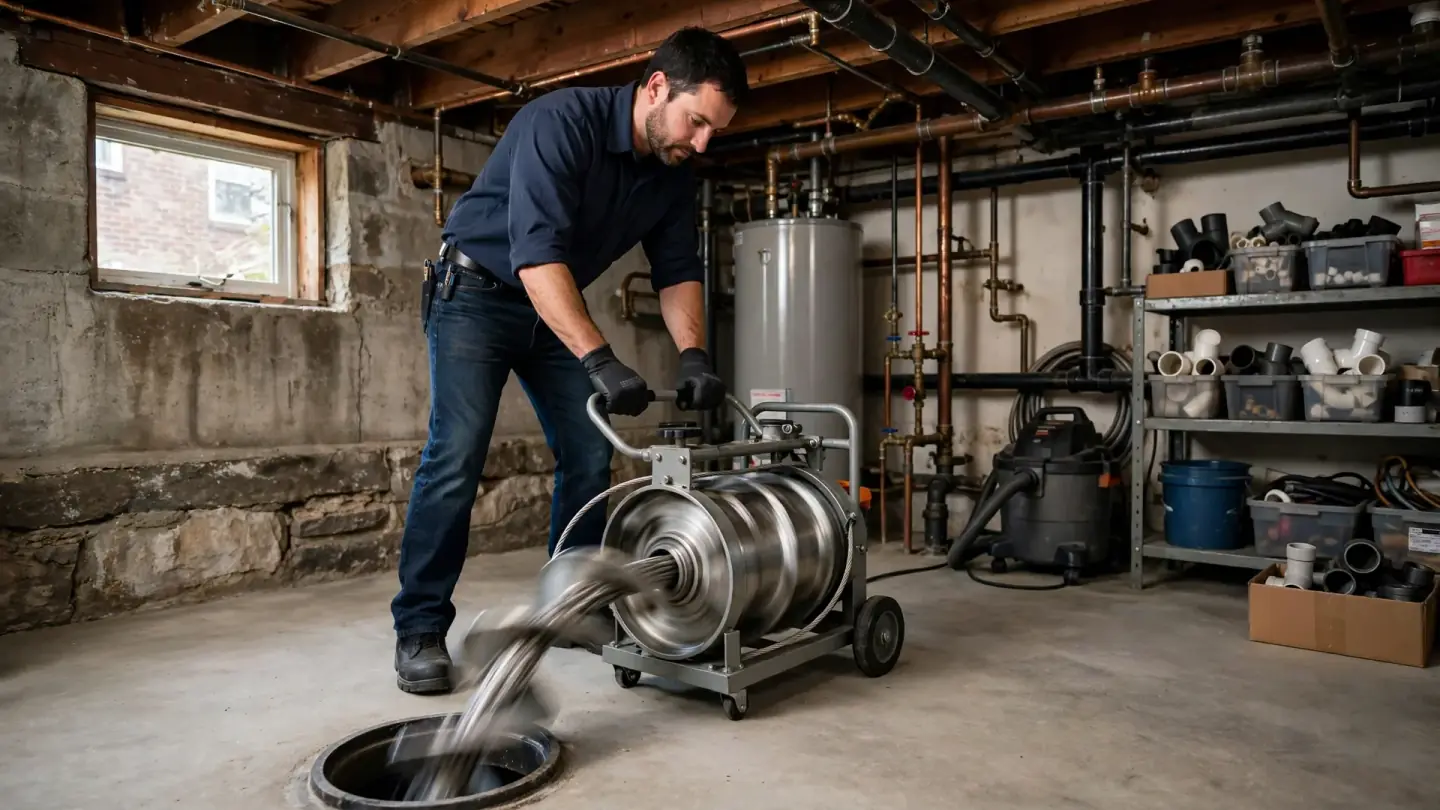
So the unit that sees the water is often not the unit that caused the clog. The fix is the same either way: clear the stack from below, usually from a cleanout in the cellar or the kitchen, using a cable or jetter through kitchen drain cleaning. Triple-decker shared drain stack clogs are common in Somerville simply because there are so many of these buildings in a city that grew as a dense city of homes [5].
Symptoms by floor
Matching triple-decker drain symptoms to the part of the stack
| What you see | Likely cause | What to do |
|---|---|---|
| Second-floor sink fills when the third floor drains | Clog in the kitchen stack between the first and second floor branches | Ask upstairs to stop, then have the stack cleared from below |
| First-floor sink backs up when anyone above drains | Restriction low in the stack or at its base in the cellar | Clear from the cellar cleanout toward the base fitting |
| Only one unit's sink is slow, others are fine | Clog in that unit's own branch or trap | A branch line clearing in that apartment |
| Every unit's drains are slow and the cellar drain is wet | Main building drain or lateral blocked | Treat it as a main line problem and stop water use |
| Gurgling in a lower unit's tub when a toilet flushes above | Partial stack clog or a blocked roof vent | Mention it on the call; vent and stack both get checked |
Safe checks
Simple checks that help locate a clog in a three-unit building
- Knock on doors before you plungePlunging a sink while a neighbor's sink on the same stack is open just pushes water into their kitchen. Coordinate first, or skip the plunger entirely.
- Test one fixture at a timeWith the other units' taps off, run one sink for a short burst and watch where water appears. That narrows the clog to a floor.
- Check the cellar floor drainIf the cellar drain is wet or rising, the problem is below the stack in the main line, not in the kitchen stack itself.
- Keep to the trapCleaning a sink's own trap under the counter is reasonable. Reaching into the wall or the stack is where a cable and experience matter.
Cause one
Grease building up inside an old cast-iron kitchen stack
Hot dishwater carries fat down the drain in liquid form. As it travels down a cold cast-iron stack along an exterior wall, it cools and sticks to the pipe, especially at the rough interior surface that cast iron develops as it ages [3]. Three households of cooking add up, and the buildup usually concentrates near the bottom where the stack turns horizontal toward the building drain.
Cabling punches a hole through grease but tends to leave a coating on the walls, which is why repeat clogs on a kitchen stack often lead to a conversation about hydro jetting, which scours the pipe wall with water rather than just boring through the middle.
Cause two
Scale, corrosion and narrowed branches in older triple-deckers
Many triple-deckers still run their original cast-iron stacks, now a century old or close to it. Inside, corrosion produces tubercles and scale that narrow the bore and catch debris. Branch fittings, where a sink line meets the stack, are favorite spots for buildup because the flow changes direction there.
A camera is the clear way to see whether a stack is simply dirty or has thinned and cracked. Scale can be descaled with the right cutter heads; a stack with a split or a rotted hub is a repair conversation instead.
Cause three
A blocked roof vent on the triple-decker stack
The stack continues up through the roof as a vent, which lets air in so water can fall freely and keeps trap seals from being siphoned [2]. Leaves, a bird's nest or ice in a cold snap can restrict that opening. The symptom is slow draining with lots of gurgling, often in every unit, even though no single clog shows up when the line is cabled from below.
Prevention
House rules that keep a triple-decker kitchen stack open
- Put a short note in each unit asking tenants to wipe greasy pans into the trash before washing.
- Use sink strainers in all three kitchens so rice, pasta and peels stay out of the stack.
- Ask tenants to report slow drains early, before a clog pushes water into the unit below.
- Keep wipes and paper towels out of toilets on every floor, since bathroom stacks share the same main.
- If one stack keeps clogging, set up preventative drain maintenance on a schedule instead of waiting.
On the call
Details a contractor needs about your three-family's drains
- Which floors are affected and which unit's water is showing up where.
- Whether it is the kitchen side, the bathroom side, or both.
- Where the cellar cleanouts are, if you know, and whether the cellar is accessible.
- Whether tenants need to be notified or let someone into their unit.
- Any past clearings on that stack and roughly how long ago.