Key facts: Floor Drain Cleaning
- A plumbing trap holds a small pool of water that blocks sewer gas; if that water evaporates, the seal is lost and odors can enter [1].
- Most of Somerville drains into a combined sewer that carries wastewater and stormwater in the same pipes, laid between the late 1800s and the early 1900s [2].
- Clearing a stoppage is exempt from a Massachusetts plumbing permit, but installing or altering plumbing, such as adding a backwater valve, needs one [3].
- Backflow prevention devices are designed to stop water from running the wrong way through a pipe [4].
Under the grate
How a basement floor drain in a Somerville house is built and cleared
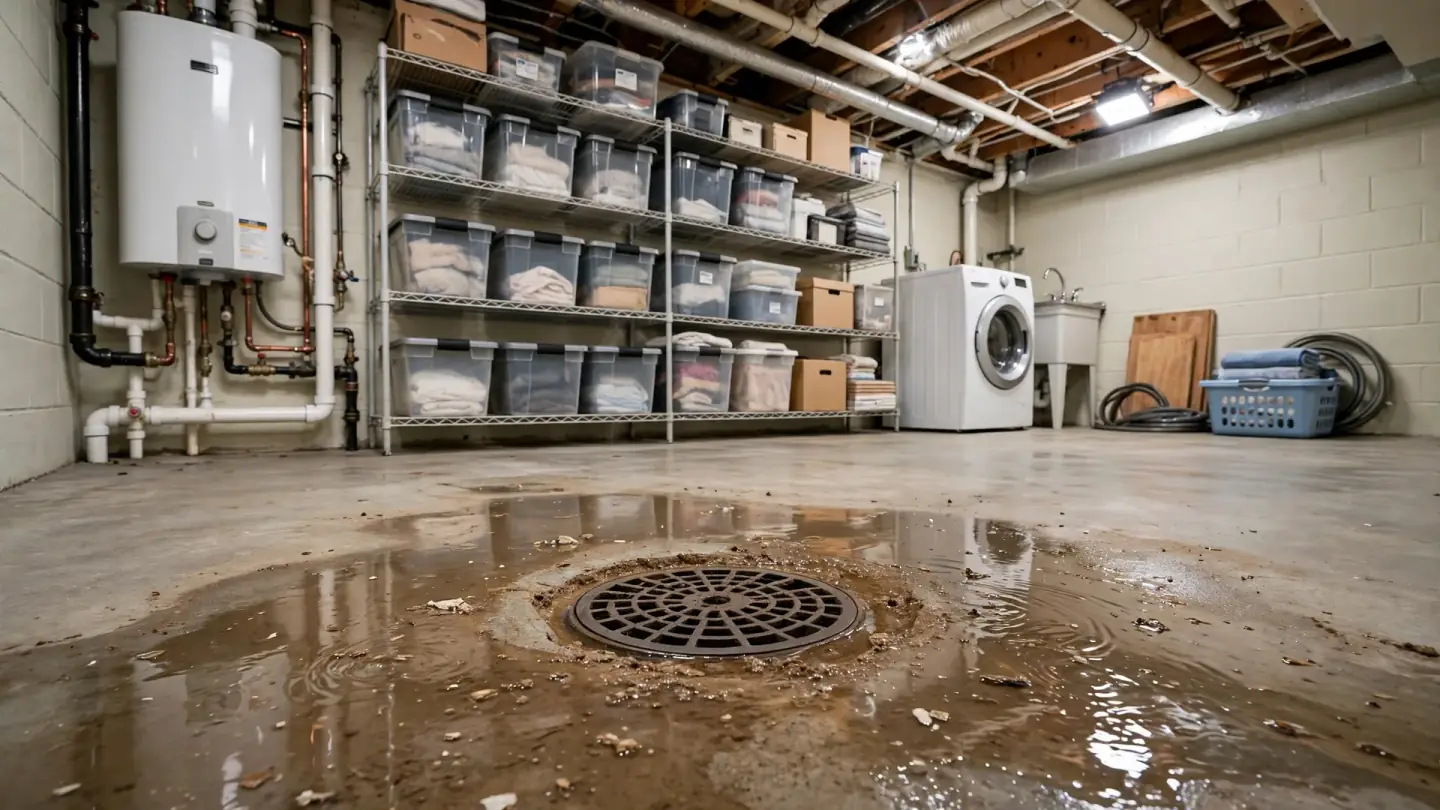
Lift the grate on most basement floor drains and you will find a short drop into a bowl of standing water. That water sits in a trap, a curved section of pipe that stays full so sewer air cannot climb back into the cellar [1]. Below and beyond the trap, the drain runs under the slab and ties into the building drain, the main pipe that collects everything from the floors above and carries it out through the foundation toward the street.
In homes built a century ago, the arrangement can be less tidy. Some floor drains connect directly to the building drain; some run to an old sump or a separate line; a few were tied in decades ago by whoever was finishing the basement at the time. Many older Somerville cellars also have a cast-iron trap with a small cleanout plug on its side, often rusted in place and covered by years of paint and grit.
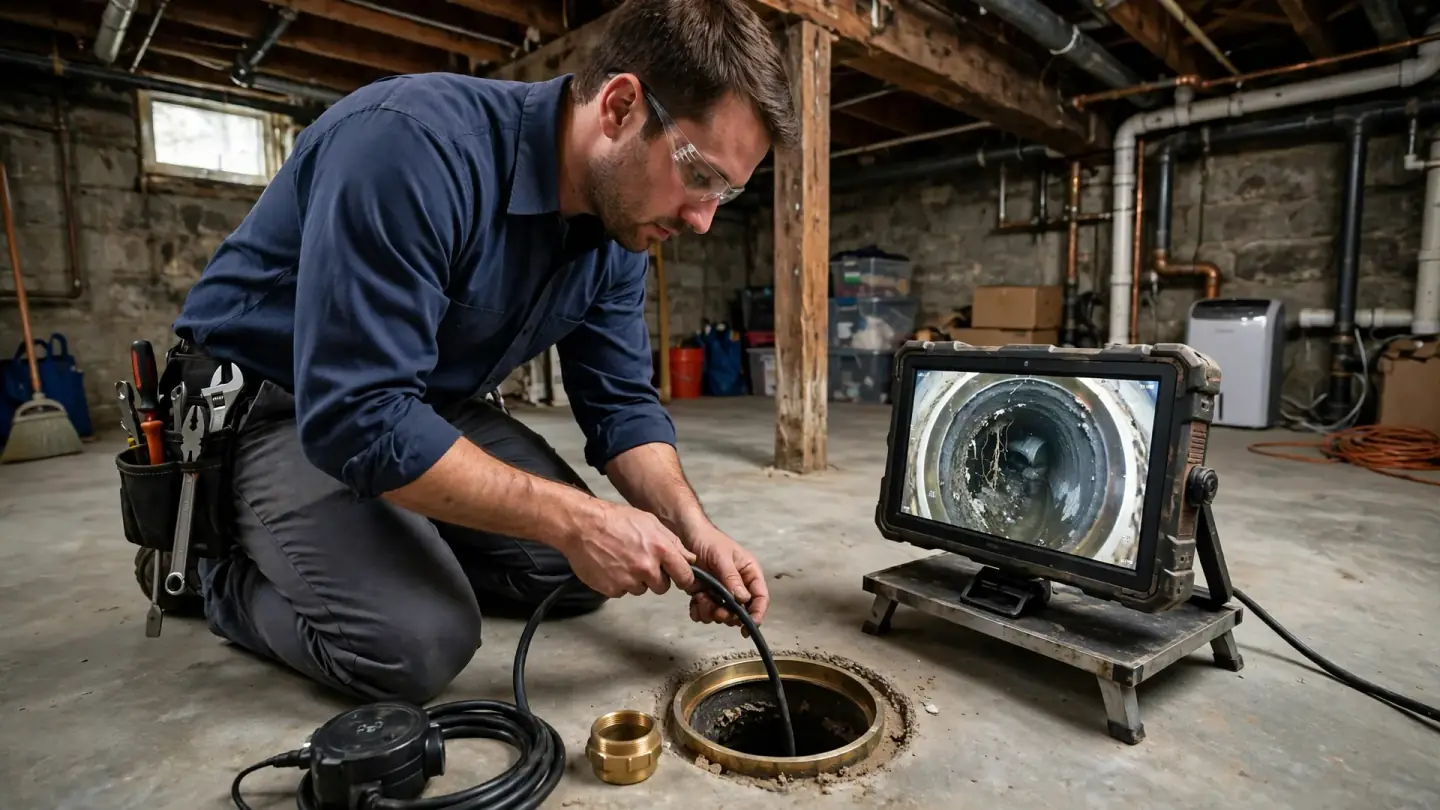
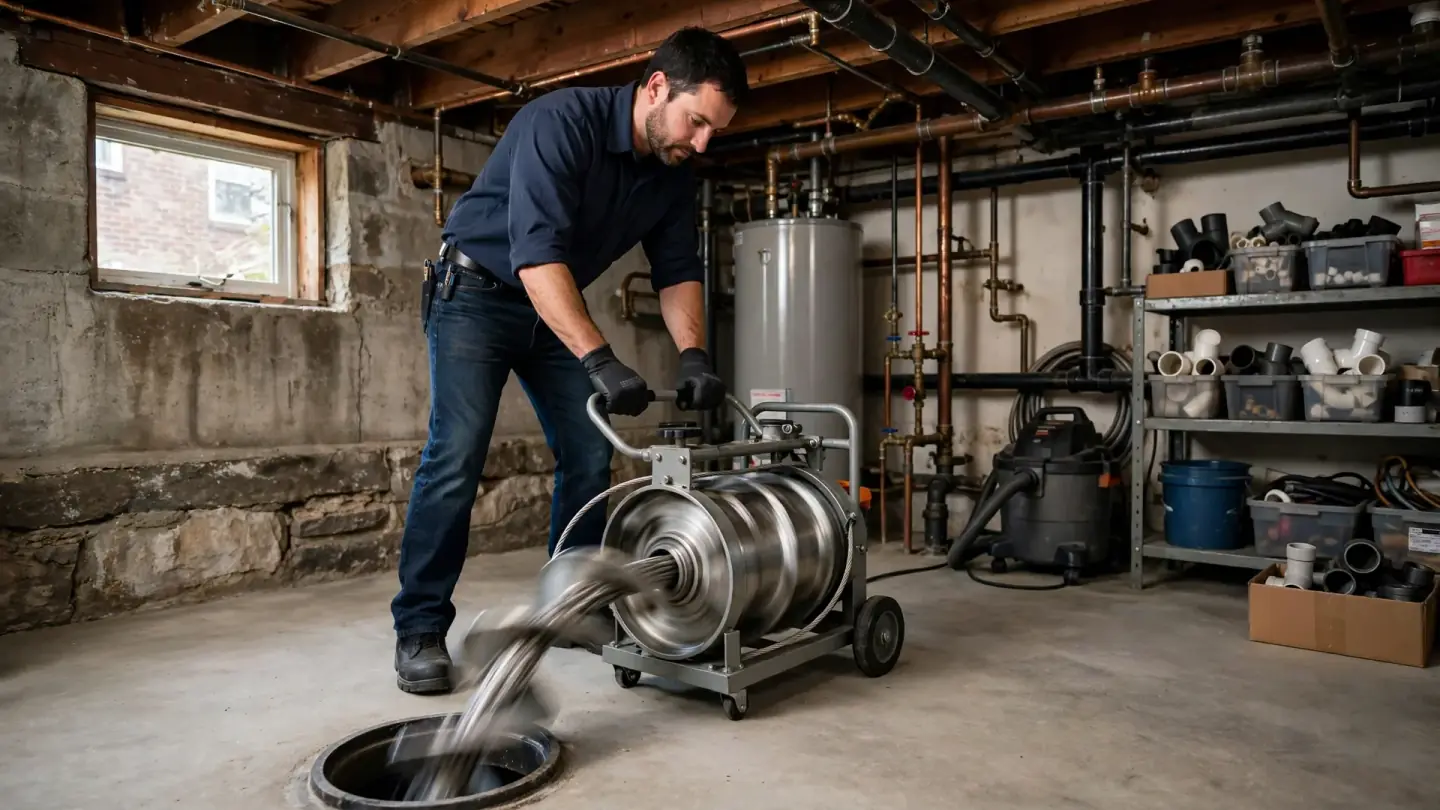
Clearing one usually starts with pulling the grate and bailing out debris that has settled in the bowl: sand, lint, bits of mortar, the occasional sock. From there a contractor runs a small cable through the trap and into the line beyond. Where the trouble sits further down, in the building drain itself, access often moves to a main cleanout so the cable or a jetting hose does not have to fight its way through the tight bend of the trap.
Once water is moving, a camera can go in to show whether the line is simply dirty or whether a collapsed section, a root intrusion or a sag is the real story. That second look matters more on a floor drain than almost anywhere else, because this drain sits closest to the parts of the system you cannot easily see.
What the drain is telling you
What are the warning signs of a clogged basement floor drain?
Each of these points toward a different cause, so it helps to notice which one you are seeing.
Water rising from the floor drain during heavy rain
Storm surcharge in the sewer can push water back up through the lowest opening. The guide on a basement floor drain backing up covers the pattern.
Read moreRotten-egg odor near the grate in a dry season
A trap that has dried out lets sewer gas through. The sewer smell in the basement guide lists other sources to rule out.
Read morePuddle spreading after the washer drains
Lint and soap can narrow the floor drain line until it cannot keep up with the pump-out from a modern washing machine.
Gurgling in the floor drain when an upstairs toilet flushes
Air being pushed or pulled through the trap suggests a partial blockage downstream. See gurgling drains for what that sound can mean.
Read more
Where the laundry goes
Washing machines, utility sinks and the basement floor drain
In a lot of Somerville two-families and triple-deckers, the laundry ended up in the basement because that is where the water lines and the drain were. Sometimes the washer discharges into a utility sink; sometimes its hose simply hangs over the floor drain. Either way, the floor drain line carries far more water than it was ever meant to, and it carries lint, hair and fabric fibers with it.
Those fibers catch on rough cast iron and on the lip of the trap, then soap residue binds them into a felt-like mat. The drain slows a little more each month until one big load overflows the grate. A lint trap on the washer hose or a mesh catcher in the utility sink is a small step that makes a real difference.
- A lint catcher on the discharge hose slows the buildup
- Shared buildings may have several washers on one drain
- Overflow after a laundry load is a line problem, not a storm problem
A visit, in order
Step by step through a Somerville basement floor drain clearing
- 1
Asking when the floor drain misbehaves
Rain, laundry day, a flush upstairs, or no pattern at all each point to a different cause. The contractor on the call starts there, before any equipment comes off the truck.
- 2
Pulling the grate and cleaning out the bowl
Settled grit and debris come out by hand or with a wet vacuum, so the trap can be seen and a cable can enter cleanly.
- 3
Running a cable through the trap or a cleanout
A small-diameter cable works through the trap. If the blockage is further along, the main cleanout gives better access to the building drain.
- 4
Flushing and watching the drain take water
A good volume of water is run through to confirm the line drains steadily and the trap refills to form a seal.
- 5
Putting a camera in where the history calls for it
Repeat backups or storm-related flooding usually justify a drain camera inspection to see what the floor drain connects to and how sound it is.
- 6
Explaining options for odor, laundry or storm water
You hear whether the answer is routine cleaning, a habit change, a trap primer or a backwater valve, and which of those would need a licensed plumber under permit.
Matching cause and response
Floor drain trouble in Somerville basements, sorted by what it looks like
These are the common conditions behind a misbehaving floor drain and the response each one usually calls for.
| What you notice | Likely cause | Usual response |
|---|---|---|
| Sewer odor, grate is dry | Trap water has evaporated | Refill the trap; consider a trap primer or seal insert |
| Slow drain, worst after laundry | Lint and soap buildup in the floor drain line | Cable cleaning, lint catcher on the washer hose |
| Water rises only in big storms | Surcharge in a combined sewer pushing back up | Camera check; discuss a backwater valve with a licensed plumber |
| Water rises after any heavy use upstairs | Blockage in the building drain downstream of the floor drain | Main line cleaning through a cleanout |
| Grit and sand keep returning | Broken pipe under the slab letting soil in | Camera inspection and repair planning |
| Cleanout plug on the trap is weeping | Corroded plug or fitting | Replacement by a licensed plumber |
Do it, or leave it
How can I keep a basement floor drain working myself?
A floor drain asks for very little attention. The few things that matter are worth doing.
- Pour a bucket of water in every month or twoThis keeps the trap full in a dry cellar. In winter, when heating dries the air, it matters more. A spoonful of mineral oil on top slows evaporation.
- Keep the grate on and clearGrates stop tools, toys and storage debris from dropping into the trap. Do not pile boxes over the drain; you want to see it if water starts rising.
- Catch lint before it reaches the drainA mesh sleeve on the washer hose or a strainer in the utility sink keeps most fibers out of the line.
- Stop using water during a storm backupIf water is coming up during heavy rain, every flush and shower upstairs adds to it. Hold off until the rain eases.
- Do not force a stuck trap cleanout plugOld cast-iron plugs can crack the fitting when wrenched hard, and a plug opened with water standing above it releases sewage onto the floor.
- Do not seal the drain shutPlugging a floor drain permanently can hide a sewer problem and leave water with nowhere to go during a leak. Ask about a proper backwater device instead.
Somerville specifics
Combined sewers, storm surcharge and floor drains in old Somerville cellars
Somerville is a dense city of closely set homes, many dating from building booms that ran through the 1940s [5]. Underneath those streets, most of the city drains into a combined sewer, which carries household wastewater and rainwater in the same pipes [2]. On an ordinary day that flow travels on toward the MWRA's Deer Island plant for treatment. In a heavy storm, the pipes can fill, and the city's long-term plan describes work aimed at cutting overflows, including a storage tank in Assembly Square and sewer separation in Ten Hills and Winter Hill [2].
For a basement, the practical point is simple. When the sewer under the street is running full, water can push backward up the building drain, and the floor drain is often the lowest opening it meets. That is why some cellars only see water at the drain during big storms and stay dry the rest of the year. Cleaning the line will not stop that, because nothing in the house is blocked.
If a backup happens and you suspect the city sewer rather than your own line, report it through 311, Somerville's line for water and sewer problems; the Water and Sewer Department handles city sewers and emergency calls about backups [6]. Ask them as well where private responsibility ends on your street.
A backwater valve, which lets water flow out but closes when it tries to come back, is the usual answer to storm surcharge [4]. Installing one means cutting into the building drain, and in Massachusetts that is plumbing work for a licensed plumber under a permit from Somerville's plumbing inspector [3]. Floor drain cleaning in Somerville and backwater protection are related, but they are different jobs with different rules.
Clearing versus fixing
When clearing the cellar floor drain is enough and when it needs repair
Cleaning tends to settle it when the trouble is lint, grit or a soft blockage in a line that is otherwise sound. A floor drain that slowed down over months of laundry, or one that clogged after a basement cleanup washed debris into it, will usually behave again for a long time once it is cleared and the habits change.
It is not enough when the camera shows a broken pipe under the slab, when roots are pushing in from a clay connection beyond the foundation, or when the backups follow rain rather than use. Those call for repair or for backwater protection, and they are easier to plan with footage in hand. If the floor drain backs up whenever the whole house runs water, the fault may be in the main line, and main sewer line cleaning is the better starting point.
If dirty water is coming up right now, do not wait on a planned visit. The emergency clogged drain service page explains what to do first; ask when you call whether a visit is possible tonight.
Basement drain questions
What Somerville owners ask about their basement floor drain
Why does my basement smell like sewer when nothing is backed up?
The usual answer is a dry trap. The water seal in the floor drain has evaporated, so sewer air comes straight through. Pour a bucket of water in and see if the smell fades within a day. If the smell stays after refilling the trap, a loose cleanout plug or cracked pipe may be the cause.
Is it safe to let the washing machine drain onto the floor drain?
Plenty of old basements are set up that way, but the floor drain line takes a beating from lint. A catcher on the hose and periodic cleaning help. If it overflows after each load, the line needs attention. Clean the catcher after every few loads.
Will cleaning stop my floor drain from backing up in storms?
Usually not, if the water comes from a full sewer in the street rather than a clog in your pipe. Cleaning helps the drain empty afterward. Keeping storm water out generally means a backwater valve installed by a licensed plumber. A backwater valve, installed by a licensed plumber with a permit, is the device aimed at storm backups.
Can I just cap the floor drain to keep water out?
It is tempting, but a capped drain leaves a leaking water heater or burst pipe with nowhere to go, and pressure may find another opening. A proper backwater device is a better fix, and it needs a permit. Capping a drain without a plan can trap water elsewhere, so talk it through with a plumber first.
Who do I call if the street sewer seems to be the problem?
Report it to Somerville through 311. The city's Water and Sewer Department looks after public sewers and responds to backup calls. A private drain contractor can check your side of the line. Call 311 to report the street sewer, then call a contractor for the building side.
How often should a basement floor drain be cleaned?
Most residential floor drains only need cleaning when they slow, smell or overflow. A drain that takes washer or utility sink water may need it more often because of lint and soap. Pour water into an unused drain every few weeks to keep the trap sealed. See the basement floor drain guide for more.
Why is water coming up through my floor drain when it rains?
Water rising during heavy rain usually means the sewer the drain connects to is full and pushing back. Somerville has combined sewers in parts of the city, so storm water and sewage share pipes. Stop using water, report it to 311, and see main sewer line cleaning if it happens on dry days too.