Key facts: Commercial Drain Cleaning
- Somerville requires food preparation establishments to have fats, oils and grease management devices and, since June 30, 2022, to obtain annual approval [1].
- A grease trap or interceptor slows kitchen wastewater so grease floats and solids settle before the water moves on to the sewer [2].
- Grease and blockages in sewer lines are a recognized cause of sanitary sewer overflows, including backups into buildings [3].
- Restaurants, bars and markets crowd Union Square, the commercial district where Somerville's trade first gathered [4].
Behind the kitchen door
How drain work in a Somerville restaurant or storefront building is done
A commercial kitchen has more drains than most people notice: three-compartment sinks, a prep sink, a hand sink, a mop sink, floor sinks under the dish machine and ice machine, and floor drains in the walk-in and along the cook line. Most of the greasy water from those fixtures is meant to pass through a grease interceptor before it joins the building drain. Downstream of the interceptor, the line usually meets waste from restrooms and, in a mixed-use building, from the apartments upstairs.
Clearing a stopped line in that setting starts with finding out which fixtures are affected. If only the dish area backs up, the trouble is probably in the kitchen branch before the interceptor. If the restrooms and the floor drains back up together, the blockage is likely further down, in the building drain or the lateral to the street. That distinction saves a lot of time.
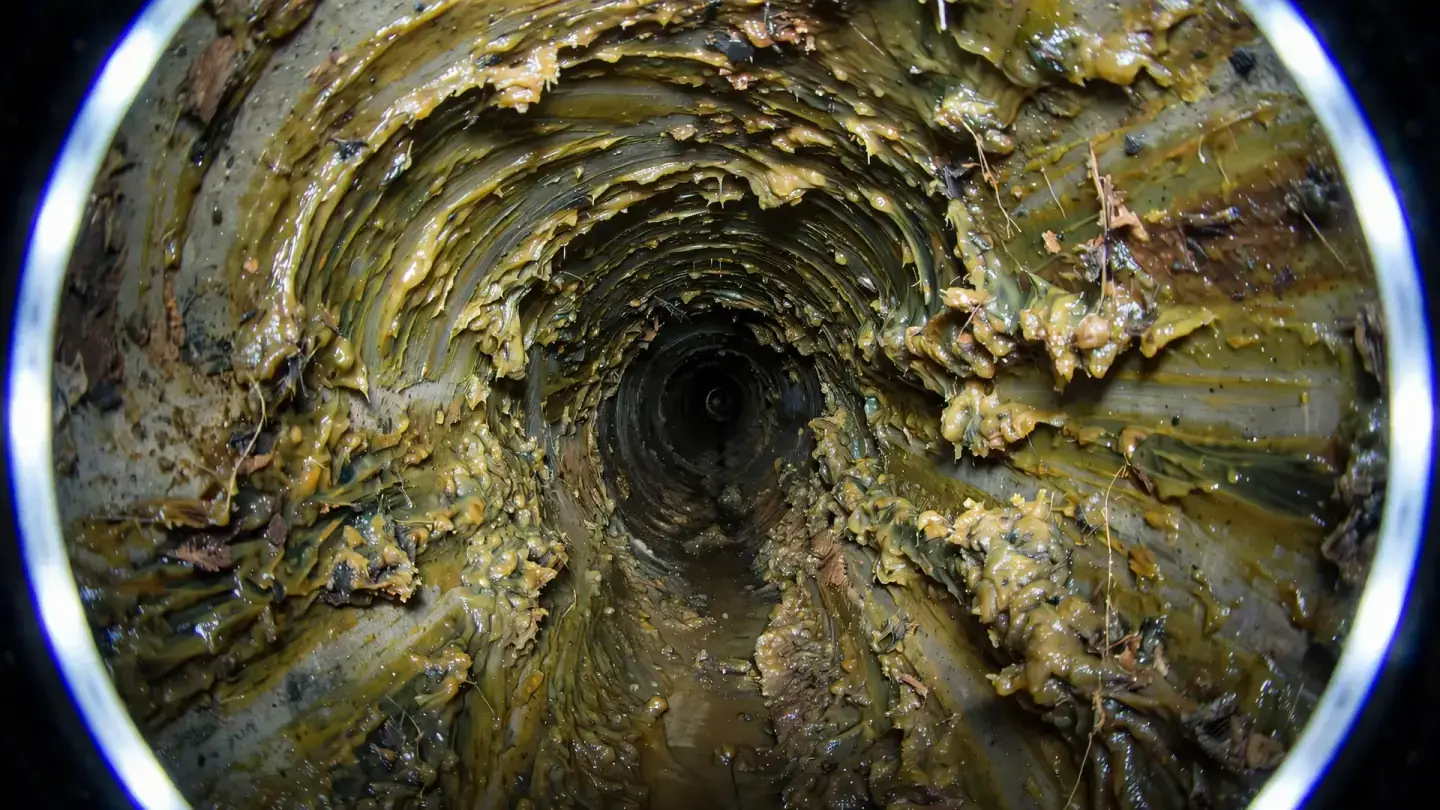
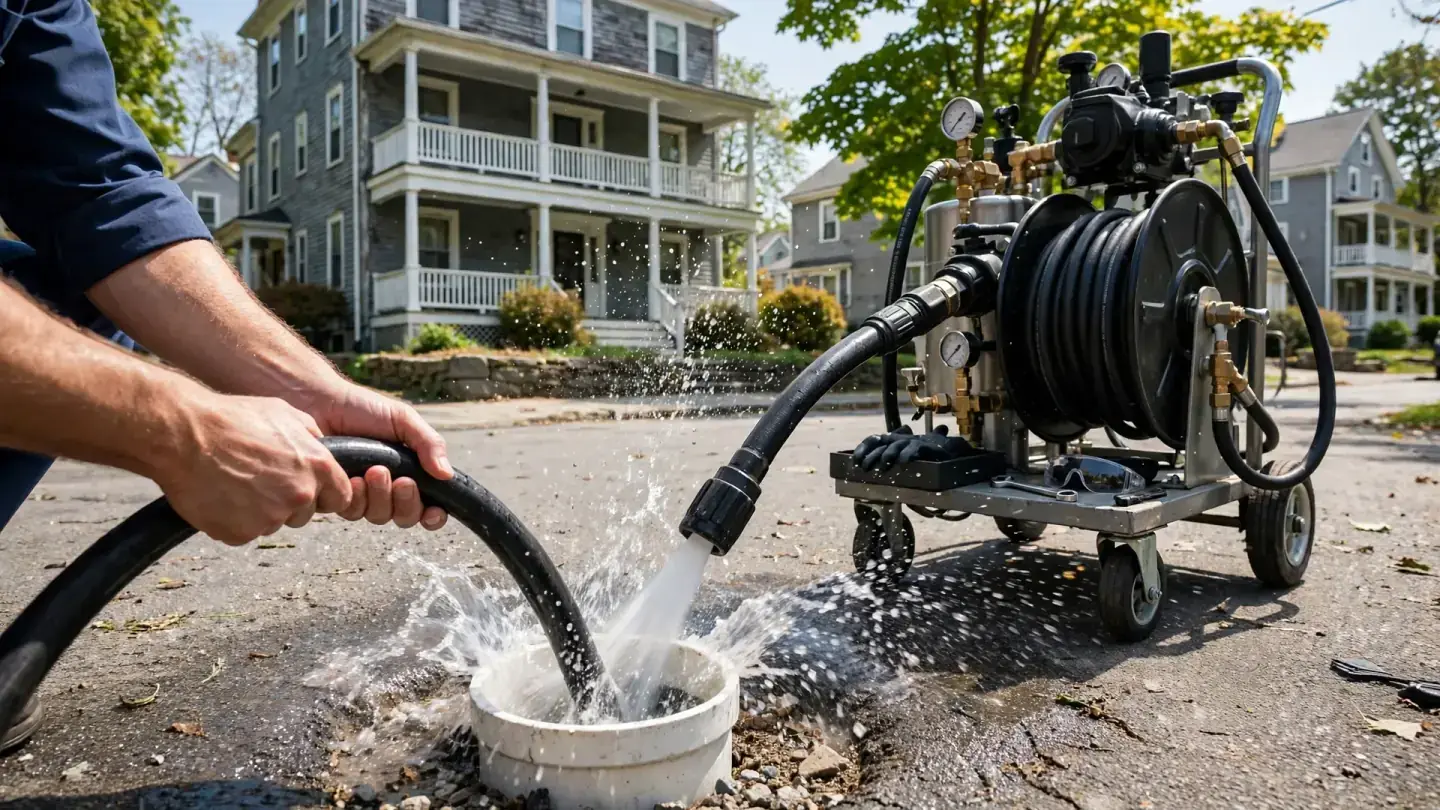
A sectional cable machine is the usual first tool for a fully stopped line, because it opens a path quickly. For grease, though, a cable only bores a hole through the middle and leaves the coating on the wall. Kitchen lines that clog again and again are usually better served by hydro jetting, which scours the pipe wall along the whole run. A camera before or after shows how much buildup there is and whether the pipe underneath is sound.
The interceptor itself is a separate task. Pumping out a large in-ground interceptor is often handled by a grease hauler, while small under-sink units may be cleaned by kitchen staff. A drain contractor deals with the pipes going into and out of it, and can tell you when the outlet side is starting to coat because the interceptor is overdue.
Early warnings
How can a restaurant tell a kitchen drain backup is coming?
These rarely appear all at once. Catching one early is the difference between a planned visit and a closed kitchen.
Floor sinks under the dish machine filling during a rush
Dish machine discharge is hot and heavy. If the floor sink holds water through the dinner peak, the branch is narrowing.
Grease odor or sewer smell in the dining room
A dry floor drain trap or a failing seal can let gas through. The sewer smell in the basement guide explains how to narrow it down.
Read moreUpstairs tenants reporting gurgling when the kitchen is busy
Shared building drains carry both. Sounds in the apartments above can point to a partial blockage downstream; see gurgling drains.
Read moreGrease cap rising in the interceptor faster than usual
A full interceptor passes grease straight on to the building drain. The guide to what not to pour down drains covers what feeds it.
Read more
Planning around service
How a scheduled grease-line cleaning at a Somerville cafe or restaurant runs
- 1
Agreeing on a window before or after service
Most kitchens prefer early mornings before prep starts, or late night after close. The contractor on the call can say what windows they work, so the line is not open during service.
- 2
Clearing the area around access points
Staff move mats, racks and stock away from floor sinks and cleanouts. In a basement kitchen or storage area, the main cleanout may be behind shelving.
- 3
Opening a stopped line if there is one
If water is standing, a cable goes in first to give the jetting water somewhere to drain.
- 4
Jetting the kitchen branch toward the interceptor
The jetter scours grease from the branch lines, working from the fixtures downstream so the material moves in the right direction.
- 5
Checking the outlet side and the building drain
A camera run or a flow test confirms the pipe beyond the interceptor is clear, since that is where grease that slips through tends to collect.
- 6
Leaving notes the manager can keep on file
A short written record of what was cleaned and what was seen helps with the next visit and is handy to show if the city asks how grease is managed.
Fixture by fixture
Somerville commercial kitchen drains and how each one is usually kept clear
Different fixtures send different loads. This is how they typically compare in a small restaurant or cafe.
| Fixture | What it sends | Usual upkeep |
|---|---|---|
| Three-compartment sink | Grease, food scraps, detergent | Scraping before washing; branch jetting on a schedule |
| Dish machine floor sink | Hot water with dissolved grease that hardens downstream | Strainer basket checks; periodic jetting of the branch |
| Cook line floor drains | Spilled oil, mop water, debris | Grates kept on; traps kept wet; cable when slow |
| Espresso and coffee stations | Grounds that settle like silt | Grounds to the trash; strainer in the drain |
| Walk-in cooler drain | Condensate, sometimes slime growth | Occasional flushing; check for a dry or clogged trap |
| Restrooms shared with apartments | Paper, wipes, ordinary household waste | Signage about wipes; cable when needed |
Staff and owners
What restaurant staff in Somerville can do, and what to hand to a contractor
Daily kitchen habits do more for a grease line than any machine. A few tasks still belong with the professionals.
- Scrape plates and pans into the trashEvery scoop of food and smear of fat that skips the sink is one less thing coating the branch or filling the interceptor.
- Keep strainer baskets in every sinkThey catch the rice, lettuce and coffee grounds that settle in pipes. Empty them into the trash, not by banging them in the sink.
- Collect fryer oil separatelyUsed cooking oil belongs in a rendering container. Pouring it into a floor drain sends a large load straight to the line.
- Log interceptor cleaningsSomerville's grease program expects food businesses to manage their devices, and a log makes it easy to show what was done [1].
- Do not use caustic drain openers on a grease lineThey can soften grease briefly, only for it to reharden further down, and they are harsh on old pipe and on staff.
- Do not open the main cleanout during serviceIf the building drain is backed up, opening the cleanout can flood the floor. Leave it to the contractor with the right setup.
Somerville specifics
Union Square, Davis Square and the city's grease rules for food businesses
Somerville's restaurants are concentrated in a few walkable districts. Union Square, the city's earliest and largest commercial area, has a long row of restaurants, bars and markets, and the Green Line station that opened there in 2022 has added foot traffic [4]. Davis Square, revived after the Red Line arrived in 1984, packs cafes and restaurants close to Tufts [5]. Many of these businesses sit on the ground floor of older buildings with apartments above.
That mixed-use layout matters. In a building like that, the kitchen and the apartments upstairs often share a building drain and a lateral to the street. A grease blockage in that shared pipe affects tenants as well as the business, and a backup into the apartments is a much harder day than a slow sink in the kitchen. Owners of these buildings are wise to treat the shared line as everyone's concern.
The city takes grease seriously. Somerville requires food preparation establishments to have grease management devices, has required annual approval since mid-2022, and allows Inspectional Services to ticket businesses that do not comply [1]. Grease that gets past the kitchen ends up in the city sewer, where it is a well-known cause of overflows and backups [3].
Clearing a stoppage is not permit work in Massachusetts, but installing or replacing an interceptor, adding a cleanout or repairing a broken drain is. That work goes to a Massachusetts-licensed plumber under a permit from Somerville's plumbing inspector [6]. A good commercial drain cleaning Somerville visit should tell you which category the next step falls into.
Clean, schedule, or repair
When does a commercial drain line need repair instead of cleaning?
For most small kitchens, cleaning on a regular interval is the right answer. A branch that coats over a few months can be jetted before it closes, and the kitchen never has to deal with a backup during service. The interval depends on menu, volume and habits; a fry-heavy kitchen will need more attention than a bakery. A preventative drain maintenance plan is a sensible way to set that up.
Cleaning stops being enough when the camera shows a broken section, a sag that collects grease, or cast iron worn thin underneath years of coating. It is also not enough when an interceptor is too small for the volume the kitchen now produces. Those situations call for repair or replacement, planned with footage so the work can be timed for a closed day.
When a line is backing up during service and cannot wait for a planned visit, go to emergency commercial drain cleaning; call to check emergency availability and describe which fixtures are affected.
Business owner questions
Questions Somerville restaurant and building owners ask about drain service
Can drain cleaning be done without closing the restaurant?
Usually, if it is planned. Early morning before prep or late night after close are common windows. A surprise backup is harder to work around, which is the main argument for scheduled cleaning. Many visits are booked before opening or after close, so the kitchen stays in service.
Does the drain contractor pump out our grease interceptor?
Some do and some do not. Large interceptors are often pumped by a grease hauler. Ask on the call. Either way, the pipes in and out of the interceptor are drain-cleaning work. Pumping is often a separate job by a grease hauler, so ask about both when you call.
How often should a restaurant kitchen line be jetted?
It depends on the menu, the volume and the habits in the kitchen. Many places settle on an interval after the first cleaning shows how fast the coating builds. A camera look helps set it. The right interval depends on volume and menu, and records from each visit help set it.
Our apartments upstairs keep getting backups. Is it the restaurant?
It can be, if the building shares a drain and grease is reaching it. It can also be a lateral problem unrelated to the kitchen. A camera run on the building drain usually answers that. Shared building drains carry both, so a camera look shows where the grease is coming from.
What does Somerville expect from us on grease?
The city requires a grease management device, annual approval for food preparation establishments, and compliance with its FOG program. The city's own FOG page has the current requirements. Read the city's fats, oils and grease rules and keep your interceptor records ready.
Can a contractor clean the floor drains in a commercial kitchen too?
Yes, kitchen floor drains and floor sinks are usually part of commercial drain work. They collect grease, food scraps and mop water and can smell or back up when ignored. Ask for them to be cleaned with the main kitchen line. The floor drain cleaning page covers how they are built.
What should a restaurant manager have ready when calling about drains?
Have the address, which fixtures are slow, when the last cleaning happened and where the cleanouts and interceptor are. Note your busiest hours so work can be planned around them. If tenants live upstairs, mention it. See preventative drain maintenance for setting up a schedule.