
Key facts: Clogged Drain Repair
- Clearing a stoppage does not need a Massachusetts plumbing permit, but cutting out and replacing pipe does, and that work goes to a licensed plumber [1].
- Fixtures, vents and the building drain form one connected drain-waste-vent system, so a clog low in the house shows up at several fixtures [2].
- Blockages in private lines, including grease and roots, can push sewage back into basements [3].
How the work is done
How a Somerville clogged drain gets diagnosed before anyone cables it
Good clog work starts with questions, not tools. The drain contractor on the call will want to know which fixtures are slow, which still run fine, whether anything rose up somewhere unexpected, and what floor you are on. Those answers usually narrow the stoppage to one of three places: the trap and short arm under a single fixture, a branch line that serves a bathroom or a kitchen, or the main building drain that every fixture in the house empties into.
Plumbing in a house is one connected tree. Each sink, tub and toilet drains through its own trap into a branch, the branches feed a vertical stack, and the stack turns at the bottom into the building drain that runs out to the street sewer, with vent pipes letting air in so water can fall freely [2]. A blockage affects everything upstream of it and nothing downstream. That simple rule is how a contractor reads your symptoms.
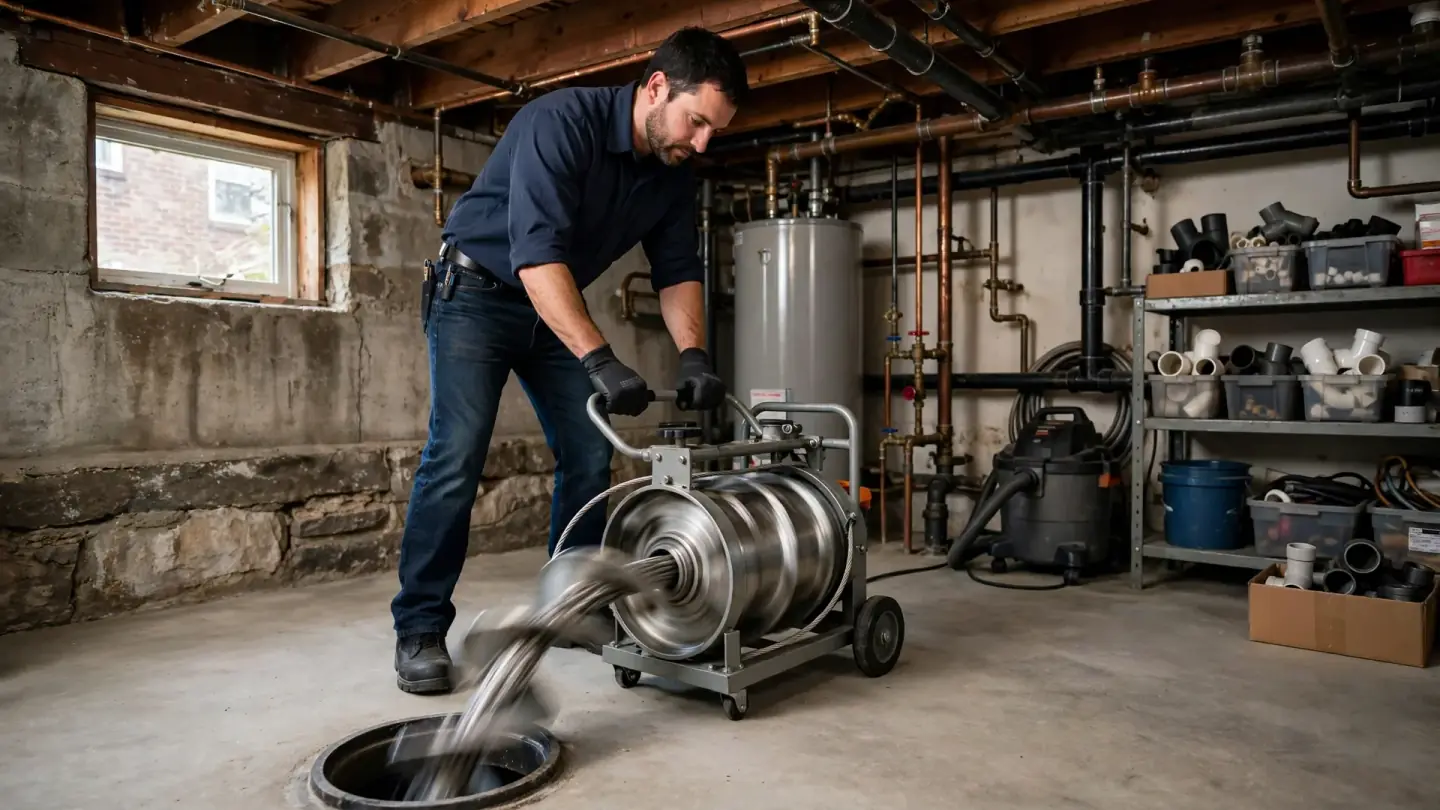
Once the location is narrowed, the tool follows. A small hand auger or a drum machine with a thin cable handles traps and branches. A larger sectional machine goes in through a basement cleanout for the main. Where the pipe is coated in grease or scale rather than plugged, jetting may come up as a follow-on. The aim on the first visit is simple: get water moving, find out what the blockage was made of, and decide whether anything further is warranted.
What you might be seeing
Is it one clogged drain or the main line?
Only one sink or tub is slow while the rest of the house drains normally
The blockage almost certainly sits in that fixture's trap or short branch. This is the most common and usually the quickest clog to clear.
Gurgling from a tub when the toilet next to it flushes
Air is being pulled through water seals because flow is restricted downstream. Read the gurgling drains guide for what the sounds point to.
Water rising in the basement floor drain when upstairs fixtures run
That points below every fixture, at the building drain or lateral. See basement floor drain backing up for the usual causes.
A neighbor upstairs or downstairs has the same slow drain
In a stacked house the shared riser may be partly blocked. The triple-decker shared stack guide explains how that plays out.
A sour or rotten-egg odor near a drain that also runs slowly
A dried trap or decaying buildup can release sewer gas. The sewer smell in the basement guide covers what to check first.
The visit, start to finish
Clearing a household clog in Somerville, step by step
The order below is typical. Your contractor may skip steps if the cause is obvious.
- 1
Map which fixtures are affected on each floor
Run water at a few fixtures on different levels. If only one is slow, the work stays local. If the lowest fixtures are worst, attention moves down to the building drain.
- 2
Pick the access point closest to the blockage
That might be the sink tailpiece, a tub overflow, a toilet, a roof vent, or the basement cleanout. Going in close keeps the cable short and reduces strain on old fittings.
- 3
Run a cable sized for the pipe
A plumber's snake rotates a coiled steel cable with a cutting or grabbing head until it bores through or snags the obstruction. Thin cable goes in small lines; heavier sections go in the main.
- 4
Pull back debris and look at it
What comes back on the head tells the story: hair, soap, grease, wipes, roots or rust flakes. Each points to a different next step.
- 5
Flush and test every affected fixture
Water is run hard for several minutes. A drain that clears and then slows again means a partial restriction remains further along.
- 6
Talk through camera or jetting only if the evidence calls for it
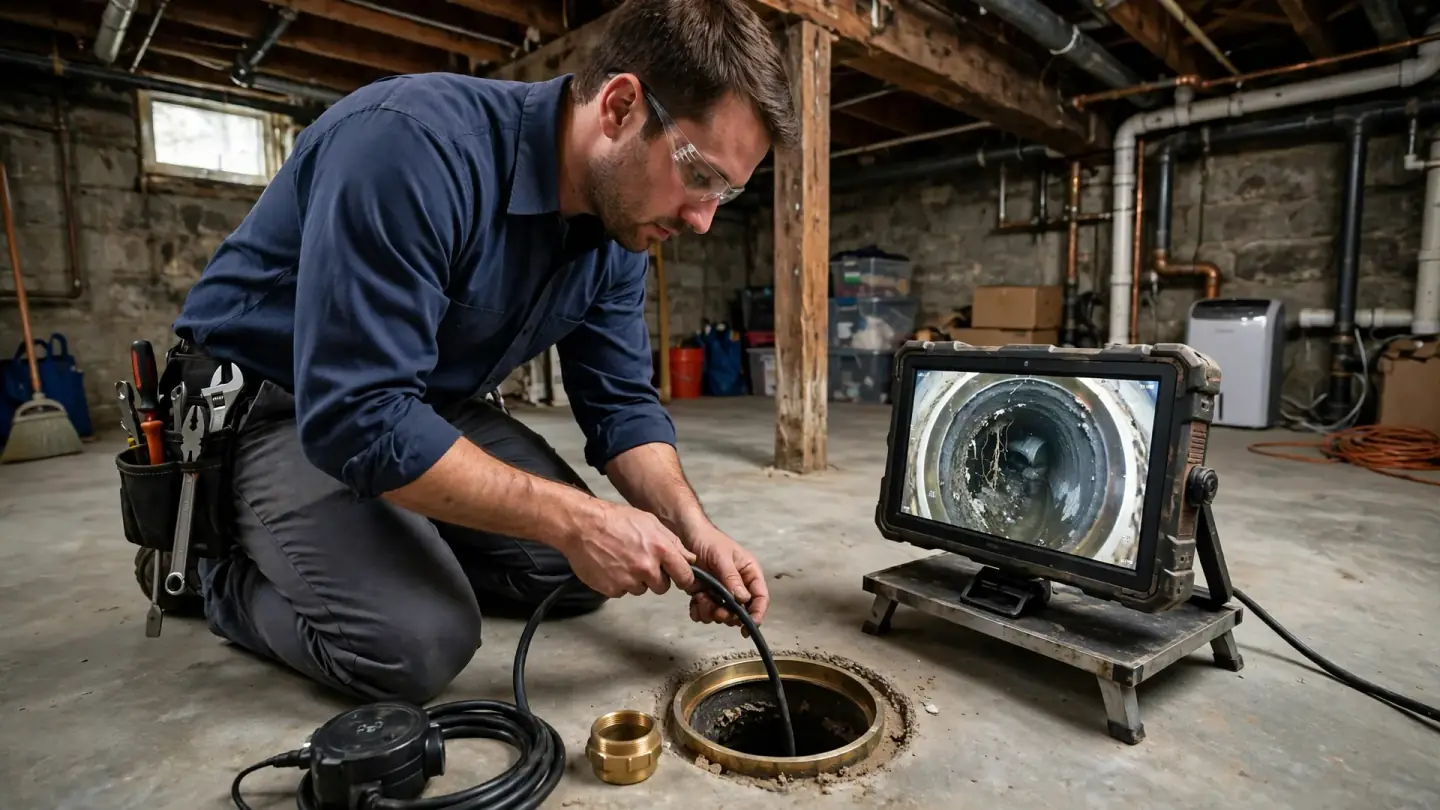
Roots, repeated main-line backups or heavy scale are reasons to look inside with a camera before anything else is done.
Where the clog is, and what clears it
Somerville clog locations matched to likely causes and tools
| Where the stoppage sits | What it is usually made of | Tool commonly used | Who notices first |
|---|---|---|---|
| Fixture trap | Hair, soap, food scraps, small objects | Hand auger or removing the trap | Whoever uses that sink or tub |
| Branch line in a wall or floor | Grease, soap film, sludge | Drum machine with small cable | Two fixtures in the same room |
| Shared vertical stack | Grease and debris from several units, scale on old iron | Cable through a cleanout or roof vent | Lower units in a stacked house |
| Building drain under the basement | Wipes, paper, grease, scale | Sectional machine through the main cleanout | Basement drain and first-floor fixtures |
| Lateral to the street | Roots at clay joints, sags, breaks | Heavy cable, then camera | Every fixture in the building |
Before you call
What can I try on a clogged drain before calling?
- Use a cup plunger on a sink, a flange plunger on a toiletBlock the overflow hole with a wet rag so pressure goes down the drain rather than out the top. A dozen firm strokes is plenty.
- Pull the stopper or strainer and clean itMany bathroom clogs are a hair mat sitting right under the stopper, within reach of a gloved hand.
- Clean a removable trap over a bucketPlastic slip-joint traps come apart by hand. Old brass or iron traps that will not budge are better left alone.
- Skip the bottle of chemical drain cleanerCaustic and acid products generate heat and can harm old pipe and joints, and they make the job hazardous for whoever opens the line next.
- Stop if water appears somewhere other than the fixture you are working onThat means the blockage is below a junction. Plunging harder only pushes water into the next fixture or a neighbor's unit.
- Stop and stop using water if the basement floor drain backs upTell everyone in the building to hold off on showers, laundry and dishwashers until the main is cleared.
Somerville specifics
Why Somerville's packed housing changes how a clog behaves
Somerville is the most densely settled municipality in New England, a city of homes that filled up in building booms that ran through the 1940s [4]. A great many of those homes are two-families and triple-deckers, stacked flats with one kitchen above another and one bathroom above another. That layout is efficient, and it means drains are shared in a way they are not in a single-family house. A clog in the stack below the second floor can push the third floor's dishwater into the first-floor sink.
Houses of this era commonly have cast-iron stacks and building drains, often with later sections of copper, galvanized steel or plastic spliced in. Cast iron is strong and quiet, but over many decades its inside wall roughens with rust and scale, which narrows the bore and gives grease and paper something to cling to [5]. A clog in an old iron line is often a narrowing that finally closed, rather than a single object.
Out at the street, most of the city is on a combined sewer that carries both wastewater and stormwater [6]. During heavy rain the public system runs full, so a building drain that is already partly restricted may show trouble during a storm that it hides on a dry day. If your basement drain misbehaves only in downpours, mention that on the call. The pattern helps separate a private clog from a public-side issue, and if you suspect the city sewer, report it through 311.
Clearing versus fixing
When clearing the clog is enough and when pipe repair is the honest answer
Most clogs are exactly that: a plug of material in a sound pipe. Once it is out, the drain works and nothing else is needed beyond better habits. That is the usual outcome for single-fixture clogs, and for many main-line clogs caused by wipes or a grease slug.
Repair enters the picture when the same line clogs again and again, when the cable comes back with roots or chunks of pipe, or when the contractor feels the cable drop into a void. Those are signs of a broken, sagging or badly corroded section. A camera look settles it; see drain camera inspection for how that is done. Snaking and jetting a stoppage do not need a permit in Massachusetts, but replacing pipe, adding a cleanout or fitting a backwater valve is plumbing work that needs a permit and a licensed plumber [1].
If the trouble is clearly out in the lateral, the next read is main sewer line cleaning. If every fixture has stopped and water is rising tonight, the emergency clogged drain service page explains how to ask whether help can reach you. For this page, clogged drain repair Somerville homeowners call about usually ends with a clear pipe and an explanation, not a demolition.
FAQ
Questions people ask about clogged drain repair in Somerville
How do I know if my clog is in the main line rather than one sink?
Check the lowest fixtures. If the basement floor drain, a first-floor toilet or a tub is backing up while you run water elsewhere, the stoppage sits below them in the building drain. A single slow sink with everything else fine is almost always local. Running water in a second fixture on a lower floor is a simple test before you call.
My upstairs neighbor's water comes up in my sink. Whose clog is it?
In a stacked house that usually means the shared stack is restricted somewhere below your sink's connection. It affects the building, not one unit, so it helps if owner and tenants talk it through together before the contractor arrives. In shared buildings the owner usually arranges the work, so report it to them promptly.
Is it fine to use a chemical drain opener first?
It is better not to. Strong cleaners can damage old joints and sit in the line as a hazard if they do not work. A plunger and cleaning the stopper solve many sink clogs without the risk. Chemicals also make the job hazardous for the contractor if the drain still has to be opened, so tell them what you used.
Does clearing a clog need a permit in Somerville?
No. Massachusetts plumbing rules exempt clearing a stoppage from the permit requirement. If the contractor finds broken pipe that needs replacing, that repair is permit work for a licensed plumber. A permit applies only if pipe has to be cut out and replaced by a licensed plumber.
Why does the drain clog again a few weeks after it was snaked?
Usually because something in the pipe keeps catching debris: scale on old cast iron, a sag, a root intrusion or a grease coating. A camera look or a jetting pass tends to explain repeat clogs. A camera inspection can show whether a sag, scale or roots are the reason.
What is the difference between drain cleaning and clogged drain repair?
Drain cleaning removes what is blocking or lining the pipe; repair fixes the pipe itself. Most calls only need cleaning. Repair comes in when a camera shows a crack, a collapsed section or a bad joint that keeps catching debris, and that work needs a licensed plumber and a permit. The services hub explains each option.
Can a plunger fix a clogged sink or will it make it worse?
A cup plunger often clears a simple sink clog and rarely causes harm if used gently. Block the overflow and any second basin first so the pressure goes down the drain. Stop if water rises elsewhere in the house, because the stoppage is probably in shared pipe, and see the gurgling drains guide.