Key facts: Signs of a clogged main sewer line
- Grease, roots and debris blocking sewer lines are common causes of sewage backing into basements [1].
- Clay sewer pipe was widely used for older laterals, and its joints can admit roots [2].
- Cast iron drain pipe corrodes and builds scale inside over time, narrowing the flow path [3].
- Somerville residents report suspected public sewer problems to the Water and Sewer Department through 311 [4].
Short answer
What are the first warning signs of a main sewer line clog?
Think of the house as a tree turned upside down. Every sink, tub, toilet and washer is a twig, the stacks are branches, and the main building drain in the basement is the trunk that carries everything out to the lateral and the street. A clog in a twig affects one fixture. A clog in the trunk affects everything above it, and it shows up first at the lowest openings.
So the early signs are patterns, not single events: two or more drains slowing in the same week, toilets that gurgle or bubble when a tub or washer empties, a faint sewer smell near the basement floor drain, or water that briefly rises in that drain when an upstairs toilet is flushed. Any one of those, repeated, is worth a call before the line closes completely.
Pattern check
Main line clog symptoms compared with a single-fixture clog
| What you see | Likely cause | What to do |
|---|---|---|
| One bathroom sink is slow, everything else is fine | Hair in that sink's trap | Clear the sink, not the main |
| Toilet bubbles when the tub or washer drains | Main drain restricted below both lines | Cut water use and book main line clearing |
| Floor drain rises when an upstairs toilet flushes | Building drain or lateral blocked downstream | Stop using water and treat it as urgent |
| Every unit's drains slow over a few weeks | Roots, grease or scale building in the main | Arrange cleaning and a camera look |
| Water seeps from the cleanout cap | Line full and under pressure behind the clog | Keep clear of the cap and call for help |
Safe checks
Household tests that point to the main line rather than a branch
- Run the highest sink and watch the lowest drainHave someone run a top-floor sink for a minute while you watch the basement floor drain from the stairs. Rising water there points to the main.
- Flush a toilet and listen to the tubBubbling or gurgling in a nearby tub or shower drain suggests air and water being pushed back by a blockage downstream.
- Check whether it rainedBackups that appear only in heavy rain can come from the city's combined sewer; the heavy rain guide covers that case.
- Look at the cleanout without opening itDamp around the cap or a sewage smell there is a strong sign. Finding it first is covered in the sewer cleanout guide.
- Ask the other householdsIn a two- or three-family house, slow drains in every unit settle the question quickly.
The cleanout test
What the sewer cleanout tells a contractor about a main line clog
The cleanout is a capped opening into the building drain, usually in the basement near where the pipe leaves through the foundation. A contractor uses it as a window. If the pipe behind the cap is full of standing water, the clog is between the cleanout and the street. If the cleanout is dry while basement fixtures back up, the clog is upstream, inside the house.
That is why you should not open the cap yourself during a backup. A full line is under pressure, and loosening the cap can release sewage onto the floor in seconds. Leave it to someone with buckets, a wet vacuum and the machine ready to go.
Cause
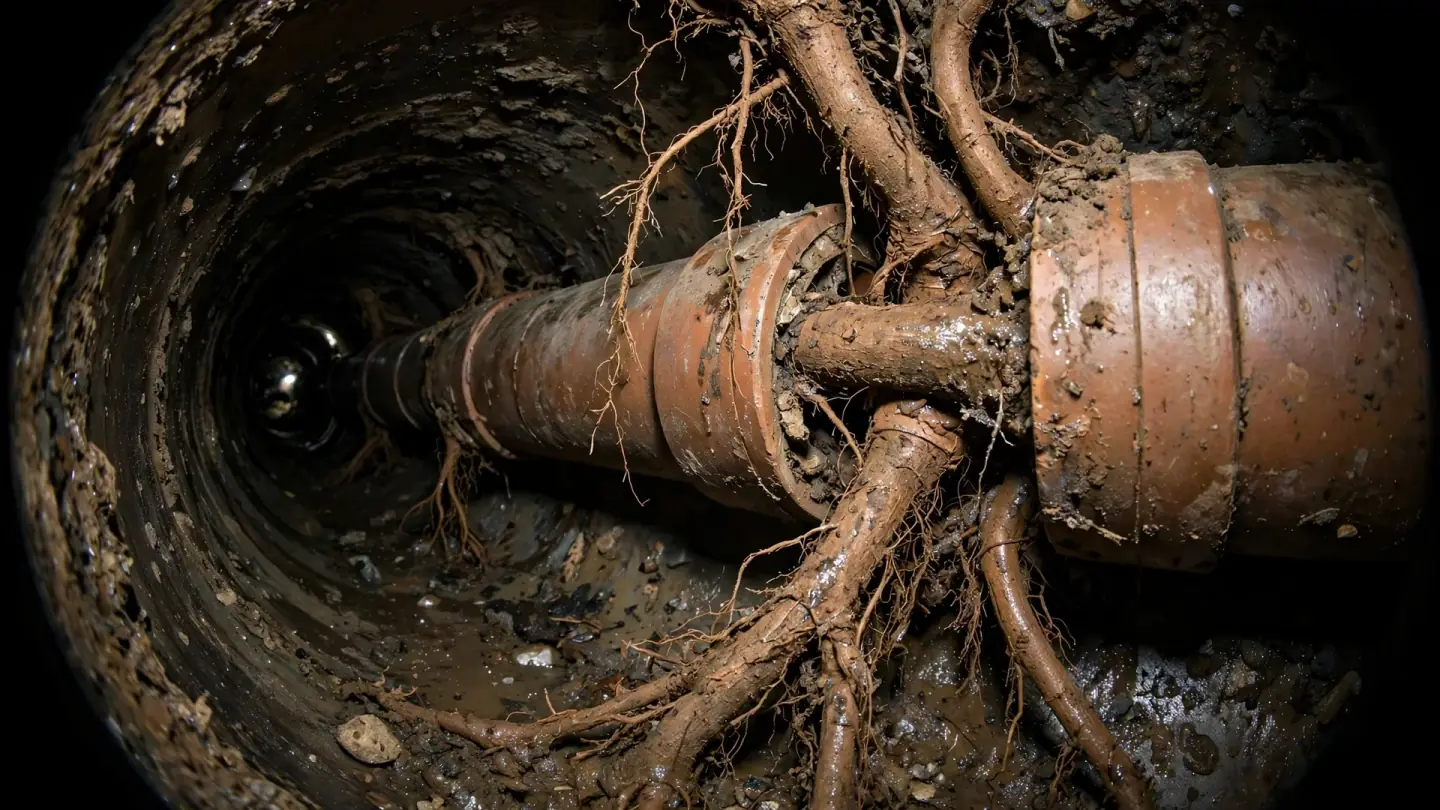
Tree roots working into clay laterals under Somerville yards
Many older laterals are vitrified clay, laid in short sections with joints that can admit fine roots seeking water [2]. The roots spread into a mat that catches toilet paper and grease. Clogs from roots tend to return on a rhythm, often worse in the growing season. The tree roots guide goes deeper on this.
Cause
Scale and grease narrowing an old cast-iron building drain
Cast iron rusts and scales inside as it ages [3]. The rough surface grabs grease from kitchens upstairs and paper from bathrooms, and the opening slowly shrinks until a busy morning closes it. In houses where three kitchens drain to one building drain, grease is a frequent partner in these clogs [1]. See cast iron drain pipe problems for how that ageing shows up.
Diagnosis
How a professional confirms and clears a clogged main drain
- 1
Asking which fixtures misbehave and when
The pattern of symptoms often places the clog before any tool comes out.
- 2
Opening the cleanout under control
Standing water or a dry pipe tells them which side of the cleanout the blockage is on.
- 3
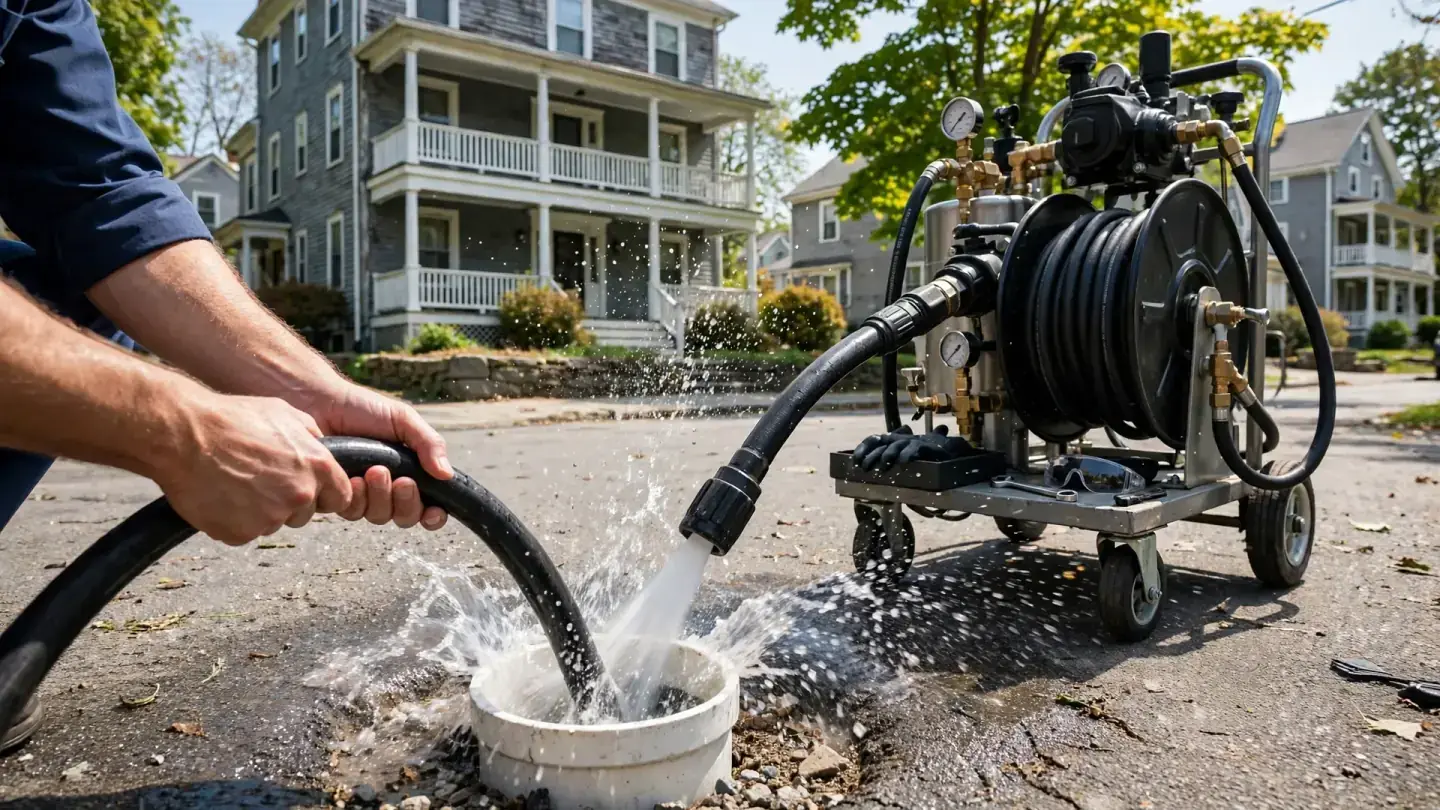
Running a sectional or drum machine
A cable with a cutting head breaks through roots, paper or grease toward the street.
- 4
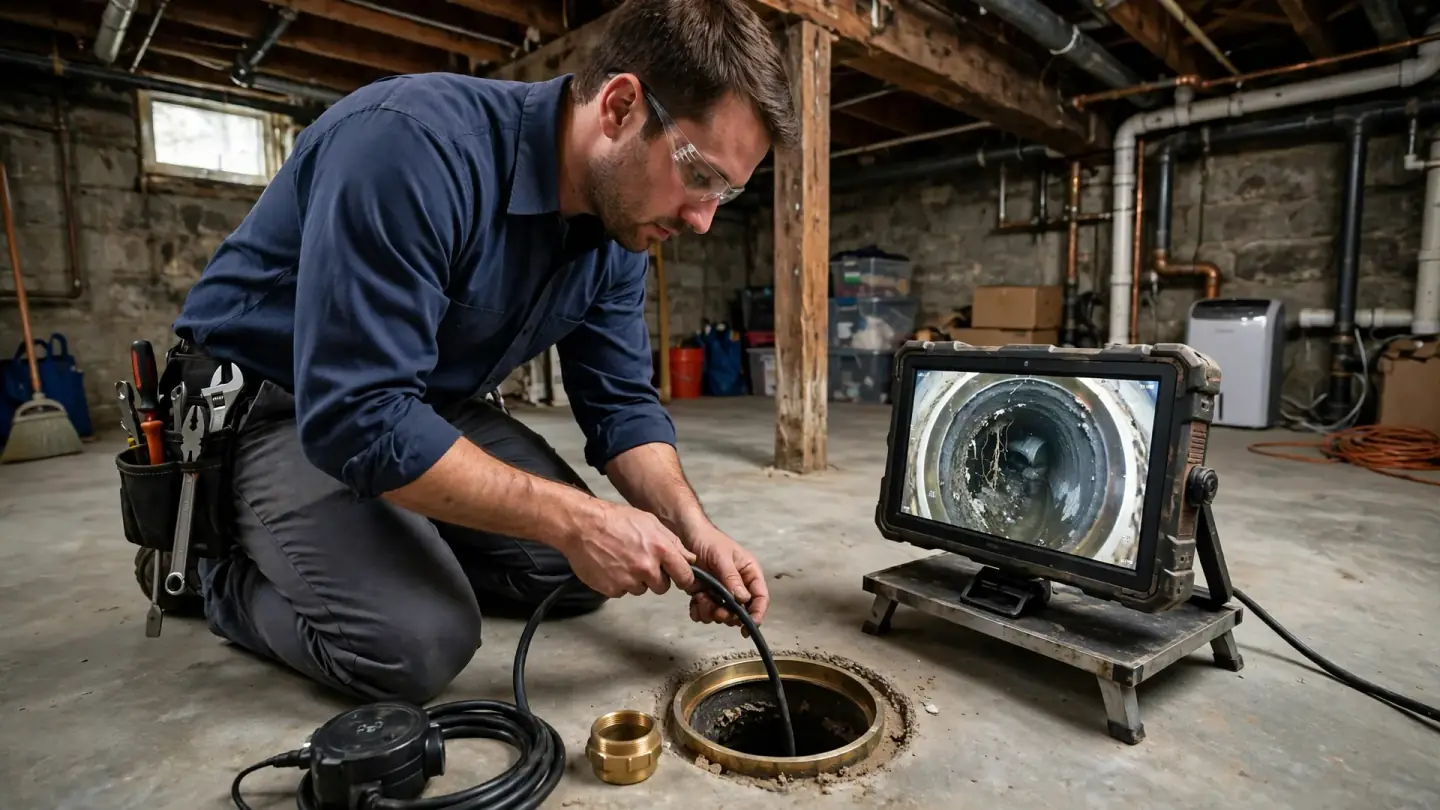
Following with a camera when clogs repeat
A sewer line inspection shows breaks, sags or root entry points that cleaning alone will not fix.
Prevention
Keeping a Somerville building drain from closing up again
- Schedule cleaning for lines with rootsLines with known root entry often do well on a set main sewer line cleaning interval.
- Keep fats and wipes out of every unitOne building drain serves every household, so habits upstairs matter downstairs.
- Keep the cleanout reachableShelving or a finished wall over the cleanout slows down every future visit.
- Ask about a camera after the second clogTwo main line clogs in a short span usually mean something structural is feeding them.
Main line questions
Spoken questions about spotting a clogged main sewer line
Why do all my drains seem slow at the same time?
When every drain slows together, the restriction is almost always in the shared building drain or lateral that they all empty into. A single clogged fixture cannot slow drains it is not connected to.
Why does water come up in the basement floor drain when someone upstairs flushes?
The flush has nowhere to go past a blockage further down, so it rises at the lowest opening, which is usually the floor drain. Stop using water and get the main line cleared.
Can a clogged main line make the house smell like sewage?
Yes, a backed-up main can push sewer gas past trap seals and out of the cleanout or floor drain. A persistent smell near the lowest drain alongside slow fixtures is a common warning sign.
Is a toilet bubbling by itself a sign of a main line problem?
It can be, especially if it happens when a nearby tub, sink or washer drains. That bubbling is air being forced back up through the toilet because water cannot get past a blockage.
Should I call the city or a drain contractor for a clogged main?
If neighbors have backups too or it is raining hard, report it to 311 as well. If only your building is affected, the blockage is likely in private pipe, which a drain contractor clears.
How long can I wait once I notice main sewer line warning signs?
Not long; a partly blocked main tends to close fully at the busiest moment. Book a clearing soon, cut back on laundry and long showers, and treat any rising floor drain water as urgent.