
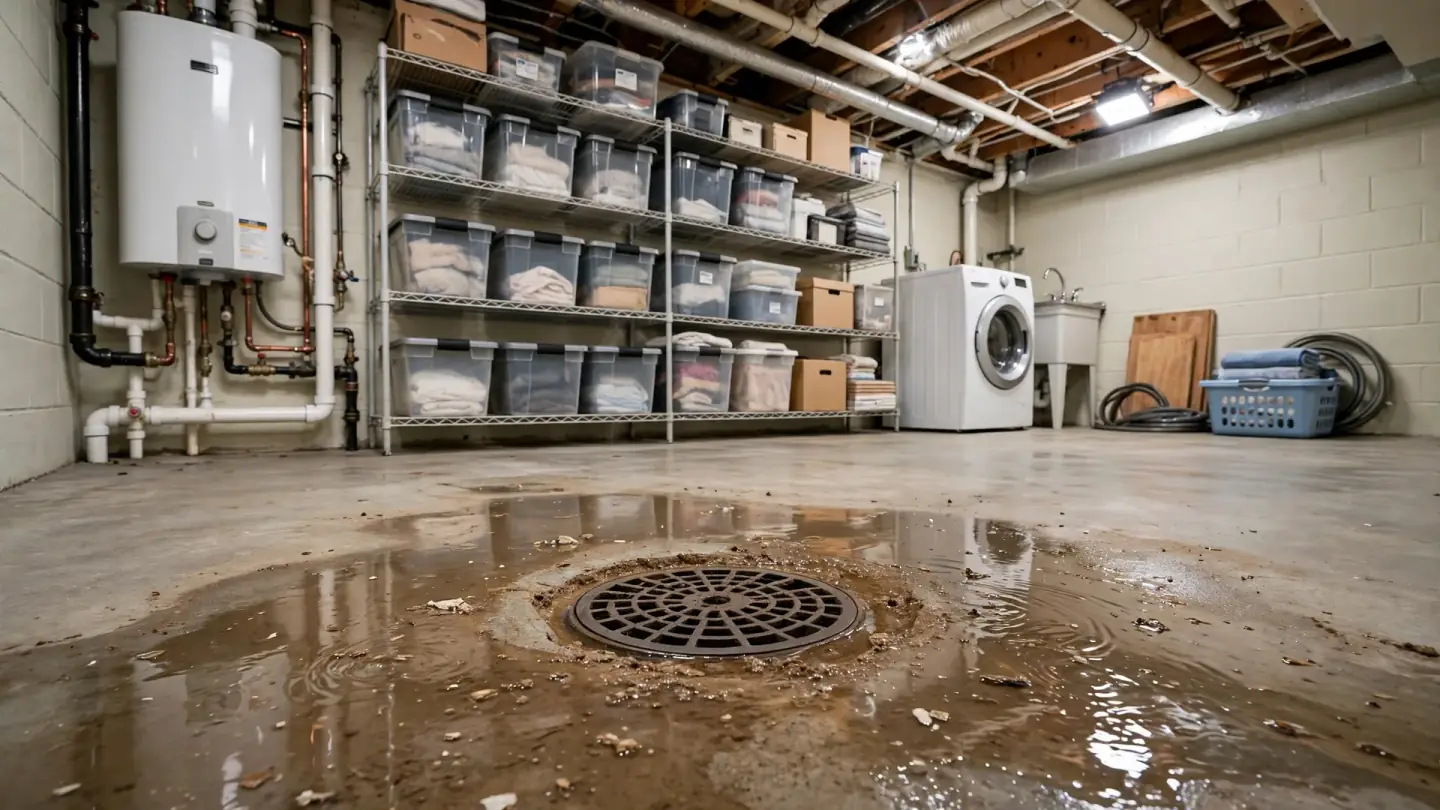
Key facts: Basement floor drain backing up
- Most of Somerville drains into a combined sewer, which carries wastewater and stormwater in the same pipes [1].
- During heavy rain, combined sewers can fill beyond what they were built to carry and overflow [2].
- Basement backups can also come from blockages such as grease or roots in the sewer line [3].
- Clearing a stoppage does not need a Massachusetts plumbing permit, but replacing pipe or adding a backwater valve does [5].
Short answer
Why does my basement floor drain back up first?
Water comes up through a basement floor drain for one of two broad reasons. Either the building's own drain or lateral is blocked between the cellar and the street, or the public sewer outside is overloaded and pushing water back toward the house. Every sink, tub and toilet upstairs drains down through the same building drain, and the cellar floor drain sits lowest, so it overflows first.
Timing is the quickest clue. If the drain backed up on a dry day right after laundry or a run of showers, the blockage is almost always on the private side and a drain contractor can clear it with a cable or a jetter through main sewer line cleaning. If it happened during a downpour and neighbors on the block saw the same thing, storm surcharge in the combined sewer may be the cause [1][2], and the city's Water and Sewer Department wants to hear about it through 311 [4].
Reading the signs
Floor drain clues in a Somerville basement and what each points to
| What you see | Likely cause | What to do |
|---|---|---|
| Gray water pools at the drain after the washer pumps out | Partial blockage in the building drain or lateral | Pause laundry and arrange a cable or jetting clear-out |
| Toilet paper and solids appear at the grate on a dry day | Main line blocked toward the street | Stop all water use and call for sewer line clearing |
| Water rises only during a heavy storm, then drains away | Surcharge in the combined sewer | Stay out of the water, report it to 311, ask about backflow protection |
| Clear water seeps up slowly after snowmelt | Groundwater or a tied-in foundation drain | Ask for a camera look at what connects to that drain |
| Drain stays wet and smells but never overflows | Slow line or a dried trap nearby | Refill traps and ask about a camera inspection |
Safe checks
Checks you can make at the cellar drain without opening any pipe
- Note the weather and the timeWrite down whether it was raining hard and when the water appeared. That single detail separates storm surcharge from a private blockage more often than anything else.
- Watch a fixture upstairsHave someone run a bathroom sink on the first floor for ten seconds while you watch the floor drain. If the water level at the grate rises, the obstruction is below that sink, on the main.
- Ask the neighborsIn a two-family or a row of triple-deckers, ask whether other cellars on the street had water. A shared problem points toward the public sewer.
- Keep your hands out of itDo not reach into the drain or push a garden hose down it. Wastewater carries germs, and forcing water into a blocked line only adds to the overflow.
- Leave the cleanout cap aloneA cleanout under pressure can release a rush of sewage when opened. That is a job for the contractor with the right gear and a plan for where the water goes.
Cause one
A blocked lateral under a Somerville two-family
In many older Somerville homes the building drain runs across the cellar in cast iron and leaves through the front foundation wall, joining a clay or cast-iron lateral that heads out under the yard and sidewalk to the street sewer. Over decades, cast iron builds up internal scale, clay joints can admit roots, and kitchen grease cools and hardens along the bottom of the pipe. Any of those narrows the opening until a big surge of water, like a washing machine draining, cannot get past.
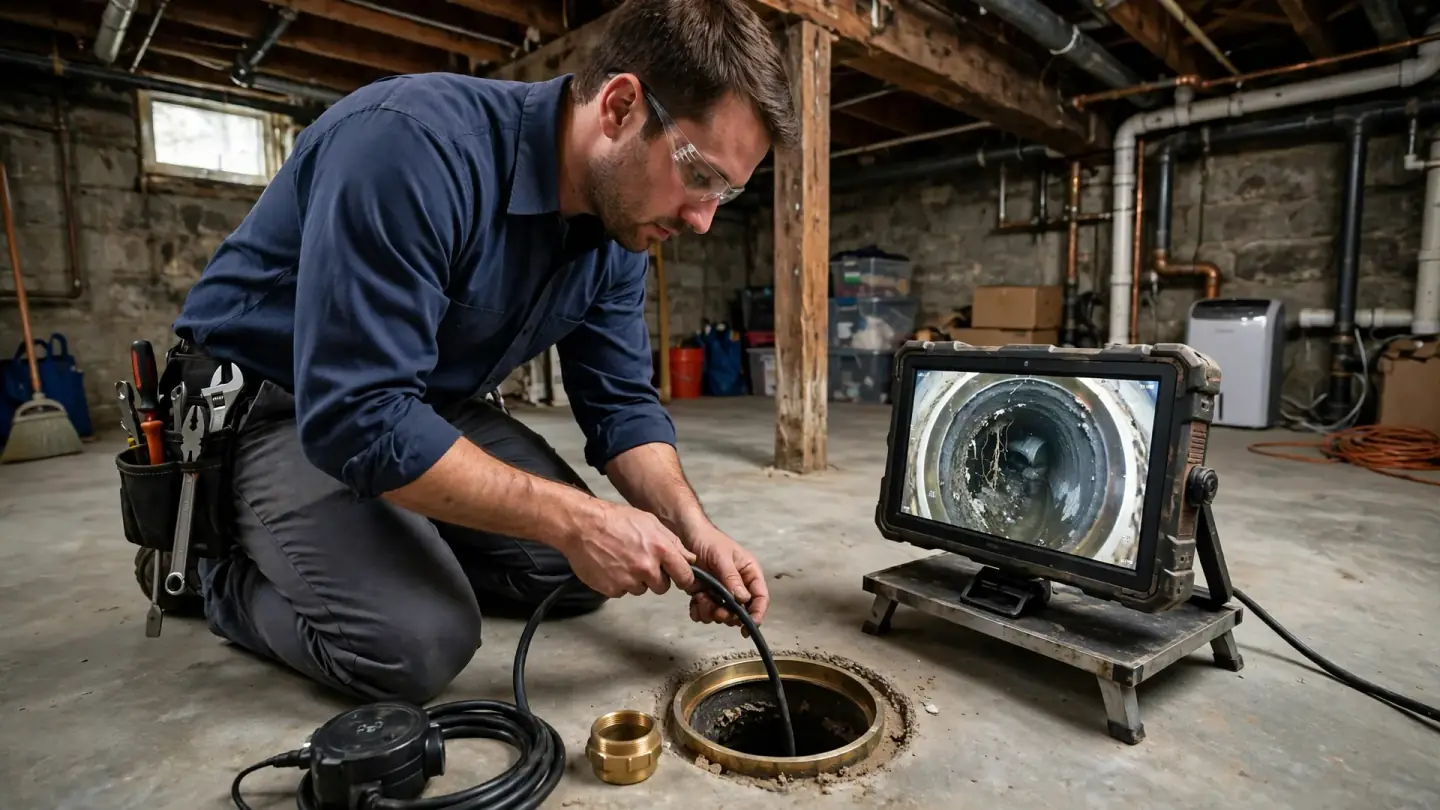
The pattern is consistent: the problem shows up after heavy use, on any kind of day, and gets worse each time. A drain contractor usually opens the main cleanout, runs a cable to break through, and then often recommends a drain camera inspection to see whether the cause was grease, roots, a belly in the pipe or broken clay.
Cause two
Storm surcharge from Somerville's combined sewer pushing back
Somerville's sewers were largely laid between the late 1800s and the early 1900s as a combined system, meaning rainwater from streets and roofs travels in the same pipes as household wastewater [1]. On most days that flow heads to the MWRA's Deer Island plant. In a heavy storm the pipes can run full, and when they do, combined systems are designed to overflow at permitted outfalls rather than back into homes [2]. Even so, a fully loaded street sewer can raise the water level in a low cellar drain.
The city's long-term plan includes a storage tank in Assembly Square and sewer separation work in Ten Hills and Winter Hill, aimed at removing overflows in a typical year by 2050 [1]. Until then, a backup that appears only in big storms is worth reporting through 311, because the Water and Sewer Department responds to backups and maintains the city's sewers and catch basins [4].
Cause three
Groundwater and old tie-ins at the floor drain
Some cellar drains were connected decades ago to foundation drains, a sump or even a downspout line. When the ground is saturated in spring, clear water can rise through the grate without any blockage at all. That is a different problem from sewage, and it usually calls for tracing what is tied into the drain rather than repeated cleaning. A camera run from the floor drain often shows where each branch comes from.
Diagnosis
How the drain contractor on the call works out a cellar backup
- 1
Questions before anyone arrives
Expect to be asked about the weather, which fixtures were running, whether solids came up, and whether this has happened before on that line.
- 2
Finding the main cleanout
The contractor locates the cleanout on the building drain, typically near the front wall, and opens it carefully to see whether water is standing in the main.
- 3
Clearing with a cable or jetter
A sectional machine or a hydro jetting rig is run toward the street until flow returns, and what comes back on the cutter gives the first hint of the cause.
- 4
Camera confirmation
A camera pushed through the line shows roots, grease, scale or broken pipe and roughly where they sit, so any repair conversation is based on what was seen.
- 5
Checking the floor drain branch itself
If the main is clear but the floor drain still misbehaves, the branch and its trap are cleaned separately through floor drain cleaning.
Cleaning or repair
Is clearing the cellar line enough, or do I need a repair?
A first grease or scale blockage is usually a cleaning job. Clearing a stoppage is not permit work in Massachusetts [5], so a contractor can cable or jet the line the day you reach them, if they have availability. If the camera shows collapsed clay, an offset joint or a long belly holding water, cleaning only buys time.
Repairs that cut out and replace pipe, add a new cleanout or install a backwater valve are plumbing work. Under 248 CMR 3.05 that work needs a permit issued to a Massachusetts-licensed plumber through Somerville's Inspectional Services [5]. A backwater valve, a type of backflow device, lets wastewater leave but closes when the sewer pushes back [6], which makes it worth discussing in a cellar that floods during storms.
Prevention
Keeping a Somerville cellar drain flowing between storms
- Scrape pans into the trash so kitchen grease never reaches the line that runs past the floor drain.
- Keep wipes, even ones labeled flushable, out of every toilet in the building, including the upstairs units.
- Pour a bucket of water into a rarely used floor drain every month so the trap seal stays full.
- Keep boxes and stored items off the floor near the drain, so a minor backup does not ruin belongings.
- If storms are the trigger, ask about a backwater valve and keep the cellar clear before forecast downpours.
- Consider preventative drain maintenance if the line has needed clearing more than once.
On the call
What to tell the contractor about your backed-up cellar drain
- Whether it was raining hard when the water appeared, and whether neighbors had the same problem.
- What came up: clear water, gray water, or sewage with solids.
- How many units share the building drain, for example a three-unit triple-decker.
- Where the main cleanout is, if you know, and whether the cellar is finished.
- Whether the line has been cleared before and what was found.
- Whether water is still rising right now, so they can tell you if anyone can get to you tonight.
FAQ
Questions people ask about a basement floor drain backing up
Is a basement floor drain backing up always a sewer problem?
Not always; it can be your own blocked lateral, city sewer surcharge in heavy rain, or groundwater. A drain that rises when you run water on a dry day points to your own line. One that only backs up during storms, with neighbors affected too, points to the public sewer. Clear water after rain may be groundwater. Knowing which helps decide between main sewer line cleaning and reporting to 311.
Is a cellar floor drain backup the city's job or a private contractor's?
It depends where the blockage is: the city looks after the public sewer main, and the owner is usually responsible for the building drain and lateral. If neighbors also have backups or a street manhole is overflowing, call 311. If only your building is affected, a private contractor clears your line. Somerville's water and sewer department can confirm responsibility for your address.
Can I pour a chemical cleaner into the floor drain?
It is not recommended, because chemical cleaners rarely reach a main-line blockage and can harm old pipe and anyone who opens the drain. They also leave caustic water standing on the floor. If water is coming up, stop using fixtures instead and call a contractor. If a cleaner has already gone down, tell them so they can protect themselves. See floor drain cleaning for the usual approach.
Does clearing my cellar drain need a permit in Massachusetts?
No, clearing a stoppage is exempt from Massachusetts plumbing permits. Permits are needed when pipe is repaired or replaced, a cleanout is added or a backwater valve is installed, and that work must be done by a licensed plumber. If the contractor finds a broken section, they will explain the next steps. A drain camera inspection can show whether repair work is likely.
Why does the floor drain back up when the upstairs tenant does laundry?
A washing machine sends a lot of water down at once, and if the line below the floor drain is partly blocked, that surge rises out of the lowest opening. The floor drain is usually lower than any other fixture in the building. It is a strong sign that the building drain or lateral needs clearing. The triple-decker shared stack guide explains shared lines.
Will a backwater valve stop storm backups for good?
It can greatly reduce them, but no device stops every backup, and the valve needs regular checking. It closes when water tries to flow back from the sewer, protecting fixtures below street level. It must be correctly sized and placed, and fitting one requires a permit and a licensed plumber. It does nothing for a blockage in your own pipe, so the line still needs keeping clear.
Why does my basement drain smell after it backed up?
Leftover sewage, a dried-out trap or debris left in the drain usually cause the smell after a backup. Clean and disinfect the area, then pour water into the floor drain to refill the trap. If the smell persists, a cracked pipe or loose cleanout plug may be letting gas through. The sewer smell in the basement guide walks through the causes. More guides are on the guides page.