Key facts: Preventative Drain Maintenance
- Many stacked three-flat houses in New England went up between about the 1870s and 1930s, often with one kitchen above another [1].
- In a drain-waste-vent system, fixtures on each floor feed vertical stacks that join a building drain, so one blockage can affect several units [2].
- Clay sewer pipe is laid in short sections, and roots can enter at the joints between them [3].
- Clearing a stoppage is exempt from a Massachusetts plumbing permit, while repairing or replacing pipe requires one [4].
What a plan actually is
How scheduled drain upkeep works in a Somerville multi-family building
A drain maintenance plan is not a product. It is an agreement about which lines get looked at, how often, and what gets done when they are. For a typical stacked building that means the shared kitchen stack, the shared bathroom stack, the building drain in the basement and the lateral running out to the street. Individual sink and tub branches are usually left until a tenant reports trouble, because they are easy to reach and quick to clear.
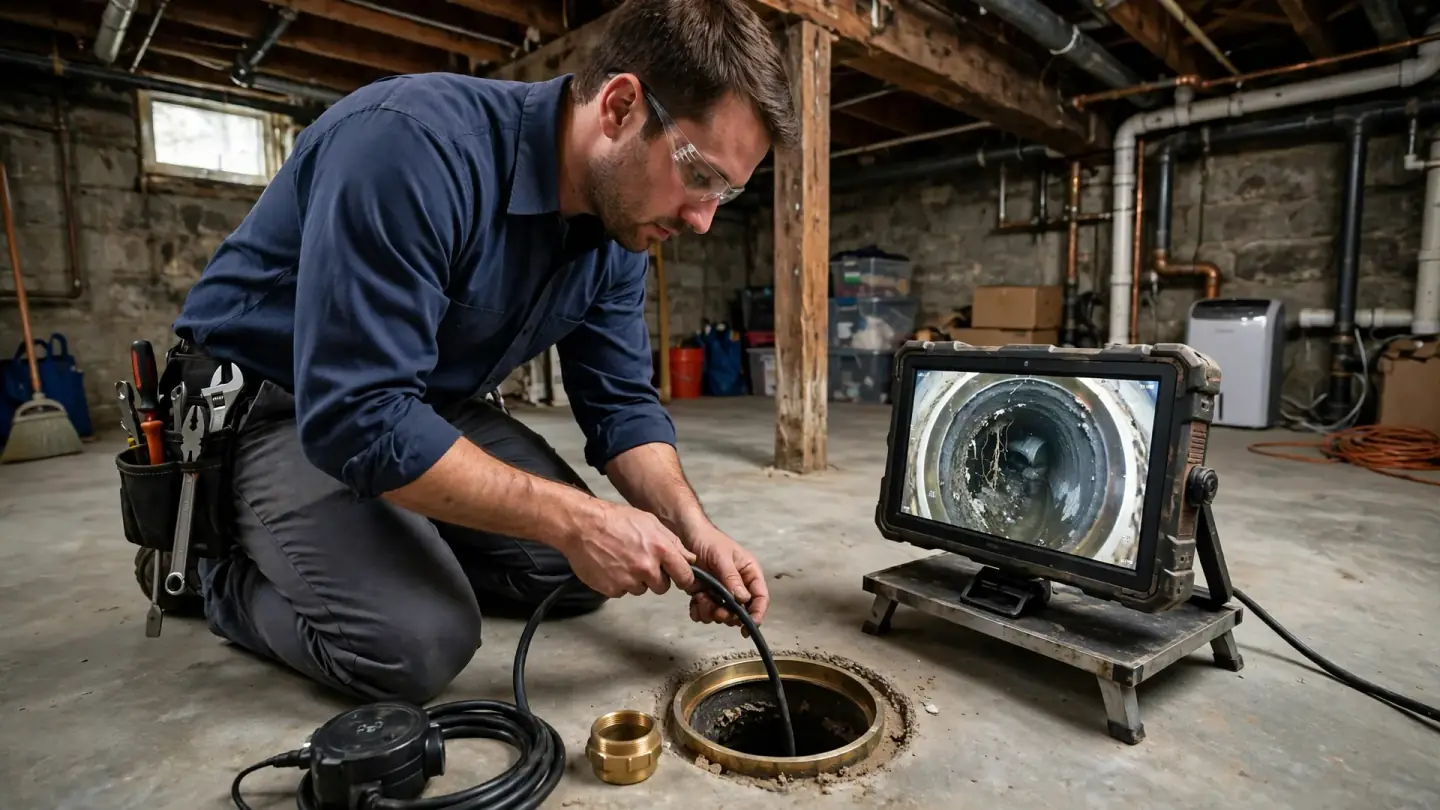
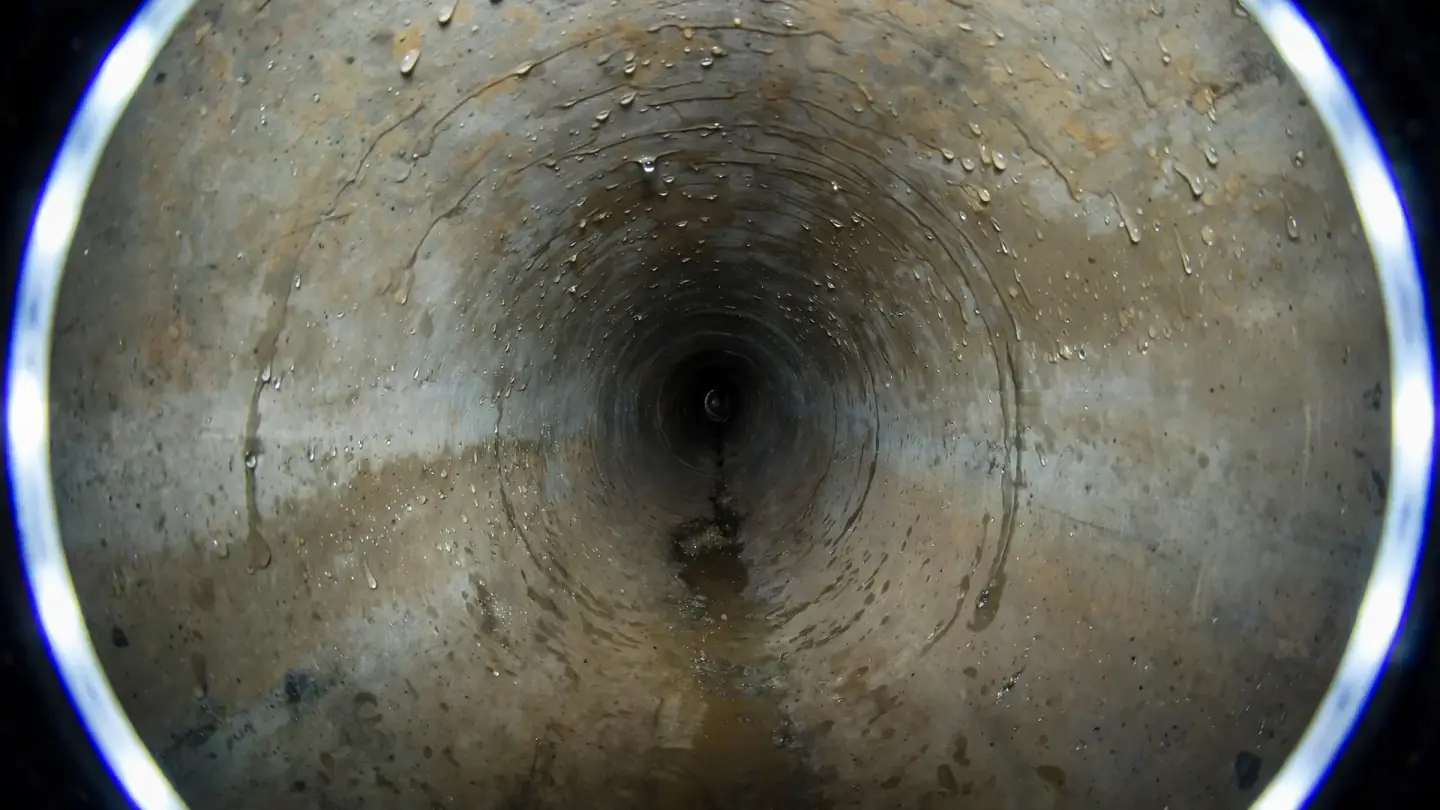
The first visit sets the baseline. The contractor runs a camera through the main lines to see what they are made of, how much buildup is present, whether roots are getting in, and whether anything is cracked, sagging or offset. That footage decides the rest of the plan. A building with clean, sound cast iron may need little more than an annual look. A building with a clay lateral full of fine roots may need cutting or jetting on a set interval to stay ahead of regrowth.
After that, each visit follows the schedule: jetting a kitchen stack that coats with grease, cutting roots from the lateral before they close it, clearing the floor drain line, and running the camera again at intervals to compare with the baseline. The comparison is the useful part. A crack that has not changed in three years is a different matter from one that has doubled in length.
Good plans also include the people. Tenants and unit owners do most of what goes down the drains, so a short note about wipes, grease and hair catchers belongs in the plan as much as any machine does.
Buildings that benefit
Which buildings benefit from scheduled drain maintenance?
Not every house needs a plan. These patterns suggest one would earn its keep.
Repeat calls on the same shared stack
If one stack backs up into more than one unit every year or so, the triple-decker shared stack guide explains why, and a schedule can stay ahead of it.
Read moreA clay lateral with known root intrusion
Roots cut once tend to regrow from the same joints. The guide on tree roots in clay sewer laterals describes the cycle.
Read moreHigh tenant turnover each September
New tenants bring new habits. Annual move-in season is a natural moment for a check and a reminder about what belongs in the trash.
Water at the basement floor drain more than once
Repeat wet floors call for a pattern on paper. The basement floor drain backing up guide helps sort clog from storm.
Read more
Condo associations
Drain upkeep for condo associations in converted Somerville triple-deckers
Many of Somerville's stacked houses have been converted to condominiums, with each floor owned separately and the shared pipes held in common. That creates a practical question every board eventually faces: when the stack clogs, whose problem is it? The master deed and bylaws usually answer that, but the drains do not care. A clog in the common stack backs up into whichever unit is lowest.
A maintenance plan gives the association a neutral record. Camera footage from the common lines, dated and kept with the association's files, shows the condition of shared pipe over time. It helps when planning for future repairs, when a unit is sold and the buyer asks about plumbing, and when owners disagree about whether a backup started in a private branch or the shared stack.
- Keep camera recordings with association records
- Name one owner as the contact for drain visits
- Share a one-page note on drain habits with every unit

Setting it up
Step by step: building a drain maintenance plan for a Somerville two-family or triple-decker
- 1
Gathering the drain history you already have
List past backups, which units were affected, what was done and roughly when. Old invoices and texts from tenants are enough to start.
- 2
Getting a baseline camera look at the shared lines
A drain camera inspection of the stacks and building drain, plus the lateral if access allows, shows the starting condition.
- 3
Choosing what to clean and how often
Based on the footage, the contractor suggests which lines need attention and at what interval: yearly, twice a year, or only as needed.
- 4
Telling tenants or owners what is changing
A short note before each visit explains when water may be off, and reminds everyone about wipes, grease and hair.
- 5
Keeping each visit's notes and recordings together
A shared folder with dates, findings and footage turns separate visits into a history that anyone can read later.
- 6
Revisiting the interval after a year
If the lines look clean at every visit, stretch the gap. If buildup returns quickly, shorten it or start a repair conversation.
Typical schedules
How often should building drains be cleaned?
These are starting points, not rules. The camera and your building's own history set the real interval.
| Condition found on camera | What usually gets done | Typical starting interval |
|---|---|---|
| Sound cast iron, light buildup | Camera check, cleaning only if needed | Every year or two |
| Kitchen stack coating with grease | Jetting the stack from the basement | Once or twice a year |
| Fine roots at clay joints in the lateral | Root cutting or jetting | Before the growth closes the pipe, often yearly |
| Heavy scale in old cast iron | Gentle descaling, close monitoring | Set after the first cleaning shows the result |
| Floor drain line gathering lint | Cable cleaning and a lint catcher | Yearly, or as laundry use suggests |
| Sag holding water in the building drain | Cleaning to keep it open while repair is planned | Short interval until repaired |
Owner and tenant habits
Day-to-day habits that help Somerville building drains, and the work to leave alone
Most of what keeps drains open happens at the sink and the toilet. These are worth sharing with every household in the building.
- Put wipes in the trash, every kindWipes labeled flushable still hold together in the pipe and snag on rough cast iron. They are a leading cause of stack clogs in shared buildings.
- Let grease cool and throw it outA third-floor kitchen drains past two other apartments. Grease that cools on the way down coats the stack for everyone below.
- Use hair catchers in tubs and showersA small strainer prevents most tub clogs and keeps hair out of the shared bath stack.
- Report slow drains earlyA tenant who mentions a slow sink in week one gives you a planned fix instead of a backup in week six. Make reporting easy.
- Do not pour chemical openers into shared linesThey rarely clear a stack, they are hard on old pipe, and they put the next person who opens the line at risk. The what not to pour down drains guide has more.
- Do not open cleanouts on a backed-up stackWith water standing in the units above, a cleanout plug can release a flood into the basement. That is a job for the contractor.
Somerville specifics
Why Somerville's housing stock suits a scheduled approach to drains
Somerville is the most crowded municipality anywhere in New England, packed into about four square miles, and much of its housing went up in building booms that ran through the 1940s [5]. Many of those buildings are stacked two- and three-family houses whose drains were designed for far lighter use than modern dishwashers, washing machines and more people per unit now put on them [1].
Many older Somerville homes still run on original cast-iron stacks and building drains, often joined to clay laterals outside the foundation. Cast iron scales and corrodes from the inside over decades, and clay joints are a classic entry point for roots [3]. Neither problem appears overnight, which is exactly why regular camera checks are useful: they show change before it becomes a backup.
The city side matters too. Most of Somerville is on a combined sewer that also carries stormwater, so heavy rain can sometimes push water back toward basements regardless of how clean a building's own pipe is [6]. A maintenance plan cannot control that, and an honest contractor will say so. What it can do is make sure your own lines are not adding to the trouble.
Preventative drain maintenance in Somerville is planned cleaning, not repair. If footage shows pipe that needs replacing, that work goes to a Massachusetts-licensed plumber under a permit from the city's plumbing inspector [4], and if the yard needs digging, Dig Safe must be called at 811 first.
Limits of a schedule
When regular drain cleaning holds steady and when the building needs repair
A schedule works well when the camera shows pipe that is basically sound and only coated, scaled lightly or invaded by fine roots at a few joints. In those buildings, regular hydro jetting or root cutting keeps the lines at a useful size, and the records show whether that is holding steady year to year.
A schedule is the wrong tool when the footage shows the problem is the pipe itself: a collapsed section of lateral, a sag that refills with debris within weeks, or cast iron rotted through along the bottom. Cleaning can keep such a line limping along for a while, and that can be reasonable while a repair is planned, but it should not become a permanent habit. The main sewer line cleaning page covers what happens when the building drain or lateral is the concern.
Plans also do not stop sudden events. If a stack backs up between scheduled visits, go to emergency drain cleaning and ask when you ring whether help is available tonight.
Landlord and board questions
What Somerville landlords and condo boards ask about drain maintenance plans
Will a maintenance plan stop all drain backups?
No, and be wary of anyone who says it will. A plan makes backups less likely and catches trouble earlier. A tenant can still flush something that blocks a line the week after a cleaning. It reduces how often backups happen, but sudden blockages from things flushed can still occur.
How often should a triple-decker's stacks be cleaned?
There is no single answer. A first camera look sets the starting point, and the interval is adjusted after each visit. Some buildings need yearly jetting; others only an occasional check. It depends on how many people use them and what the camera shows; history is the best guide.
Should the condo association or the unit owner arrange this?
Common pipes are usually the association's, and private branches the owner's, but your documents decide. A shared plan for the stacks and lateral, run by the association, tends to work well. Check the master deed and bylaws, since shared stacks are often common elements.
Is it worth keeping the camera footage?
Yes. Dated recordings let you compare condition over time, help settle questions about where a backup started, and give buyers and future contractors useful information about the building. Comparing footage over time shows whether buildup or damage is getting worse.
Can tenants do anything to help between visits?
Quite a lot. Wipes and grease in the trash, hair catchers in tubs, and reporting slow drains early do more for shared stacks than most people expect. Remind them to keep grease and wipes out of drains and to report slow drains quickly.
What does a drain maintenance visit usually include?
A maintenance visit usually includes cleaning the main line and busy stacks, plus a camera look where problems have occurred. The contractor notes what they found so the next visit can be compared. Kitchen risers and floor drains are common additions. See hydro jetting and drain camera inspection for the methods.
Is preventative drain cleaning worth it for a two-family house?
It can be if the house has a history of backups, roots or grease in the kitchen lines. For a two-family with no problems, watching for slow drains may be enough. A one-time camera look helps decide. The services hub and the triple-decker stack guide cover related issues.