Key facts: Emergency Hydro Jetting
- Cast iron drain pipe roughens and scales inside over decades, and badly corroded sections can be thin enough to fail [1].
- Vitrified clay sewer pipe has joints that roots can enter, and cracked sections can shift under stress [2].
- Grease that cools in a line forms the kind of buildup jetting is designed to scour away [3].
- Clearing a stoppage, by cable or jet, needs no Massachusetts plumbing permit; replacing pipe a jet exposes as broken does [4].
Cable versus jet
What does hydro jetting do that a drain cable does not?
A cable machine punches a hole. It spins a cutting head through the blockage, opens a channel, and the water drains. That is often exactly what an emergency needs. But a cable leaves most of the buildup on the pipe walls, and in a line coated with grease or rusted scale the channel can close again within days.
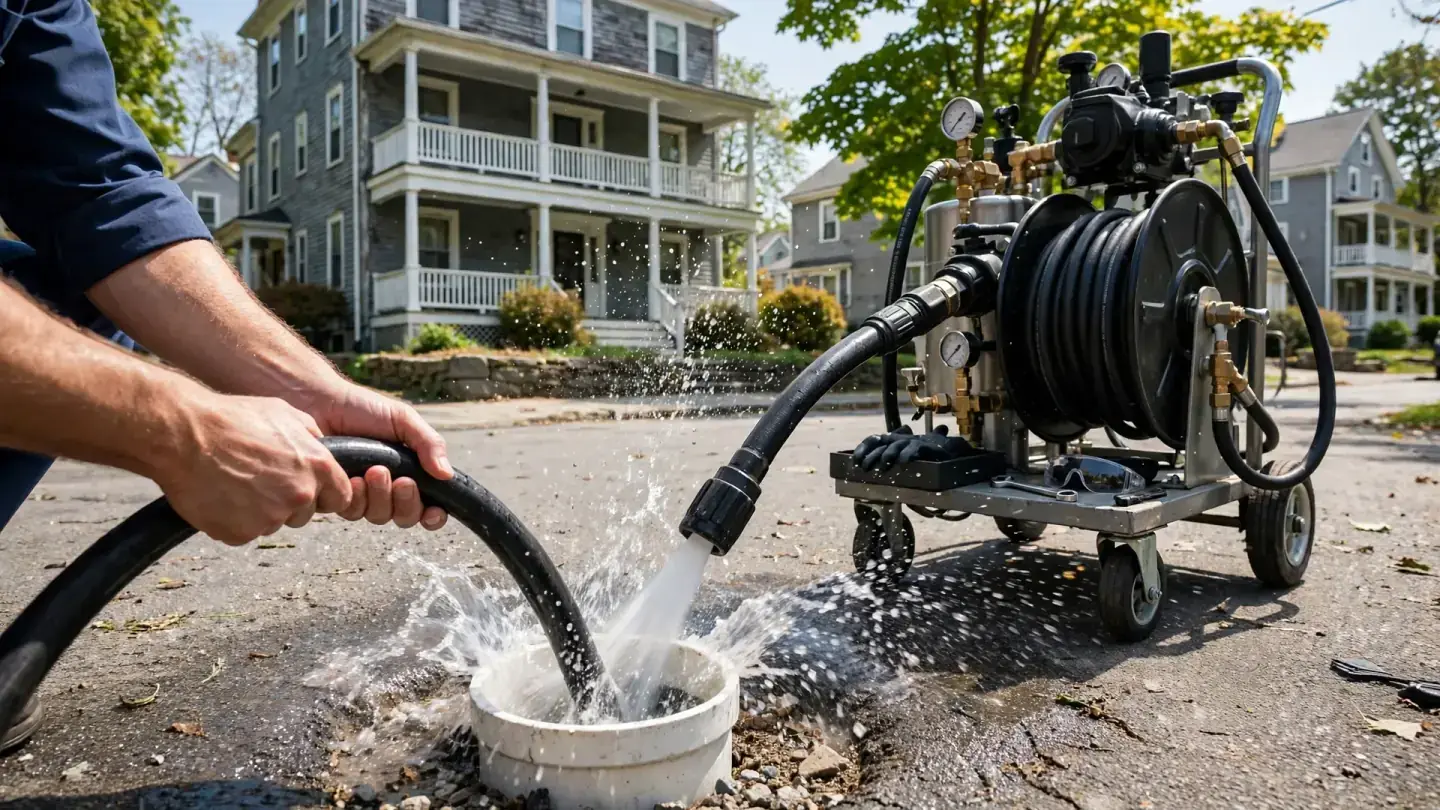
A jetter cleans the whole circumference. Rear-facing jets on the nozzle push it forward while scouring the walls, and a forward jet breaks into the blockage ahead. The loosened material flushes downstream. On a sound pipe the result is a line close to its original bore.
So the urgent question is not which tool is stronger. It is whether this line, tonight, needs a hole punched to stop the backup, or a full cleaning because a cable has already failed or will obviously not hold.
Good reasons
When is emergency hydro jetting justified?
These are the cases where a contractor may reasonably reach for the jetter on an urgent call.
A cable opened the line yesterday and it closed again
Grease or sludge coating the walls is re-forming the plug. Punching another hole will not hold; scouring the walls might.
A restaurant or shared kitchen line packed with grease
Long grease plugs absorb a cable without breaking. Jetting cuts and flushes them, as long as the pipe is in decent shape.
Sand, silt or sludge rather than a solid object
Loose sediment settles back behind a cable. Water carries it out of the line.
Fine root mass after a cable has broken through
A cable can open a channel through roots; a jetter with a cutting nozzle can clear more of the mat, though roots in clay joints will return.
Pipe condition
How pipe material and condition shape an urgent jetting decision in Somerville
| Pipe situation | Jetting tonight? | Safer first step |
|---|---|---|
| Newer PVC building drain | Usually suitable | Cable if a solid object is suspected |
| Cast iron, no known problems | Often suitable at moderate pressure | Camera if heavily scaled |
| Cast iron with rust weeping or past cracks | Not without seeing inside | Cable to open, camera before cleaning |
| Clay lateral with roots only | Possible after camera | Cable with a root cutter |
| Clay with offset joints or a known break | No | Cable to relieve, then repair planning |
| Unknown, never inspected | Ask first | Cable to open, camera to decide |
Many older Somerville homes have cast-iron building drains and clay laterals. The age of the house is a reason for caution, not a reason to refuse help.
While you wait
Keeping a blocked Somerville line under control before any jetting
The safe steps are the same whatever tool eventually clears the line.
- Stop all water use in the buildingIn a two-family or triple-decker, let every unit know the line is blocked and ask them to hold off on flushing, dishes and laundry.
- Close the main if anything is leakingA blocked drain combined with a leaking supply line is the quickest way to a flooded basement.
- Stay out of standing sewage and away from wet outletsCut power to the affected area at the panel only if you can reach it from dry ground.
- Do not pour in chemicals ahead of a jetting visitHigh-pressure water can spray chemical-laden water back out of a cleanout. Tell the contractor if anything was used [5].
- Find the cleanout if you canJetting works from a cleanout. Knowing where yours is, and whether it opens, helps decide what equipment comes.
If jetting goes ahead
How an urgent hydro jetting visit in Somerville is carried out
- 1
Relieving the backup first
If sewage is standing, a cable often opens the line enough to drain it. Jetting into a fully blocked, full pipe can push water back out of fixtures.
- 2
Looking at the pipe where condition is unknown
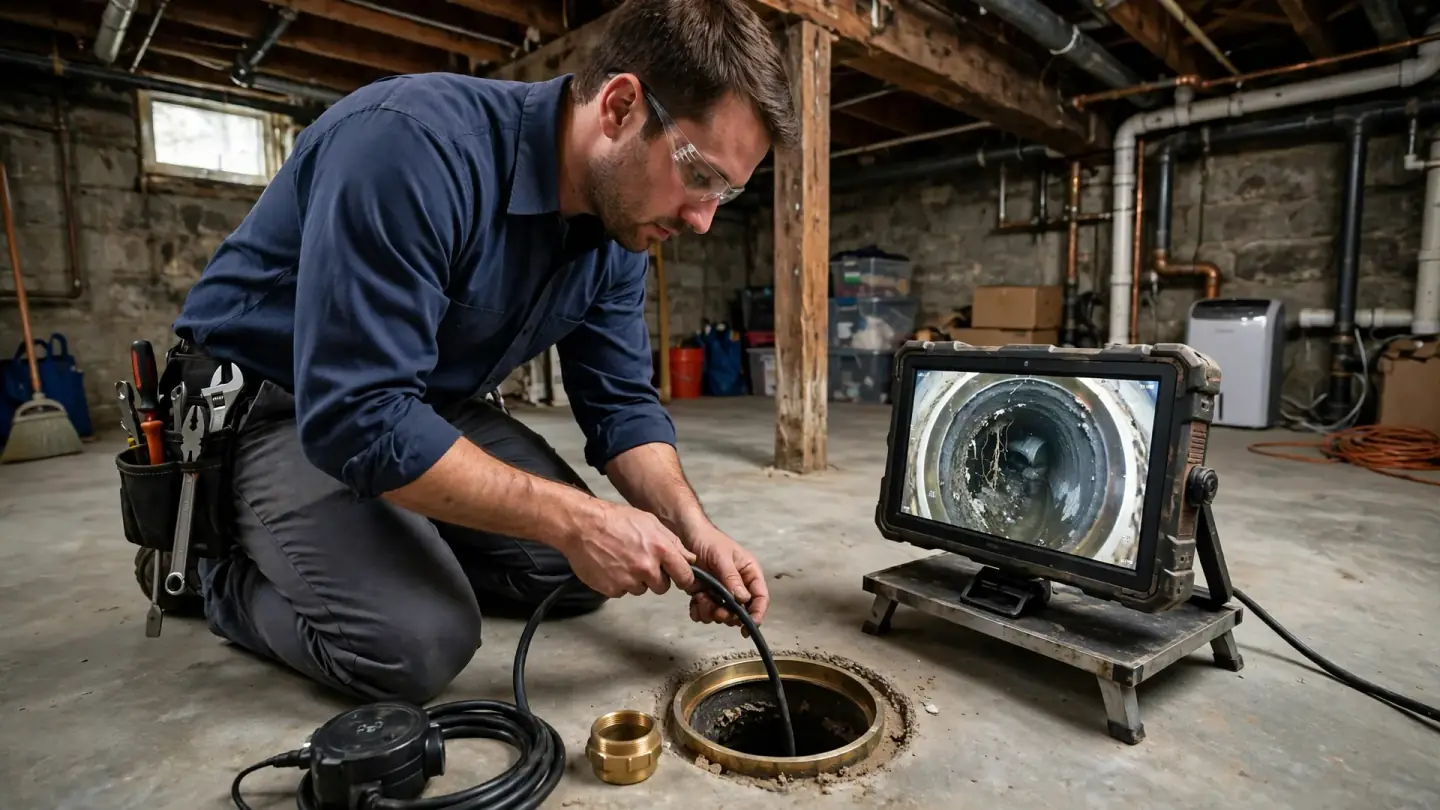
A camera shows breaks, offsets and thin sections that rule out high pressure.
- 3
Choosing nozzle and pressure for the pipe
Older cast iron gets gentler settings than PVC; grease gets a different nozzle than roots.
- 4
Working the line in passes from the cleanout
The hose is fed and retracted in sections so loosened debris keeps flowing downstream.
- 5
Testing with heavy flow and a final look
Fixtures are run together, and a second camera pass may confirm the walls are clean.
Related work
Beyond tonight: scheduled jetting and inspection for Somerville drains
If jetting is not appropriate tonight, it may be after a drain camera inspection shows the pipe is sound. The non-urgent hydro jetting page covers planned cleaning in detail. For a main line backup where a cable is the right first move, see emergency sewer line cleaning, and for restaurant grease lines, emergency commercial drain cleaning.
If jetting reveals a break, the cleaning part is over. Repairing or replacing that section is plumbing work under a Massachusetts permit [4], and if it means digging in the yard, a Dig Safe call to 811 comes before any shovel.
Jetting questions
Urgent hydro jetting questions about older Somerville pipes
Could urgent jetting crack a corroded cast-iron building drain?
It can if the pipe is badly corroded or already cracked, which is why many contractors look with a camera before jetting old cast iron. Sound cast iron usually handles jetting well, and the pressure can be adjusted. Thin walls, holes or broken sections are the risk. If the camera shows serious damage, a cable may be used to restore flow and a repair planned, as described on drain camera inspection.
Why would a contractor use a cable first when I asked for jetting?
A cable quickly opens a blocked line so water can drain, and it is safer if nobody yet knows the pipe's condition. Jetting works best once water can flow and the line has been checked. Many contractors cable first, camera second, and jet third. That sequence protects fragile pipe and avoids flooding a basement with jetting water. The hydro jetting page covers the method in detail.
Does hydro jetting remove tree roots from a sewer line?
A jetter with a root-cutting nozzle can cut and flush out fine roots, but roots usually grow back through the same joint. Heavy, woody roots may need a cable cutter first. Jetting clears the pipe, but it does not seal the joint the roots came through. The tree roots in clay laterals guide explains when a repair makes more sense than repeated cutting.
Does jetting need a permit in Massachusetts?
No, clearing a stoppage by jetting does not need a permit under Massachusetts plumbing rules. A permit comes into play if the contractor needs to repair or replace pipe, add a cleanout or fit a backwater valve, and that work must be done by a licensed plumber. Ask the contractor to explain which parts of the job are clearing and which are repairs.
Is emergency jetting used for restaurant grease lines?
Yes, commercial kitchen lines packed with grease are one of the most common reasons for urgent jetting. A cable can open a hole, but grease left on the pipe walls quickly closes it again. Jetting scours the walls and flushes the debris toward the sewer. See emergency commercial drain cleaning for steps to take while a kitchen drain is down.
Who can hydro jet a sewer line in Somerville tonight?
A local contractor with a jetter can, and calling this line connects you with one so you can check emergency availability. Not every contractor carries a jetter on every truck, so say clearly what the problem is and that you think jetting may be needed. They may still decide a cable is safer first. For a sewage backup, see emergency sewer line cleaning, and for all options the services page.
How is jetting water kept out of my basement?
The contractor jets from the cleanout toward the street, so most water and debris flow away from the house. They should make sure the line is open before jetting so water has somewhere to go. Expect some splashing around the access point; clear the area and protect stored items beforehand. If the line is fully blocked, they will usually cable it open first.