Key facts: Kitchen Drain Cleaning
- Fats, oils and grease are a leading cause of blockages in private lines and of basement backups [1].
- Somerville requires food preparation establishments to use grease traps or interceptors under its FOG program; household kitchens rely on habits instead [2].
- Clearing a kitchen stoppage is exempt from the Massachusetts plumbing permit requirement; replacing the pipe is not [3].
- Triple-deckers stack three households one above another, which commonly puts their kitchens on a shared riser [4].
How the work is done
What a contractor does with a greasy Somerville kitchen sink line
Kitchen clogs are rarely a single lump. They are usually a long, soft coating of congealed grease mixed with food particles, sometimes a few feet past the trap and sometimes much further, where the horizontal arm meets the stack. That shape matters, because a thin cable can poke a hole through a coating like that and get water moving again while leaving most of the grease on the pipe wall. The sink drains for a while, then closes up again.
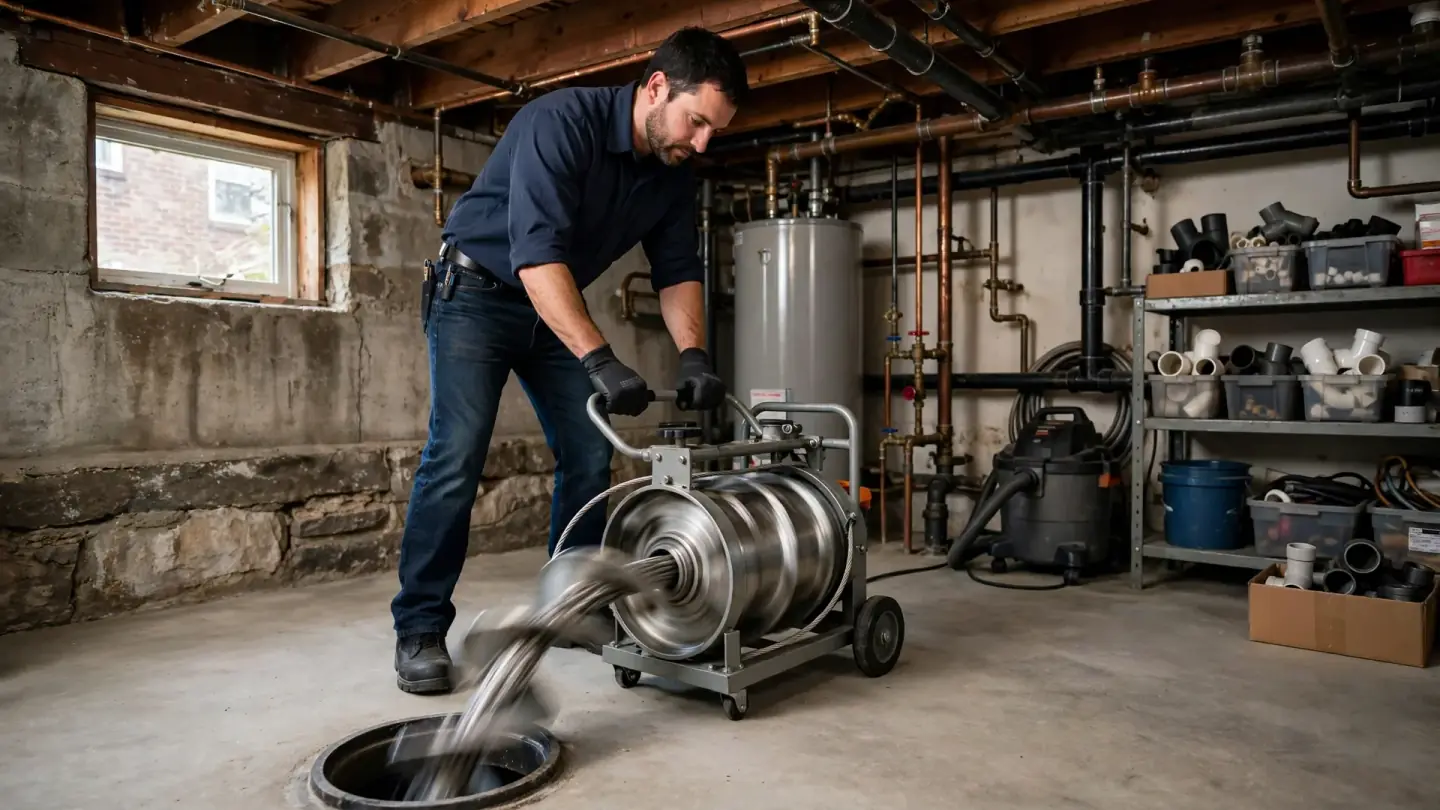
A careful approach starts by taking the trap off, checking the disposal and dishwasher connections, and then cabling the arm toward the stack with a head that scrapes rather than just drills. The contractor watches what comes back. Grey, waxy paste means grease is the main problem. Coffee grounds and eggshell grit point to the disposal. Rust flakes suggest the pipe itself is narrowed. In a long or heavily coated run, the drain contractor on the call may suggest hydro jetting to wash the wall clean rather than just reopen a channel.
Where kitchens are stacked, the job can widen. If the arm is clear but water still rises, the restriction is in the riser below, and access often moves to a cleanout in the basement or to the roof vent so the stack can be cleaned from end to end.
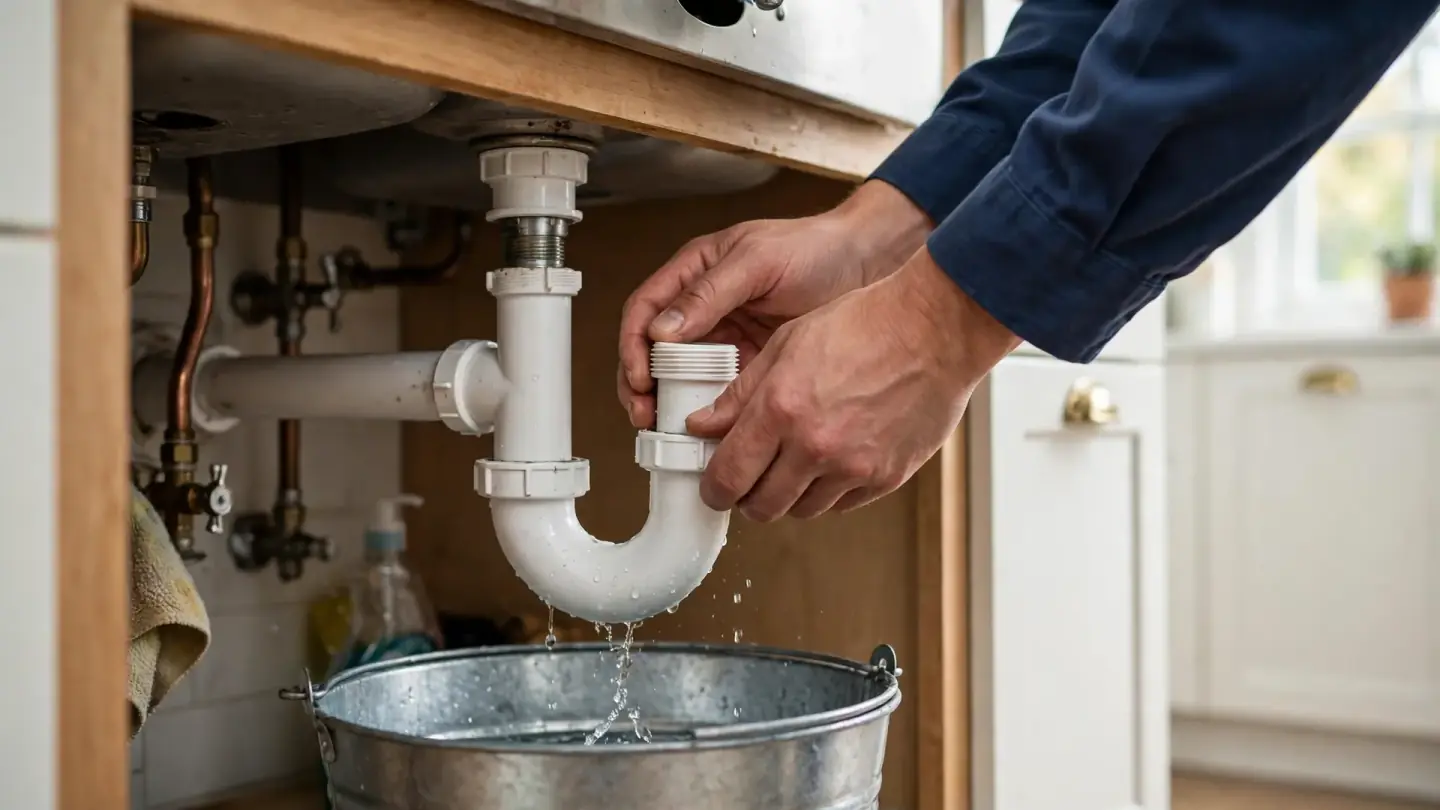
Kitchens also hide practical obstacles. Cabinets get emptied, a flashlight goes under the sink, and buckets and towels come out before any fitting is loosened. In older apartments the trap may be a brass or galvanized piece that was painted over or seized into the wall fitting. Rather than wrench it free, a contractor may cable through the disposal outlet or a cleanout tee and leave the brittle fitting in peace, then explain what they saw.
What you might be seeing
What are the signs a kitchen drain is starting to clog?
The kitchen sink empties slowly but the bathroom is fine
The restriction is in the kitchen branch, which is the classic grease pattern. It tends to get worse in cold months, when fat stiffens faster.
Dishwasher water backs into the sink basin
The dishwasher discharges into the same drain. If the line is narrowed, that pumped water has nowhere to go but up.
The disposal hums but the water will not go down
Either the disposal is jammed or ground food has packed the trap just below it. Both are common after big cooking days.
Gurgling from the sink when someone upstairs runs water
A shared kitchen stack is pulling air through your trap. The gurgling drains guide explains what that sound means.
Dirty water appears in a downstairs neighbor's sink
The shared riser below your connection is restricted. See triple-decker shared stack clogs for how these are traced.
Grease in an old pipe
How kitchen grease turns into a blockage inside Somerville cast iron
Hot grease is a liquid, so it pours easily. Within a short distance it cools against the pipe and turns waxy. Old cast iron, with its rough, scaled inner surface, gives that wax plenty to grip [5]. Each sink of dishwater adds a thin layer, and food fines stick to it.
This is why the same advice shows up on every city's grease page: wipe pans with a paper towel and put cooled fat in the trash. Restaurants in Somerville are required to run grease control devices and get them approved each year [2]. A home kitchen has no such device, so the habit is the protection.
- Cold months stiffen grease faster
- Rough iron holds more buildup
- Dishwashers add hot, greasy volume
The visit, start to finish
Kitchen sink line cleaning in a Somerville home, in order
- 1
Check disposal, dishwasher hose and air gap
A jammed disposal or a kinked dishwasher hose can look like a clog. These are ruled out first because they are quick to fix.
- 2
Remove and clean the sink trap
Packed food in the trap is cleared by hand. If the trap is old and corroded, the contractor will tell you before it is disturbed.
- 3
Cable the kitchen arm toward the stack
A cable with a scraping head is fed from the trap opening through the wall to the vertical stack, working through the grease collar rather than just past it.
- 4
Test with hot water and a full basin
Filling the sink and pulling the plug shows whether the line really carries volume, not just a trickle.
- 5
Follow into the shared riser if lower kitchens are affected
Access shifts to a basement cleanout or the roof vent so the riser can be cleaned along its full length.
- 6
Discuss jetting for heavy, repeat grease
If the line has clogged several times, a jetting pass can clear the wall coating that cables leave behind.
Causes and remedies
Common Somerville kitchen drain culprits and how each is handled
| Culprit | Where it collects | Usual clearing method | How to keep it from returning |
|---|---|---|---|
| Cooking grease and pan drippings | Horizontal arm and base of the stack | Scraping cable, jetting for heavy coats | Wipe pans, put cooled fat in the trash |
| Coffee grounds and eggshell grit | Trap and first bends | Trap removal, small cable | Compost or bin them instead |
| Starchy food (rice, pasta, potato peel) | Disposal outlet and trap | Clearing the disposal, trap cleaning | Scrape plates into the trash |
| Fibrous scraps (celery, onion skins) | Disposal chamber | Freeing the disposal impeller | Keep stringy scraps out of the disposal |
| Scale and rust on old iron | Entire run, worse at bends | Cabling, then camera if it repeats | Ask about the pipe's condition |
Before you call
What can I safely try on a clogged kitchen sink?
- Reset the disposalTurn it off, press the red reset button underneath, and use the hex key in the bottom socket to free a jammed impeller. Never put a hand inside.
- Plunge a double-bowl sink with the other side sealedHold a wet rag or a second plunger over the other drain, or the pressure simply escapes there.
- Clean the trap over a bucketPlastic traps loosen by hand. Have a towel ready; the trap holds more water than you expect.
- Avoid pouring boiling water into old or plastic linesIt may soften grease briefly, but it can stress joints and only moves the grease a little further down.
- Leave it once the water appears in another unitThat is a shared-stack problem. Further plunging in your kitchen sends dishwater into a neighbor's sink.
- Read the grease list before the holidaysThe what not to pour down drains guide covers the usual offenders.
Clearing versus fixing
When a kitchen line just needs cleaning and when the pipe needs work
For most homes, a thorough kitchen drain cleaning Somerville contractors do in a single visit restores the line for a long time, especially if grease habits change afterward. A clog every few years is ordinary wear for a busy kitchen.
It also helps to look at what the household is putting down the drain. A family that cooks with a lot of oil, or a tenant who rinses bacon pans in the sink, can clog a perfectly sound line. Changing that habit is often worth more than any equipment.
A repeat clog within weeks is a different signal. It suggests a sag where grease pools, an arm so rusted that its opening is tiny, or a riser that needs cleaning end to end. A camera look answers which. If a night-time backup has the sink overflowing and you cannot stop the water, the emergency kitchen drain cleaning page explains how to ask during the call if anyone is free to come tonight. For a regular reminder on a shared riser, see preventative drain maintenance.
FAQ
Kitchen drain questions from Somerville renters and owners
Can I put grease down the sink if I run hot water after it?
It is not a good idea. The hot water carries the grease a few feet before it cools and sticks, usually inside the wall where it is harder to reach. Let it cool in a can and bin it. Wipe pans with a paper towel and put the grease in the trash instead.
Our downstairs neighbor gets our dishwater. Is our sink the problem?
Probably not your sink itself. The shared riser is restricted somewhere below your connection, so water from above finds the lowest opening. The fix is cleaning the riser, usually from the basement. If several kitchens share the riser, the clog may be lower in the stack.
Does a garbage disposal make kitchen clogs more likely?
It can, if it is fed starchy or stringy scraps or used without enough water. Ground food settles in slow pipes. Used lightly with plenty of cold water, a disposal is usually fine. Scraping plates into the trash first helps whichever system you have.
Is enzyme or bacterial drain treatment worth using?
Those products are gentle and will not harm pipes, but they work slowly and will not open a hard clog. Think of them as maintenance at most, not a fix for a sink that is holding water. They may slow buildup, but they will not clear a line that is already blocked.
Who arranges the cleaning when the kitchen stack is shared?
Usually the building owner, since the riser serves every unit. Tenants should tell the owner as soon as water appears in the wrong sink, so the line can be cleared before it overflows. Usually the owner or condo association, since the riser serves several units.
Why does my kitchen sink drain slowly even though the disposal works?
The disposal only grinds food; the pipe after it can still be narrowed by grease and starch. Slow drainage with a working disposal usually means buildup further down the line. Cleaning the trap may not reach it. A cable or hydro jetting clears the run, and the services hub explains the choices.
Is it normal for a kitchen sink to back up when the dishwasher runs?
No, it means the line past where the dishwasher connects is partly blocked. The dishwasher pushes a lot of water at once, and a narrowed pipe sends it back into the sink. Avoid running it until the line is cleaned. See what not to pour down drains for prevention.