Key facts: Sewer Line Inspection
- Older laterals are often vitrified clay laid in short sections, where joints can shift and admit roots [1].
- Cast-iron drain pipe can corrode and build scale inside over decades, narrowing the bore [2].
- Somerville's housing is mostly older multi-family stock built through the 1940s, so many laterals have served for generations [3].
- Sewer repair found during an inspection is plumbing work requiring a Massachusetts permit; the inspection itself is not [4].
What the assessment is
How a sewer lateral assessment is carried out in a Somerville basement
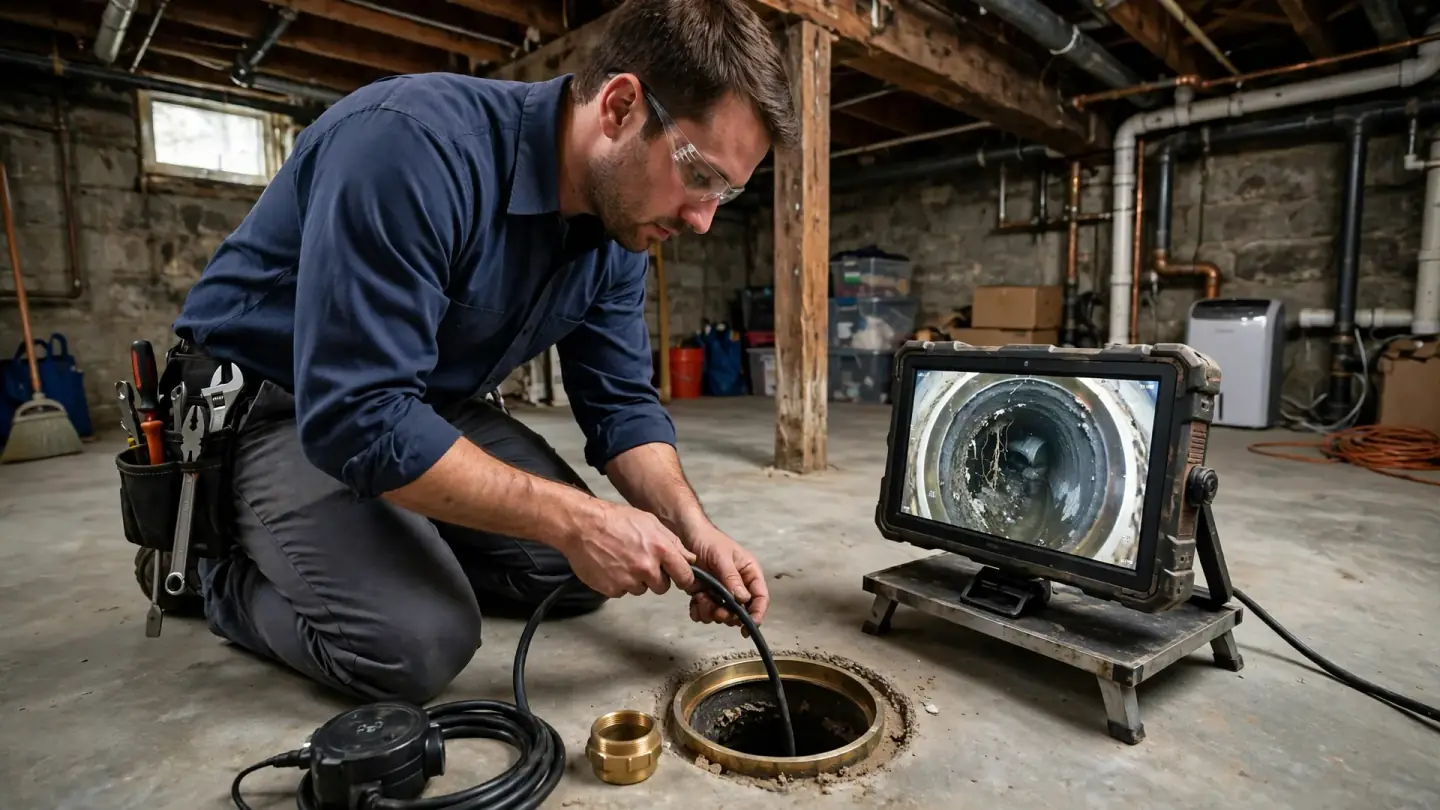
The inspection starts where the building drain is easiest to reach, usually a basement cleanout near the front foundation wall. A waterproof camera head on a flexible push cable is fed in and driven out toward the street while the contractor watches a monitor and records. A small transmitter in the head lets them stand in the yard or on the sidewalk with a locator and mark where the pipe runs and how deep it sits at points of interest.
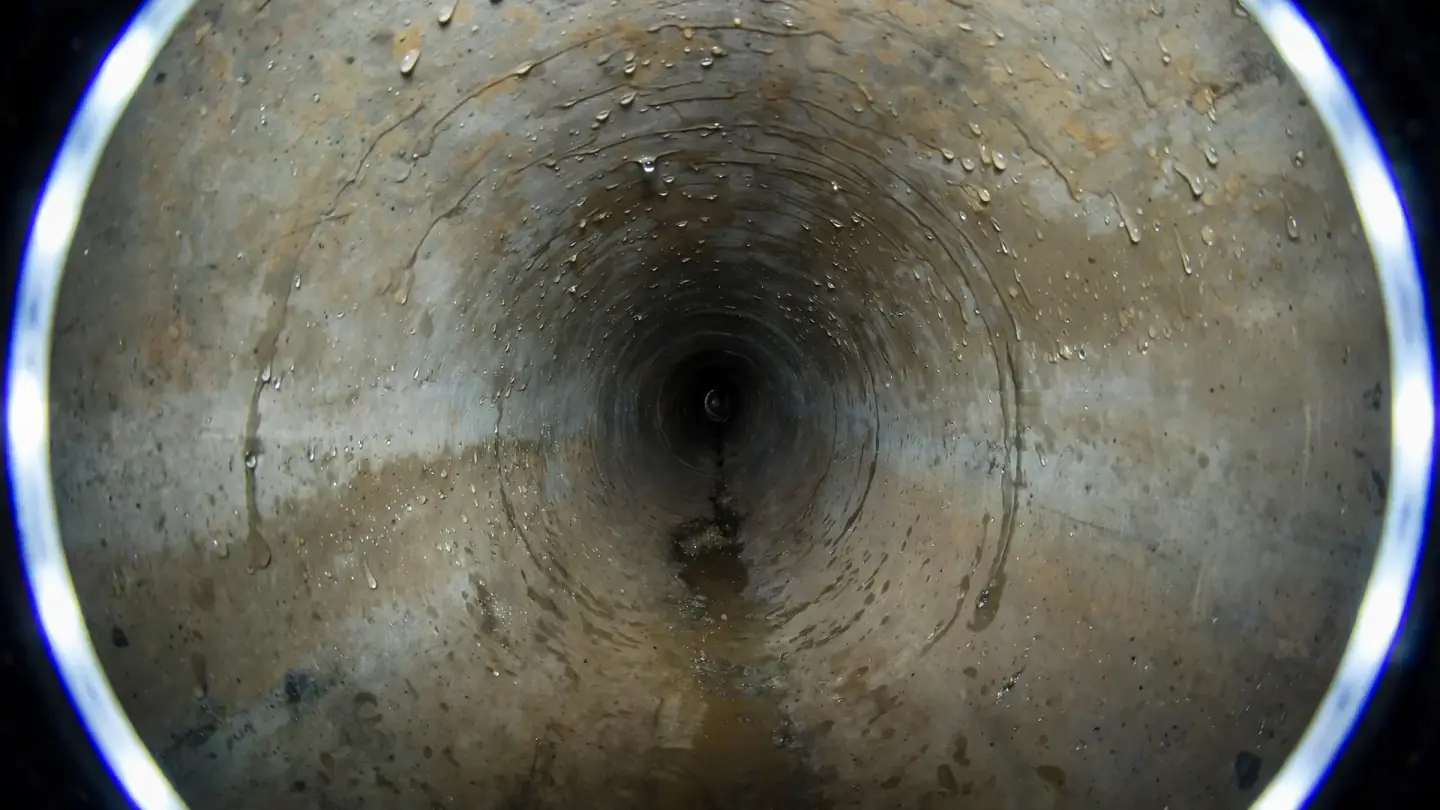
What makes this an assessment rather than just a look is the order of work and the questions asked. Is the line clean enough to see? If not, it may need to be cleaned first, because a coating of grease or standing water hides cracks and joints. Where does the material change, for example from cast iron inside the house to clay outside? Where are the joints, and are any offset? Is there a low spot where water lies still? Where does the private pipe meet the city sewer, and is that connection intact?
The result should be a recording plus a written summary that gives distances from the cleanout to each finding. Those distances are what a repair plumber or a lining contractor needs to plan work, and what a buyer's attorney or lender may want to see. The drain camera inspection page goes into the equipment; this page is about using what it shows to make a decision.
Reasons to inspect
When should I get a sewer line inspection?
Some reasons are about a purchase, some about a problem that keeps coming back.
Buying an older two-family or triple-decker
A home inspection rarely looks inside the lateral. A recorded run gives you a clear picture before closing, while there is still room to ask questions.
Read moreConverting a multi-family into condominiums
Separate owners will share one lateral. Knowing its condition up front helps the association set expectations about upkeep and repair.
Read moreBackups that return after every cleaning
Roots, a sag or a broken joint will keep closing the line. Background on the warning signs is in the guide to a basement floor drain backing up.
Read moreA persistent sewer odor with no obvious cause
A cracked pipe or failed joint near the foundation can let gas into the cellar. See sewer smell in the basement for the other causes to rule out first.
Read moreBefore agreeing to relining or excavation
A liner needs a host pipe that is clean, round enough and not collapsed. An independent look lets you understand what is being proposed and why.
Read more
Visit sequence
Step by step through a sewer line inspection for a Somerville property
- 1
Agreeing on the purpose before the visit
A buyer, an owner with repeat backups and an owner planning a liner need slightly different answers. Saying which you are on the call shapes what the contractor records and reports.
- 2
Locating the access point and running water to check flow
The cleanout is opened and a fixture is run to confirm water is moving. If the line is backed up, it has to be cleared before any useful picture is possible.
- 3
Cleaning the line where coating would hide defects
Grease, scale or roots can make a sound pipe look poor and hide a crack in a bad one. Many inspections include a cable or main sewer line cleaning pass first.
- 4
Recording the run out to the city connection
The camera is pushed to the street sewer, pausing at joints, changes of material, fittings and any defect. The footage counter shows distance at each point.
- 5
Marking key points above ground
Where a repair might be needed, the head's transmitter is located from the surface and the spot is marked, along with an approximate depth.
- 6
Walking through the findings with you
The contractor explains what was seen in plain terms and sends the recording with a short written summary you can share with a buyer, seller, association or plumber.
Reading the report
What does a sewer inspection report include?
| Finding in the report | What it looks like | What it usually means | Typical next step |
|---|---|---|---|
| Pipe material and transitions | Cast iron inside, clay or other material outside | Older materials age differently | Note for future reference |
| Root intrusion at joints | Hairlike or thick roots at regular intervals | Joints are open enough to admit roots | Scheduled cleaning or repair planning |
| Offset or separated joint | A visible step or gap between sections | Ground movement or settling | Watch, or repair if it catches debris |
| Belly or sag | Water standing in a stretch of pipe | The pipe has dropped below grade | Repair if backups recur |
| Scale and corrosion | Rough, flaky interior on cast iron | Bore is narrowing, wall may be thinning | Gentle descaling or replacement |
| Crack or collapse | Broken pipe wall, soil visible | Structural failure | Repair by a licensed plumber under permit |
| Condition at the city connection | Where the lateral meets the main | Whether the tie-in is intact | Ask the city about responsibility at that point |
Preparation
What you can prepare before a sewer line inspection, and what to leave to the contractor
A little preparation makes the recording more useful. Interpreting the footage is where an experienced eye matters.
- Find and clear access to the cleanoutMove storage away from the cleanout and floor drain. If the cap is painted or rusted shut, mention it on the call.
- Gather the property's backup historyDates of past backups, who cleaned the line and what they found are worth more than any guess. Sellers and landlords often have receipts.
- Note trees near the front of the houseRoots often enter laterals near large trees in a yard or sidewalk strip. Pointing them out helps the contractor focus on likely joints.
- Ask for the full recording, not just clipsShort clips can leave out context. The full run with distances lets another plumber review it later if you want a second opinion.
- Do not run your own camera through a full lineConsumer inspection cameras can snag or get stuck in a broken pipe. Retrieving one can turn into a bigger job than the inspection.
- Leave repair judgments to licensed tradesDeciding between spot repair, lining and replacement depends on the full run, depth and access. That call belongs with the plumber who would do the work.
Somerville context
Why Somerville's old housing and combined sewers make lateral inspection worthwhile
Somerville is one of the most densely built places in New England, and much of its housing went up in booms that ran through the 1940s, giving the city the nickname 'city of homes' [3]. Many of those houses still drain through laterals laid when they were built. Homes of that era commonly have cast-iron drains inside and clay outside, both of which age in known ways: cast iron scales and thins [2], and clay sections can separate at the joints and invite roots [1].
The pipe at the end of your lateral is part of a much older system. Most of Somerville's sewers are combined, carrying household waste and stormwater together toward the MWRA and the Deer Island Treatment Plant, and the city is working on a long-term plan to cut overflows, including sewer separation in Ten Hills and Winter Hill [5]. If an inspection shows your lateral is sound but backups still happen during storms, the issue may be the street sewer, and that is a 311 call to the city rather than a private repair.
If the report does point to repair, the next steps are regulated. Replacing or repairing a lateral is plumbing work done by a Massachusetts-licensed plumber under a permit from Somerville's plumbing inspector [4]. Any excavation, even in your own yard, needs the area marked in white and a Dig Safe call to 811 at least 72 business hours ahead [6]. Neither applies to the inspection itself, which only looks.
After the report
When an inspected lateral only needs cleaning and when it points to repair
A lot of inspections end with good news, or at least manageable news. A line with some scale, a few light roots and no structural defects usually just needs cleaning, perhaps on a schedule. In that case the useful follow-up is hydro jetting or cable work, plus a note in the house file with the date and findings.
Repair becomes the conversation when the report shows a defect that cleaning cannot change: a belly that holds water, a collapsed section, an offset joint that catches every bit of paper going by, or roots so dense that they are clearly growing through broken pipe. For a buyer, that is information to bring to the negotiation. For an owner, it is a reason to get a repair plan from a licensed plumber with the recording in hand.
If the line is backed up right now and you cannot wait for a scheduled inspection, start with the emergency sewer line cleaning page and call to check emergency availability. The inspection can follow once the line is flowing.
Inspection questions
Questions buyers and owners ask about a sewer line inspection in Somerville
Is a sewer line inspection in Somerville part of a standard home inspection?
Usually not. Most general home inspections check fixtures and visible piping but do not send a camera down the lateral. If you are buying an older multi-family, it is normally arranged separately. Usually not; ask for it separately and plan for basement access.
How is this different from the drain camera inspection page?
The camera page is about the tool and where it can be used in any drain. This page is about assessing the main sewer lateral specifically, with a report you can use for a purchase or repair decision. Both use cameras; the difference is the pipe being examined.
Can the inspection tell me who owns which part of the pipe?
It can show where your lateral meets the city sewer, but not where legal responsibility ends. Ask Somerville's Water and Sewer Department about that boundary on your street. Not directly, but it records where the pipe runs and its condition, which helps answer that question with the city.
Should the line be cleaned before it is inspected?
Often, yes. Grease, roots and standing water hide what the pipe looks like underneath. A cleaning pass first gives a truer picture, especially before relining or a purchase. Often yes, because debris hides cracks; the contractor will advise. Ask whether footage before and after cleaning will be recorded.
We are converting to condos. Who should keep the inspection report?
Keep it with the association's building records. Every unit shares the lateral, so future owners and the association both benefit from knowing its condition at the start. The association usually should, along with any cleaning records. Keeping it with the building records helps future buyers and boards.
Should I get a sewer line inspection before buying a Somerville house?
It is worth considering for any older house, because the lateral is hard to reach and a standard home inspection usually does not cover it. The footage shows roots, cracks, sags and old joints. Arrange it with the seller's permission. See main sewer line cleaning for what follows if the line is dirty.
Can a sewer camera see tree roots in the pipe?
Yes, roots are among the clearest things a sewer camera shows, usually as fine strands at joints or a mass blocking the pipe. The footage shows where they enter and how much of the pipe they fill. See the tree roots guide and the services hub.