
Key facts: Shared Stack Backup
- A triple-decker is a three-family building of stacked flats, built widely across New England in the late nineteenth and early twentieth centuries [1].
- In a drain-waste-vent system, fixture branches feed a vertical stack that carries waste down to the building drain [2].
- Somerville is the most densely populated municipality in New England, with much of its housing in closely built multi-family homes [3].
- Clearing a stoppage does not need a Massachusetts plumbing permit, but replacing or altering stack piping does [4].
One pipe, several households
Why is my neighbor's dishwater coming up in my sink?
In a triple-decker or two-family, kitchens and bathrooms are usually stacked one above another, and each fixture connects to a vertical pipe that runs down through every floor to the basement [1][2]. When that stack or the drain below it clogs, water from the top floor drops until it meets the blockage, then rises out of the lowest open fixture above it. That might be your kitchen sink, your tub, or a toilet on the first floor.
So the household dealing with the mess is rarely the one causing it. The water belongs to whoever is running it, often a dishwasher or washer upstairs, and it will keep coming until everyone above the clog stops. That is why the first job in a shared stack emergency is communication, not tools.
First ten minutes
How to get every unit in the building to stop using water
A shared stack backup cannot be managed from one apartment. Reach everyone who drains into it.
- Knock, text or call each unit above youSay plainly that the shared drain is backing up and ask them to stop dishes, showers, laundry and flushing until further notice.
- Leave a note on doors and the laundry areaHouseholds who are out will come home and start a load. A note on each door and on the washer helps.
- Plug or cover the overflowing fixtureA sink stopper or a weighted cover can slow water coming up in your unit while the units above hold off.
- Protect the ceiling belowIf water is spilling onto your floor, the unit beneath may get it through the ceiling. Move items, lay towels and warn them too.
- Tell the owner, landlord or condo boardWhoever manages the building needs to know, because access to the basement and to other units will be needed.
Where the clog sits
Reading which floor the stack blockage is likely on
| What you see | Likely clog location | What to do |
|---|---|---|
| Second-floor sink fills when third floor runs water | Stack between first and second floor branches | Stop upper units and arrange stack clearing |
| First-floor tub fills, basement floor drain dry | Stack near the first-floor branch | Hold all water use above and call |
| Basement floor drain and first floor both backing up | Building drain or lateral below the stack | Treat as a main line backup |
| Only one kitchen sink slow, no other units affected | That unit's own branch line | A single-fixture clearing is usually enough |
Access and coordination
Who lets the contractor in, and which units they may need
A stack is usually cleared from the top through the roof vent, from a cleanout on one of the floors, or from the base of the stack in the basement. The contractor may need to get into the cellar, onto the roof, or into a specific unit where a cleanout sits behind a panel or under a sink. In an owner-occupied two-family that is simple. In a rental triple-decker or a condo conversion, it means someone with keys and authority needs to be reachable.
Have the name of the landlord, property manager or condo trustee ready when you call, and ask the other households whether they are home. Questions about who pays and whose responsibility the clog is are separate from the emergency itself, and our guide on landlord versus tenant drain clogs covers how to approach that conversation afterward. If the basement cleanout is hard to find, see how to find your sewer cleanout.

On site
What an urgent stack clearing in a multi-unit Somerville house involves
- 1
Confirming all units have stopped water use
Before opening anything, the contractor checks that no one upstairs is running a washer, dishwasher or shower.
- 2
Choosing the access point
Depending on where the clog seems to be, the line is entered from a floor cleanout, the base of the stack or the roof vent.
- 3
Cabling or jetting the stack
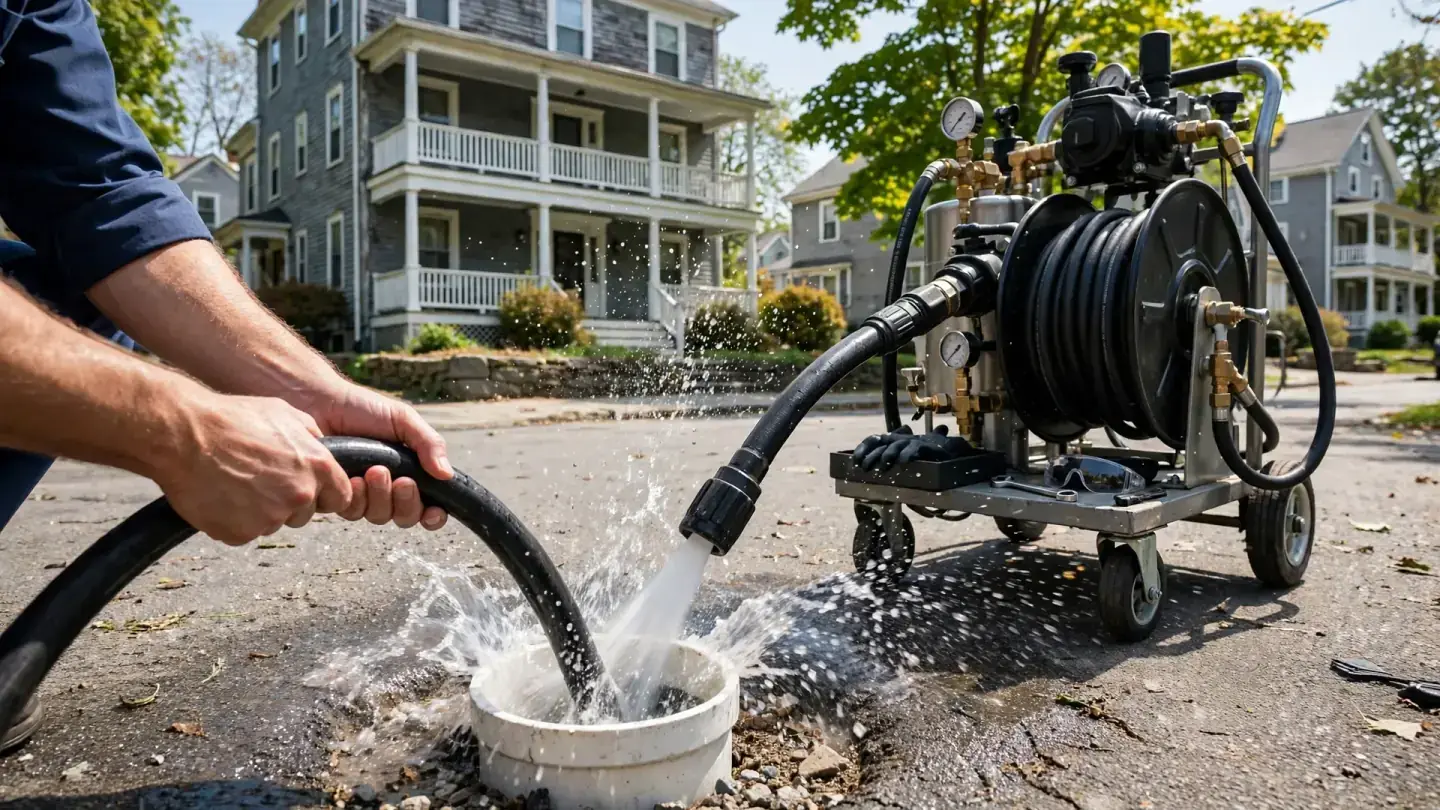
A cable clears most blockages; a jetter may follow for heavy grease from several kitchens, with care on old cast iron.
- 4
Testing floor by floor
Water is run from the top unit down while someone watches the lower fixtures to confirm the stack is flowing.
- 5
Recommending a closer look
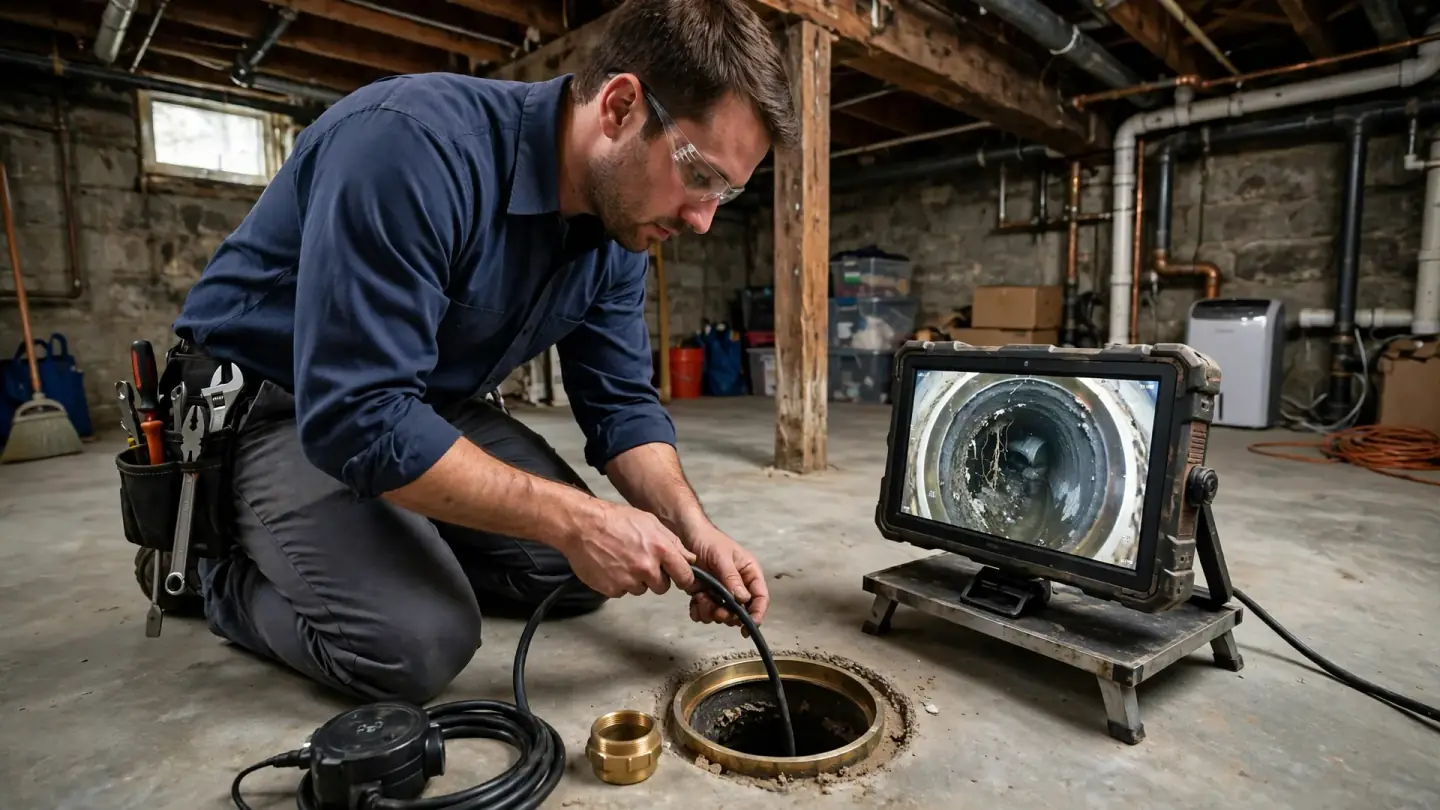
If scale or a cracked section is suspected, a camera check is suggested. Replacing stack pipe is permit work for a licensed plumber [4].
Afterward
Building-wide habits after a Somerville stack has been cleared
Agree as a building on a few simple rules: scrape plates into the trash, keep wipes out of toilets, and use lint catchers on washers. Post them by the laundry area.
Owners and condo boards often schedule preventative drain maintenance for stacks that clog repeatedly, and keep a shared list of who to contact in an emergency so the next backup is handled in minutes instead of hours.