Key facts: Kitchen grease clogs in older homes
- Cast iron drain pipe can corrode internally over time, and the rough surface it leaves catches debris [1].
- Somerville regulates fats, oils and grease from food preparation establishments and requires grease control devices there [2].
- Grease, along with roots and debris, is a common cause of sewer blockages and backups [3].
- Clearing a stoppage does not need a plumbing permit in Massachusetts, while replacing pipe does [4].
Short answer
Why does grease clog the kitchen sink so often in an old Somerville house?
Fat leaves the pan warm and liquid, then cools as it travels through the wall and down to the basement. In a new plastic line it has a smooth path. In an older home the kitchen branch is often cast iron or galvanized steel, and decades of use leave the inside scaled and rough [1]. Grease grabs that roughness, food particles stick to the grease, and each wash adds another thin layer. The opening shrinks slowly until one heavy evening of dishes is enough to stop it.
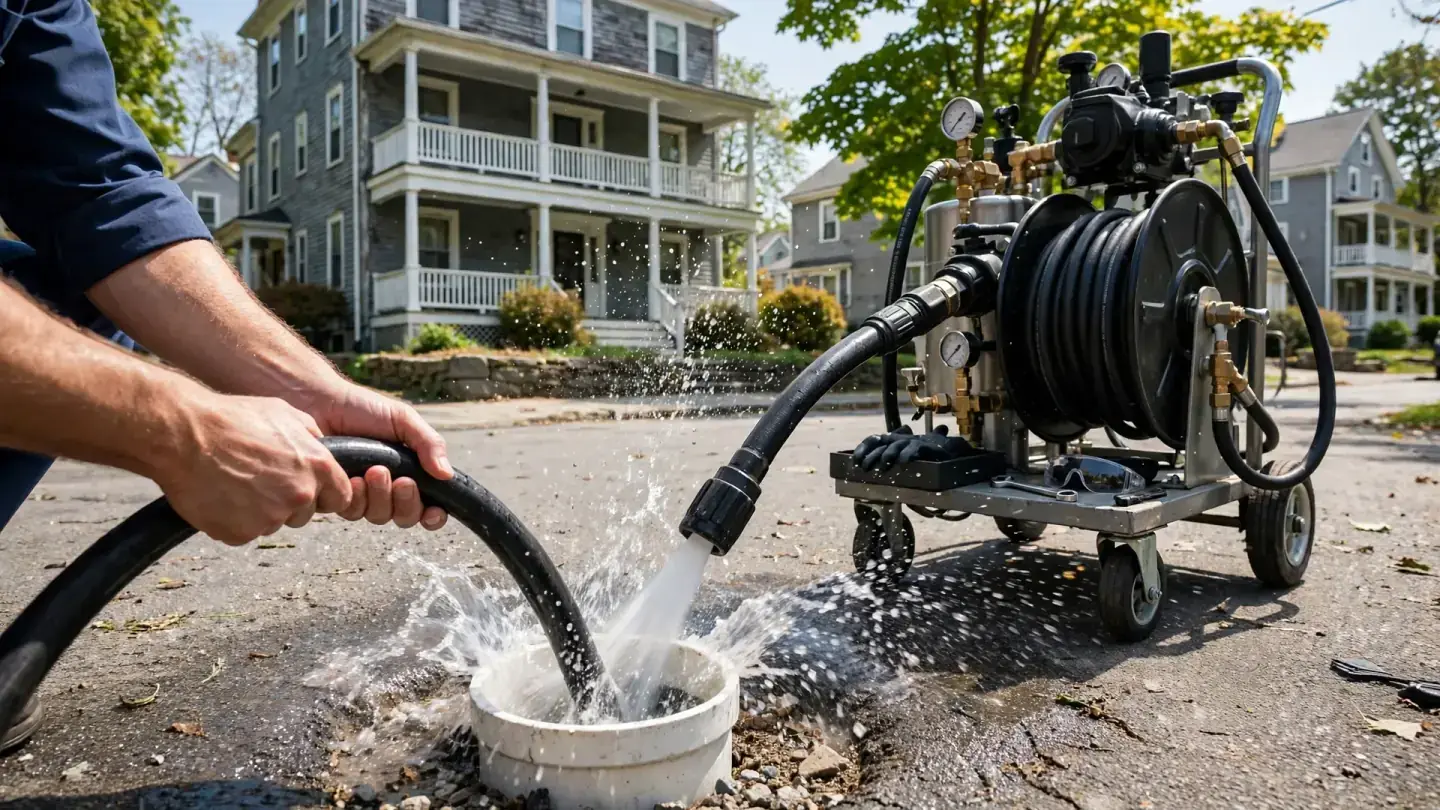
That is why the same sink clogs again a few months after a quick snaking. A small cable punches a hole through the middle of the buildup, but the coating on the walls stays put. Lasting relief usually means cleaning the full diameter of the line through kitchen drain cleaning, and sometimes hydro jetting where the pipe is sound enough to take it.
Reading the sink
Grease clog clues in an older kitchen and what each one suggests
| What you see | Likely cause | What to do |
|---|---|---|
| Sink drains slower each week, no sudden stop | Grease coating thickening along the branch | Have the full line cleaned, not just the trap |
| Your sink is fine but the downstairs sink fills when you run water | Shared kitchen stack narrowing below your floor | Stop running water and call about the stack |
| Clog returns within months of a snaking | Cable left most of the coating on the pipe walls | Ask about a larger cutter or jetting |
| Gray, waxy lumps come up the sink | Hardened fat breaking loose from a horizontal run | Avoid hot water flushing and arrange cleaning |
| Dishwasher leaves standing water in the sink | Shared trap or branch partly blocked | Clear the kitchen branch before running it again |
Safe checks
Checks you can make on a greasy kitchen drain without harm
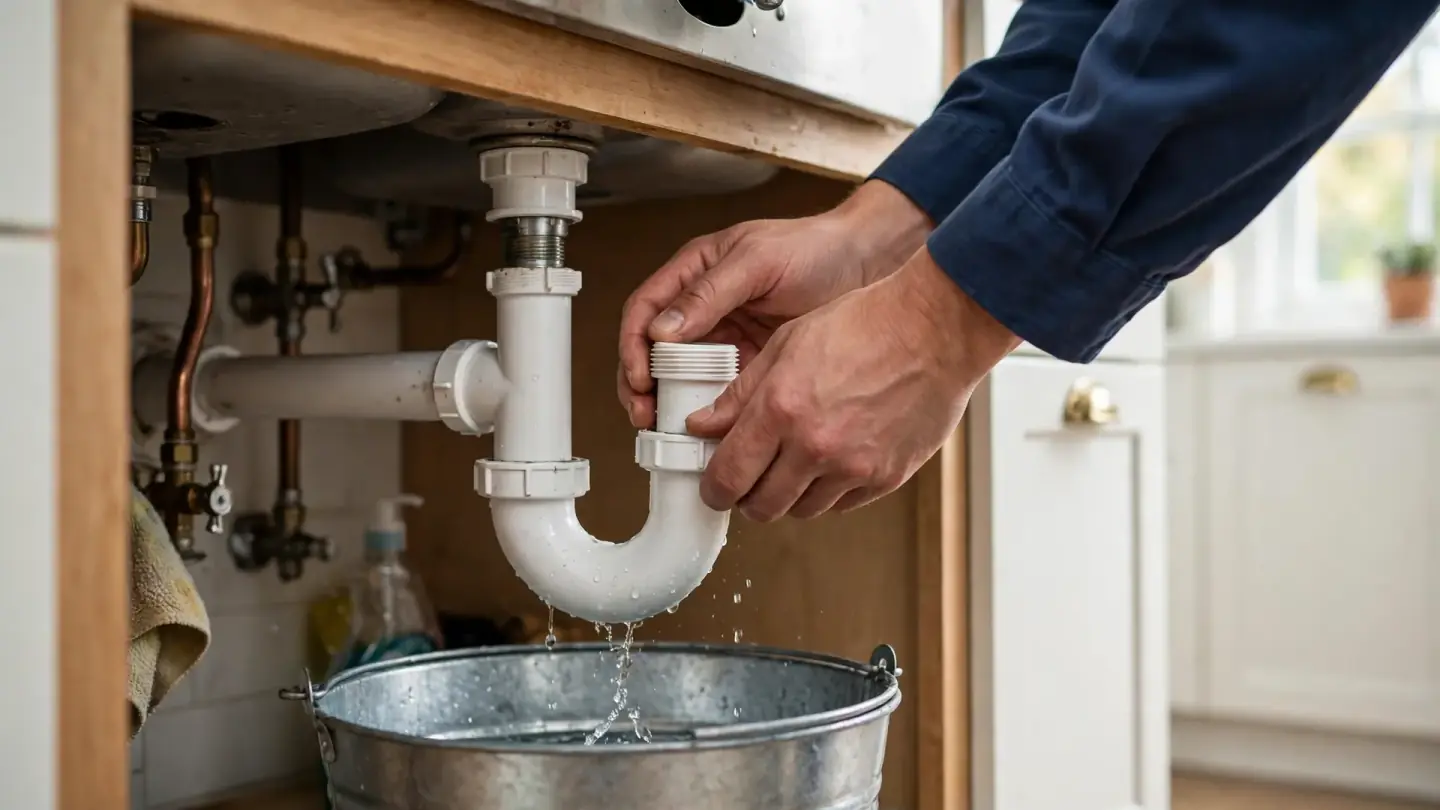
- Look under the sink for the trap typeA plastic slip-joint trap can be removed over a bucket and wiped out. An old metal trap that is crusted at the nuts is best left to the contractor, since it can crack.
- Ask the units below whether their sink is slowIn a stacked house, a downstairs sink that fills when you drain yours points to the shared line rather than your own trap.
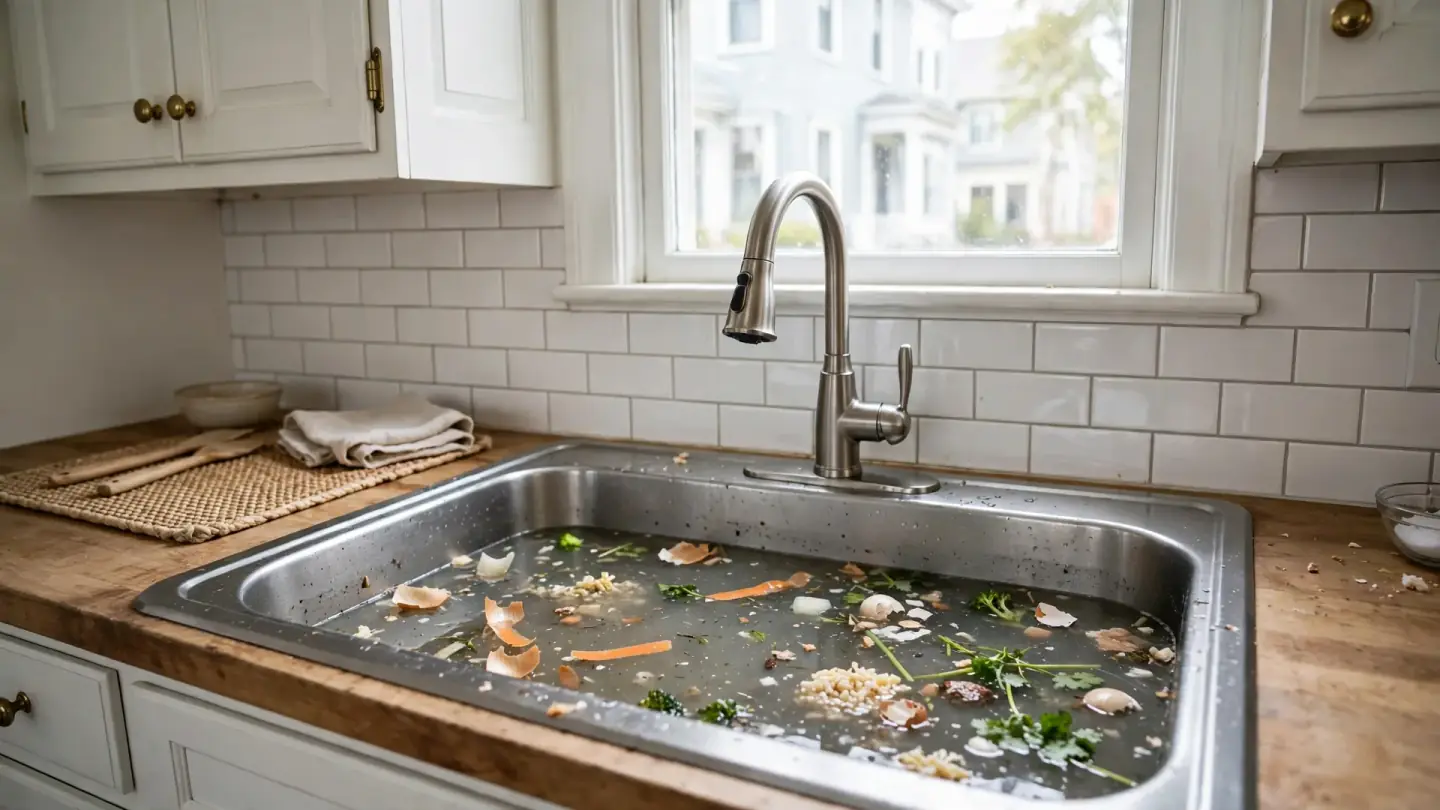
- Run the sink alone and time the dropFill the basin partway, pull the plug, and notice whether the water drains steadily or stalls and then gurgles.
- Skip the boiling kettle and caustic openersVery hot water only moves the fat further down where it sets again, and chemical drain openers can damage old metal piping and endanger whoever clears the line next [5].
Cause one
Rough cast iron and galvanized branches that hold on to fat
Galvanized steel kitchen lines rust from the inside, and the rust swells into the bore. Cast iron scales in a similar way. Either one turns a smooth tube into a surface like coarse sandpaper, which is ideal for grease to anchor. Once a ring forms at a fitting or a low spot, it catches more with each wash. The pipe itself may still be structurally fine, but its usable opening can be a fraction of what it once was.
Cause two
Long, flat kitchen runs across old basements
Many older houses carry the kitchen waste a good distance across the cellar ceiling before it joins the main building drain. A horizontal run with little pitch gives grease time to cool and settle. Joists, later renovations and added fixtures can leave sags where water lingers. A contractor will often find the heaviest buildup right at these flat stretches rather than near the sink.
Cause three
Several kitchens feeding one stack in a multi-unit house
In a triple-decker the kitchens are stacked, so the top-floor kitchen line usually drops past the two below on its way to the basement [6]. Every household adds fat to the same pipe. The lowest kitchen is the first to see trouble because water backs up to the lowest open fixture. That is why a first-floor tenant can get a full sink from a neighbor's dishes. The guide on triple-decker shared drain stack clogs covers stack layouts in more detail, and if water is already overflowing a shared line, see emergency shared stack backup.
Diagnosis
How a drain contractor works out where the kitchen grease sits
- 1
Asking about every kitchen on the line
Which floors share the stack, which sinks are slow, and whether a disposal or dishwasher is connected all help place the blockage.
- 2
Opening the nearest access point
That may be the trap arm, a cleanout on the stack, or a fitting in the basement, chosen so the cable starts close to the clog.
- 3
Running a cable with a cutter sized for the pipe
A head that nearly fills the bore scrapes more of the coating than a small bulb head, which only pokes a hole.
- 4
Checking the condition with a camera when clogs repeat
A drain camera inspection shows whether the problem is grease on sound pipe or a corroded section that needs a plumber.
- 5
Deciding between cleaning and replacing a section
Clearing is not permit work, but cutting out and replacing old pipe is plumbing work for a licensed plumber under a permit [4].
City context
Is there a Somerville rule about kitchen grease at home?
The city's fats, oils and grease program is aimed at food preparation establishments, which need grease control devices and annual approval [2]. Homes are not under that program, but the reason behind it applies in any kitchen: grease that leaves your building can join with other buildup in the sewer and contribute to overflows [3]. Wiping pans and scraping plates into the trash before washing is the household version of the same idea. Restaurant owners should read the commercial drain cleaning page instead.
Prevention
Habits that slow grease buildup in an aging kitchen line
- Wipe pans with a paper towel firstMost of the fat in a pan can go to the trash before the pan ever reaches the sink.
- Collect cooking fat in a canLet it harden and throw it out with household trash rather than rinsing it away.
- Use a sink strainer every timeFood scraps give grease something to bind to inside the pipe.
- Agree on kitchen habits with the other unitsIn a shared-stack house, one heavy-frying household can clog everyone below. The what not to pour down drains guide is easy to share.
- Schedule line cleaning if clogs repeatFor lines that clog more than once a year, preventative drain maintenance keeps the coating thin.
Before you call
Details about your kitchen line that help the contractor
- Which floor the kitchen is onAnd whether kitchens above or below share the same stack.
- How long it has been slowWeeks of slowing points to grease coating; a sudden stop may be a solid object.
- Anything already triedSay if a chemical opener was used, so the contractor can protect skin and eyes.
- Where the basement cleanouts areIf you know, describe them; if not, the guide on finding your sewer cleanout helps.
Grease questions
Kitchen grease clog questions from owners of older Somerville homes
Why does my kitchen sink keep clogging even after it was snaked?
A small cable usually opens a hole through the grease without cleaning the pipe walls, so the coating rebuilds quickly. Ask for a cutter sized to the pipe, or jetting if the line is sound.
Can hot water and dish soap melt a grease clog in an old pipe?
Not reliably. Hot water may soften fat near the sink, but it cools further down and sets again, often in a harder spot to reach. It can buy time but rarely clears the line.
Is it my grease or my upstairs neighbor's that clogged my sink?
In a stacked house it can be either, because the kitchens often share one line. The lowest sink shows the problem first. A contractor can usually tell where the buildup sits once the line is opened.
Is hydro jetting safe for old galvanized kitchen pipes?
Sometimes. Jetting cleans grease well, but badly rusted galvanized or thin cast iron can be weak. Many contractors look with a camera first and adjust pressure or choose a cable instead.
Should I replace an old kitchen drain line instead of cleaning it?
Only if a camera shows corrosion, holes or sags that cleaning cannot fix. Sound old pipe often cleans up well. Replacement is permit work for a licensed Massachusetts plumber.
Does a garbage disposal make grease clogs worse in older houses?
It can, because ground food gives grease more material to stick to inside a rough pipe. If your line is old and clogs often, use the disposal sparingly and scrape plates into the trash.