Key facts: Shower and Bathtub Drain Cleaning
- Every tub and shower drains through a trap that holds water to block sewer gas; soap and hair collect in it [1].
- Tub and shower lines tie into the same drain-waste-vent system as the rest of the house, so a lower blockage can push water up into the tub [2].
- Clearing a stoppage needs no Massachusetts plumbing permit; replacing a tub's waste piping does [3].
- Chemical drain cleaners can harm old pipes and are hazardous if left standing in a tub [4].
How the work is done
How tub and shower clogs are reached without pulling up tile
A bathtub drain is a small system of its own. At the bottom of the tub is the drain opening, threaded into a fitting called the shoe. On the end wall is the overflow plate, which covers a second opening connected to the shoe by a vertical tube. Below both sits a tee that joins them and drops into the trap. Clogs build in the shoe, in the tee, and in the trap bend, usually within a foot or two of the drain.
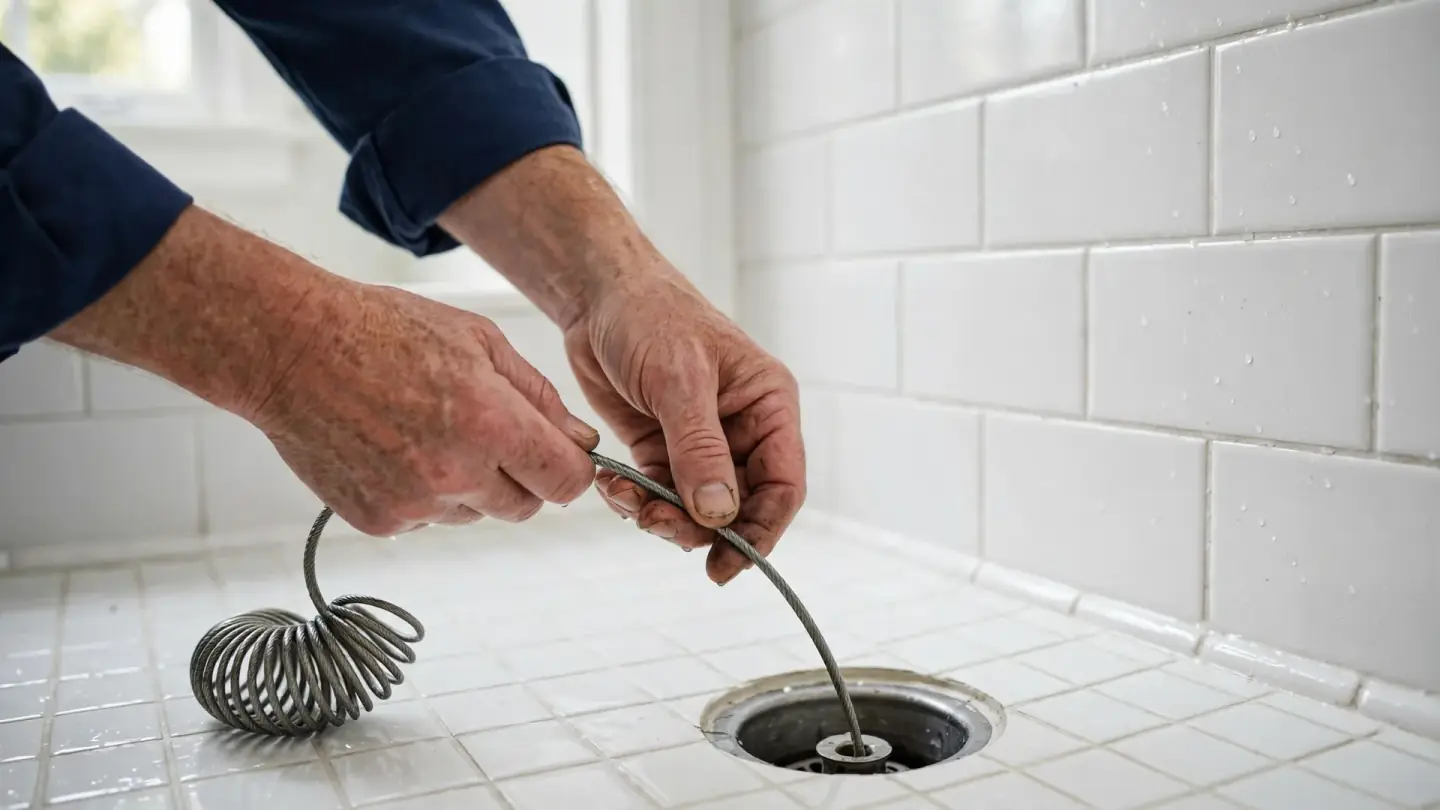
The most useful access point is often the overflow, not the drain. Taking off the overflow plate lifts out the linkage for a trip-lever stopper and gives a cable a straight shot down the overflow tube into the trap, without fighting the tight turn of the shoe. A contractor feeds a small drum machine cable in there, works through the hair and scum, and pulls back what it catches. For a stall shower, the strainer is unscrewed or pried up and the cable goes straight down.
If the tub and sink share a branch, or the stoppage is further along toward the stack, the work follows it. The drain contractor on the call can tell from your description whether a clean shoe and trap are likely to solve it, or whether the line toward the stack needs attention as well.
Renovations add a twist of their own. After a bathroom is retiled, grout dust and thinset often get rinsed down the tub, where they settle like sand in the trap. That grit does not dissolve and cannot be pulled out like hair; it has to be broken up and flushed.
What you might be seeing
Why is my shower draining slowly?
Water pools around your feet during a shower
The drain is accepting less than the showerhead delivers. Hair and soap at the strainer or shoe are the likely cause.
A grey ring of film stays behind after the tub drains
Soap scum is building in the drain line as well as on the tub. That film is what hair sticks to.
The tub gurgles or bubbles when the toilet flushes
Air is moving through the tub trap because flow is restricted below. See the gurgling drains guide for what it points to.
Dirty water rises into the tub when another fixture drains
The blockage is below the tub, in the branch or stack. In stacked homes, read triple-decker shared stack clogs.
The trip-lever stopper no longer holds a bath
The plunger linkage behind the overflow plate may be loose or wrapped in hair. It is often cleaned at the same time as the drain.
Clawfoot tubs
Cleaning the exposed drain on a Somerville clawfoot tub
Clawfoot tubs drain through visible piping: an overflow tube up the end of the tub, a drain shoe under it, and a trap that often drops straight through the floor. Because everything is exposed, the parts are easy to see but frequently old, thin brass with nickel or chrome plating.
That brass deserves gentle handling. Many clawfoot drains in older houses connect to a drum trap or to a lead bend under the floor. Cabling through them is fine with care; twisting seized slip nuts on thin tubing is how a drain cleaning turns into a leak in the ceiling below.
- Overflow tube and shoe are exposed
- Old plated brass is thin
- Trap may sit below the floorboards

The visit, start to finish
Clearing a bathtub or shower stall drain in a Somerville home
- 1
Remove the stopper or strainer
Lift-and-turn, toe-touch and push-pull stoppers unscrew from the drain. Shower strainers are unscrewed or pried free. Hair caught on the crossbars comes out first.
- 2
Take off the overflow plate and lift out the linkage
On trip-lever tubs, two screws release the plate and the plunger linkage. The linkage is cleaned and the opening becomes the cable entry.
- 3
Run a small cable through the overflow into the trap
A drum machine with a thin cable is fed down the overflow tube, through the tee and trap, and onward toward the branch.
- 4
Pull back and inspect the debris
Ropy hair and scum mean a local clog. Sand, grout or plaster grit suggest renovation debris. Rust flakes point to old iron further on.
- 5
Flush hot water and run a full tub
Filling the tub and pulling the stopper tests the line with real volume. Any slowdown means the cable did not reach the whole restriction.
- 6
Refit with new gaskets and adjust the stopper
The overflow gasket is checked or replaced so it does not leak into the ceiling below, and the stopper is set to seal and open fully.
Drain hardware types
Tub and shower drain styles found in Somerville bathrooms
| Drain style | Where hair collects | How it comes apart | Watch out for |
|---|---|---|---|
| Trip-lever tub (plunger behind overflow) | Linkage and shoe | Two screws on overflow plate | Worn overflow gasket leaking below |
| Lift-and-turn or toe-touch tub stopper | Under the stopper head | Unscrews from the drain | Set screw hidden under the cap |
| Push-pull tub stopper | Under the stopper and shoe | Unscrews by hand or with pliers | Stripped threads on old shoes |
| Shower stall strainer | Strainer crossbars and trap | Screws out or pries up | Cracked strainer seats in tile |
| Clawfoot tub drain | Shoe, exposed trap, drum trap | Exposed slip nuts | Thin plated brass and old lead bends |
Before you call
What can I do about a slow tub drain myself?
- Pull the stopper and clear the hairMost tub stoppers unscrew counterclockwise. A pair of rubber gloves and a few minutes clears the hair that causes most slow tubs.
- Plunge with the overflow sealedPut a wet cloth over the overflow plate and hold it firmly, or the plunger simply blows air out of that opening.
- Fit a hair catcher over the drainA simple mesh or silicone catcher keeps the bulk of hair out of the shoe in the first place.
- Run hot water after each shower for a short whileWarm water helps keep conditioner and soap moving rather than settling as a film in the trap.
- Do not pour caustic cleaner into a full tubIf it fails to clear the drain, someone has to bail or cable through a tub full of chemical water [4].
- Stop if the tub fills from another fixtureThat is a blockage below the tub. Plunging only sends water upward somewhere else in the house.
Somerville specifics
Tubs over ceilings: what Somerville's stacked flats mean for shower drains
In a triple-decker, the bathrooms are usually stacked like the kitchens, one above another on the same stack [5]. A tub on the third floor drains down past the second-floor bathroom before it reaches the basement. When the shared stack is narrowed low in the building, the lowest tub is often the first place water appears, even though no one in that unit caused the clog. If water rises in your tub when a neighbor upstairs showers, say so on the call; it changes where the contractor starts.
The stacking also means every tub drain sits over somebody's ceiling. A loose overflow gasket or a cracked shoe will not flood a basement; it stains the kitchen ceiling one floor down. That is why a careful cleaning ends with the overflow gasket checked and the tub tested full, not just a quick run of the tap.
Bathrooms in houses of this era commonly have old cast-iron tubs, lead or brass drain bends, and galvanized branches spliced to cast-iron stacks. Clearing a tub stoppage needs no permit in Massachusetts, but replacing the waste-and-overflow piping, a lead bend or a drum trap is plumbing work for a licensed plumber with a permit from Somerville's inspectional services [3].
Clearing versus fixing
When a tub drain needs only cleaning, and when its parts need replacing
Almost every slow tub or shower is a hair and soap clog that comes out entirely. Shower and bathtub drain cleaning Somerville residents call about usually wraps up with the stopper refitted and a full tub draining briskly.
Parts come into it when the shoe threads are stripped and the stopper will not seat, when the overflow gasket has hardened and leaks, or when an old drum trap clogs again shortly after cleaning. Those are small repairs in their own right, though a stripped shoe in an old tub can take patience. If the trouble turns out to be further down, the next reads are clogged drain repair for the house as a whole and bathroom drain cleaning when the sink beside the tub is slow too.
If the tub is filling with dirty water from somewhere else and you cannot stop it, the emergency drain cleaning page explains how to check on the call if a visit can be arranged tonight.
FAQ
Bathtub and shower drain questions Somerville callers raise
Why does my shower drain slowly even though I clean the strainer?
Hair that slips past the strainer collects in the trap and binds with soap film. Cleaning the top only removes the visible part. A cable through the strainer opening or the trap usually clears what is left below. Hair and soap often sit lower in the trap, past where a strainer can catch them.
Water from upstairs comes up in my tub. What does that mean?
It means the shared stack is restricted below your tub's connection, so water from above takes the easiest exit. Avoid using water and tell the building owner; the stack needs clearing, usually from the basement. It usually means the shared stack or building drain is blocked below your floor.
Can a clawfoot tub drain be cleaned without replacing the old brass?
Usually yes. Careful hands can pull the stopper, cable through the overflow and clean an exposed trap. Replacement only becomes the topic if the brass is cracked or the nuts are fused to the tubing. Often yes; the contractor can clean through the drain and overflow without replacing parts.
My tub leaks into the ceiling below only when it is full. Is that a clog?
Not usually. A leak that shows only with a full tub points to the overflow gasket or the shoe seal. It is worth mentioning, since it is often fixed while the drain is opened for cleaning. It may be a loose overflow gasket rather than a clog, so mention it when you call.
How often should a tub drain be cleaned in a busy household?
There is no fixed schedule. Pulling the stopper and removing hair every few months, plus a hair catcher, keeps most tubs flowing. If yours clogs often despite that, ask about the line further down. Clean the strainer weekly and have the drain cleared when it slows again.
Why does my bathtub drain gurgle after a shower?
Gurgling after a shower usually means air is being pulled through the trap because the drain or vent is partly blocked. It is often an early sign of buildup further down. Clean the strainer, and if it continues have the line checked. The gurgling drains guide explains the causes.
Can hair removal tools damage an old tub drain?
Plastic hair-removal strips are generally safe for most drains. Metal tools forced past the crossbars can scratch finishes or loosen old parts. If you hit something solid, stop and leave it for a contractor. See bathroom drain cleaning for sinks and the services hub for other options.