Key facts: Emergency Basement Sewer Backup
- Basement backups are one form of sanitary sewer overflow, commonly caused by blockages, grease and roots [1].
- Most of Somerville is served by combined sewers, which can run full in heavy storms [2].
- Somerville's Water and Sewer Department responds to emergency calls for sewer backups reported through 311 [3].
- Sewer gas can contain hydrogen sulfide, a toxic gas with a rotten-egg smell [4].
Right now
What should I do first when sewage covers my basement floor?
Stop the inflow, then protect people, then protect the house. Every gallon that goes down a sink or toilet anywhere in the building lands on the cellar floor when the building drain is blocked, so the single most useful thing you can do is get everyone to stop using water. In a two-family or triple-decker that means knocking on doors or texting the other households, not just turning off your own tap.
Next, keep children and pets upstairs and stay out of the water yourself unless you are wearing boots and gloves. Sewage carries bacteria, and the gases that come with it can include hydrogen sulfide [4]. Only after that should you think about moving boxes or rescuing the bikes.
This page is about the household side of the problem. For how a contractor tells a storm surcharge from a blocked lateral and clears the line, see emergency sewer line cleaning. For every urgent drain situation in one place, start from the emergency help hub.
Warning signs
Signs a Somerville cellar is about to take on sewage
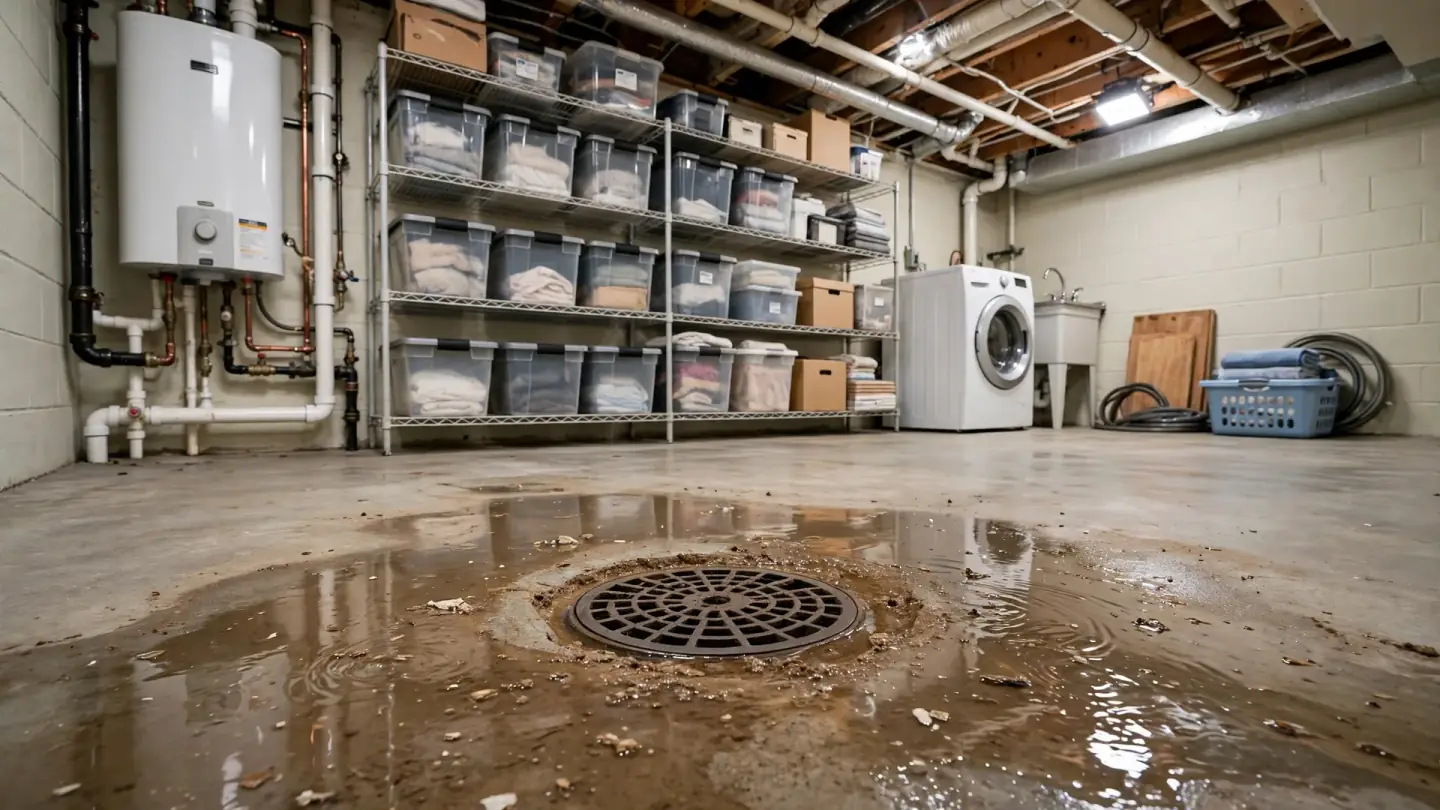
The cellar floor drain is wet or ringed with debris
A dark ring or bits of paper around the grate mean water has already come up and gone back down once.
Toilets on the lowest floor bubble when the washer drains
Air being pushed back up through the lowest fixtures is a sign the building drain cannot carry the load.
A sewage smell appears after showers upstairs
Odor that follows water use, rather than weather, points toward a slow line inside the property.
Several fixtures drain slowly at once
One slow sink is a branch clog. Everything slow at once is the main line, which is what fills basements.
Appliances and power
Keeping the furnace, water heater and washer safe in a flooded cellar
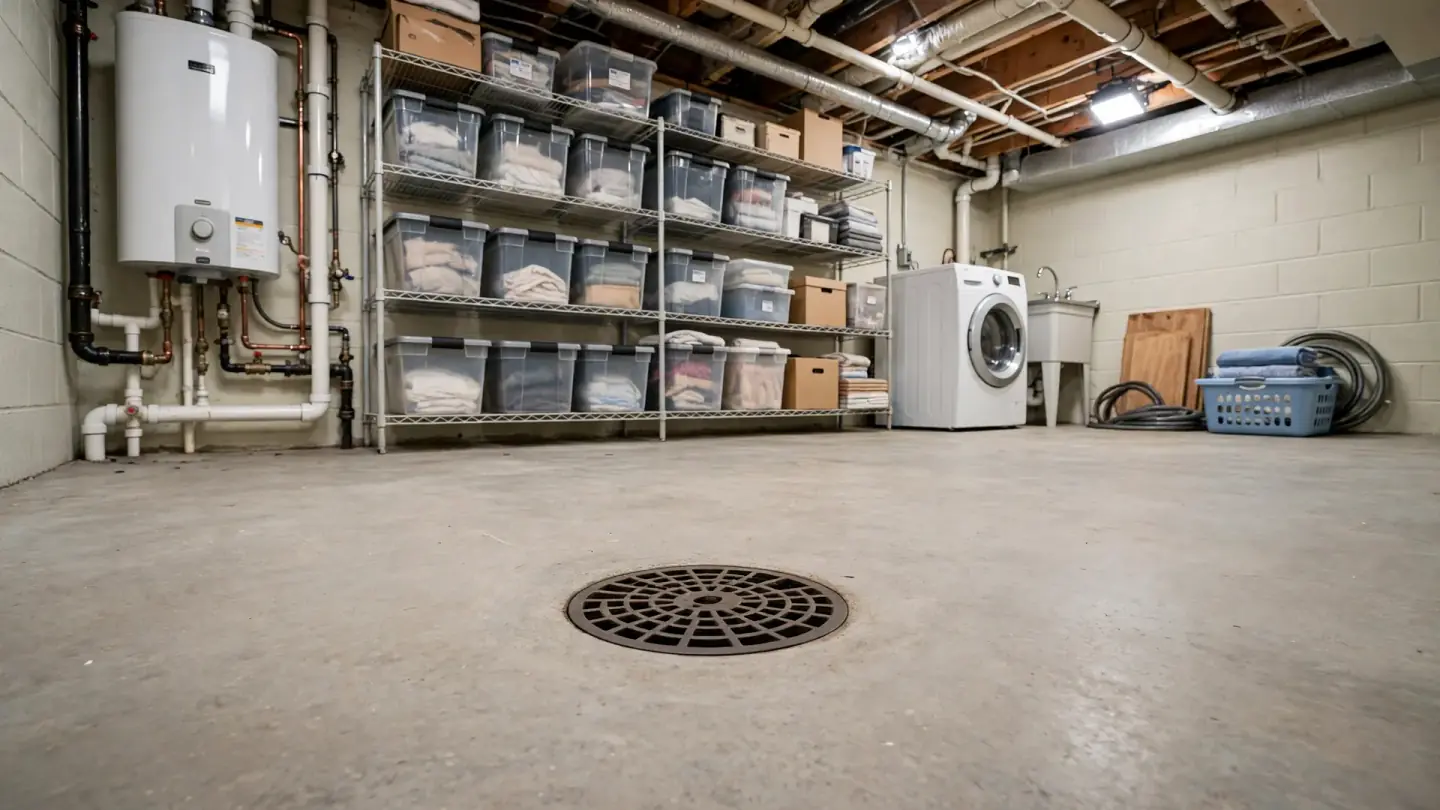
Older Somerville basements often put the boiler or furnace, the water heater, the washer and dryer and the electrical panel within a few steps of the [floor drain](/services/floor-drain-cleaning/). That layout makes a backup more than a mess.
- Never wade toward the panel through standing waterIf you cannot reach the breaker panel while standing on a dry surface, leave the power alone and tell the utility or an electrician instead.
- Do not restart a gas appliance that got wetIf water reached the burner area of a furnace, boiler or water heater, leave it off and ask a qualified heating technician to check it before relighting.
- Stop the washing machine mid-cycleA washer pumps a large volume quickly. If it is running, cancel the cycle so it does not empty into a line that is already full. See the washing machine drain overflow guide for more on laundry backups.
- Keep extension cords and space heaters off the floorUnplug anything plugged in near the water if you can do so from a dry spot, and do not run electric heaters to dry the room yet.
- Never use a gas stove or grill for warmth or dryingIf the heat is out, do not heat the house with a gas stovetop or oven. Leave drying for later, when the water is gone and the power has been checked.
Who to call
The order of calls during a Somerville basement sewage backup
- 1
Call the drain contractor about the private line
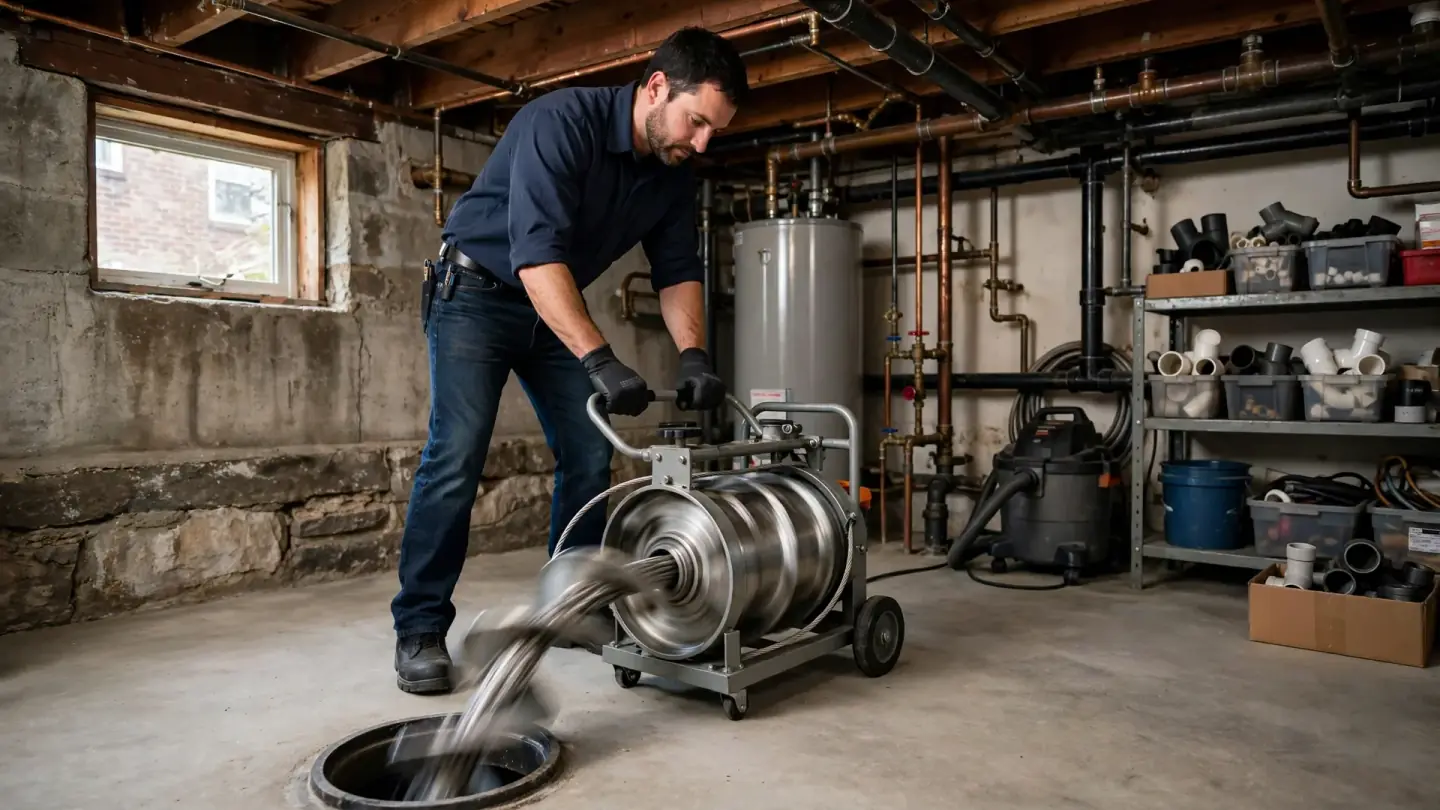
Use the call button to reach an independent local drain contractor, describe the water, and ask whether someone can come out tonight. Have the location of your sewer cleanout in mind if you know it.
- 2
Call 311 if the street sewer is a suspect
If it is pouring rain or neighbors have the same problem, report it to the city's Water and Sewer Department through 311 [3].
- 3
Tell the landlord, condo association or other owners
Shared buildings need everyone to know. The landlord and tenant drain guide covers who usually arranges what.
- 4
Call your insurer once the water has stopped rising
Ask how they want the damage documented before anything is thrown away, and whether your policy has any sewer backup coverage.
- 5
Line up cleanup help for large backups
A water damage or restoration firm can handle soaked drywall, insulation and flooring if the backup was more than a small puddle.
Records
Photographing a basement backup for the insurer and the landlord
Take pictures and short videos from the stairs before anyone starts cleaning: the high-water mark on the walls, the floor drain, appliances standing in water, and anything stored on the floor. A tape measure held against the wall makes the depth clear later.
Write down when it started, whether it was raining, whether other units were running water, and what the contractor found when the line was opened. If roots, grease or a broken section of pipe were the cause, ask the contractor to describe it in plain words so you can pass that on. Keep receipts for anything you have to replace.
Avoid these
Basement sewer backup mistakes and what to do instead
| Tempting move | Why it backfires | Better choice |
|---|---|---|
| Pouring chemical drain opener down the floor drain | It will not reach a main line clog and makes the water caustic for whoever clears it | Leave the drain alone and tell the contractor what was used, if anything |
| Running a garden hose into the drain to flush it | It adds water to a pipe that has nowhere to send it | Keep water off until the line is opened |
| Pumping sewage into the yard or street | It moves contamination and may break local rules | Wait for the line to clear and drain properly |
| Running the dryer or a fan heater to dry things | Electricity and standing water do not mix | Wait until water is gone and power is checked |
| Throwing out ruined items before photos | Insurers and landlords often want to see damage | Document first, then discard |
After the line is open
Cleaning up the cellar after Somerville sewage recedes
Porous things that soaked up sewage, such as cardboard, carpet, upholstered items and the bottom of drywall, generally need to go. Hard surfaces can be scrubbed and disinfected while wearing gloves, boots and eye protection, with windows open for air.
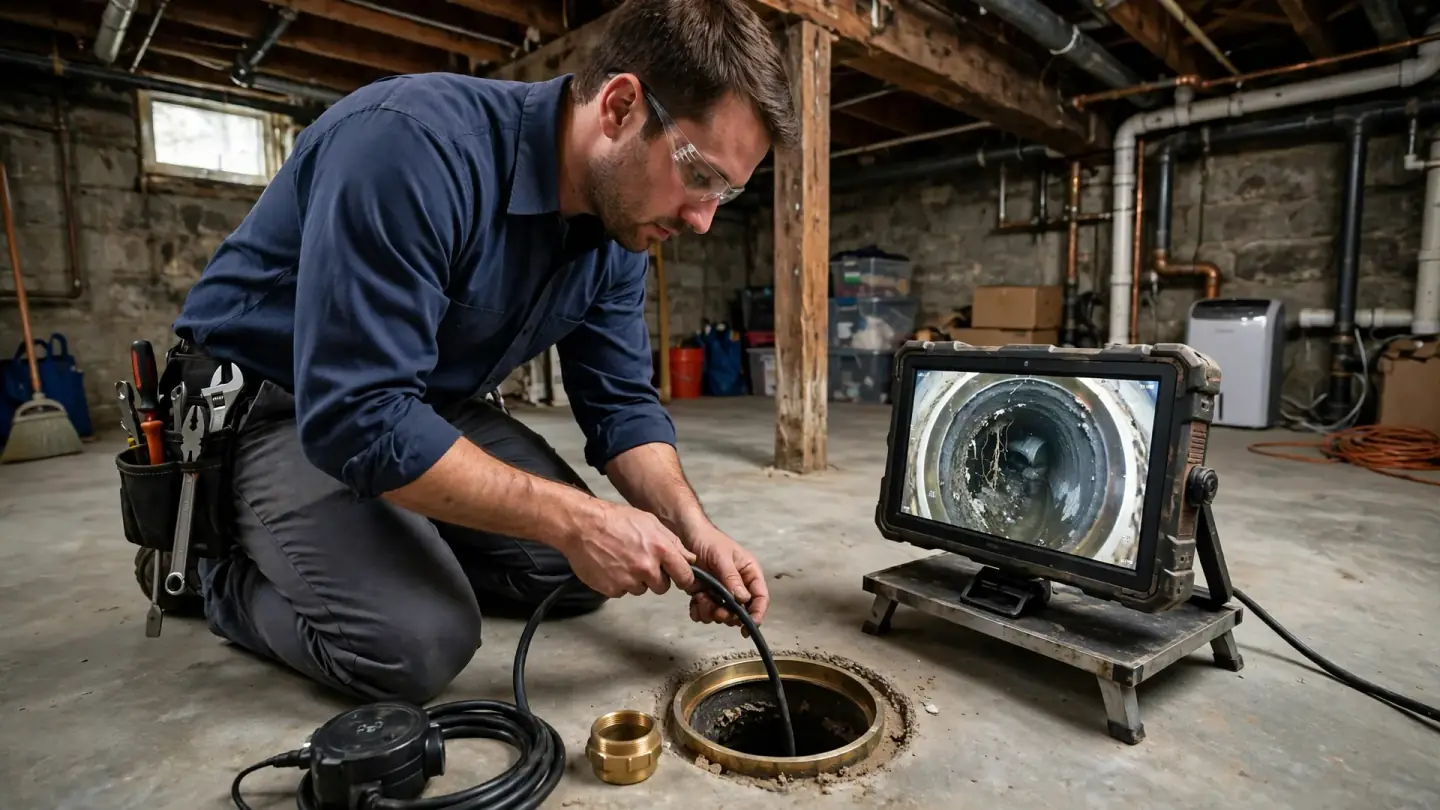
Once the basement is safe, ask whether a camera look is worthwhile. Recurring backups often come from a lateral that is narrowing with roots or scale, and the signs your main sewer line is clogged guide lists the earlier warnings. Ongoing main sewer line cleaning or, for storm-driven backups, a backwater valve may be discussed; the backwater valves explained guide covers that. New valves, cleanouts and pipe repairs are permit work for a licensed plumber in Massachusetts [5].
Local factors
Why Somerville basements are prone to sewage backups
Somerville is one of the most densely settled places in New England, built up largely before the Second World War, with many two- and three-family houses [6]. That means more households feeding each building drain and many lines that are now old. The city's sewers are mostly combined, so heavy rain loads the same pipes that carry household wastewater [2]. Put those together and a cellar floor drain, the lowest opening in the house, is where trouble shows first.
If your backups line up with storms, read sewer backup during heavy rain. If they line up with laundry day or a busy morning upstairs, the problem is more likely inside the property.
Basement sewage
Somerville basement sewage emergency questions homeowners ask
Should I turn off the electricity if sewage is in my basement?
Only if you can reach the breaker panel while standing somewhere dry. If the panel is across wet floor, stay out and ask the electric utility or an electrician for help. Never touch cords or appliances that are sitting in the water.
Can I keep using the toilet upstairs during a basement backup?
No, not until the line is cleared. Every flush on any floor ends up on the cellar floor when the building drain is blocked. Ask everyone in the building to hold off on toilets, showers, sinks and laundry for now.
Is my furnace safe to run after sewage water touched it?
Leave it off if water reached the burner, controls or base. Have a qualified heating technician inspect it before restarting. Wet gas appliances can be unsafe, and a drain contractor is not the right person to judge that.
Who do I call first for sewage in my Somerville cellar?
Call a drain contractor about the private line, and call 311 too if it is storming or neighbors are affected. Then tell your landlord or other owners, and your insurer once the water stops rising.
What should I photograph after a basement sewer backup?
Photograph the high-water line, the floor drain, any appliances standing in water, and stored items that got wet, before cleanup starts. Note the time, the weather, and what the contractor found in the line.
Does homeowners insurance cover a sewer backup in the basement?
It depends entirely on your policy and any endorsements on it, so call your insurer, describe what happened, and ask how they want the damage documented before anything is thrown away.
How do I keep a basement sewage backup from happening again?
Find out the cause first. Roots and scale call for line cleaning and maybe a camera look; storm surcharge may call for a backwater valve fitted by a licensed plumber; grease and wipes call for changing habits upstairs.