Key facts: What not to pour down drains
- Somerville requires food preparation establishments to manage fats, oils and grease with grease traps or interceptors [1].
- Grease traps exist because fats cool and separate from wastewater, building up in pipes if not captured [3].
- Chemical drain cleaners can react dangerously with each other and can harm some pipes and the people using them [2].
- Grease and debris in sewer lines are among the blockages behind sanitary sewer backups [4].
Short answer
The handful of things that clog Somerville kitchen and bath lines
If you remember only four things about what not to pour down drains, make them these: cooking grease, wipes of any kind, coffee grounds, and mixtures of chemical drain cleaners. Grease hardens in cold cast-iron pipe. Wipes do not break apart the way toilet paper does. Coffee grounds settle into a gritty sludge. And two different drain chemicals poured together can react violently or release harmful fumes [2].
Everything else on the list, like rice, eggshells, produce stickers and fibrous peels, follows the same logic. If it does not dissolve quickly in water, it belongs in the trash or compost. When a line does clog anyway, mechanical clearing through kitchen drain cleaning is safer than reaching for another bottle.
Drain-by-drain
Common drain mistakes in Somerville homes and better habits
| What you see | Likely cause | What to do |
|---|---|---|
| Kitchen sink slows a little more every month | Grease coating the inside of the pipe | Wipe pans into the trash; consider jetting if it keeps returning |
| Toilet backs up after wipes were flushed | Wipes snagging and knotting in the line | Bin every wipe, including flushable ones |
| Gritty sludge when the sink trap is opened | Coffee grounds and fine food solids | Send grounds to the trash or compost |
| Tub drains slowly despite cleaner treatments | Hair and soap that chemicals did not reach | Use a hair catcher and have the drain cabled |
| Fumes or heat after pouring a second product | Two drain chemicals reacting | Ventilate, leave the area, and do not add more |
Safe checks
A quick look at your own drain habits
- Check under the sinkIf you have more than one chemical drain product stored there, keep them apart and never use them back to back.
- Look at the strainerA basket strainer in each kitchen sink catches much of what causes slow drains. If you do not have one, it is an easy first step.
- Read the wipe label skepticallyAny wipe, including one marked flushable, is safer in the trash in an old house with long horizontal cast-iron runs.
- Watch the dishwasher outletScrape plates before loading. Food that the dishwasher grinds still travels through the same kitchen line as the sink.
Problem one
Why is cooking grease so bad for drains?
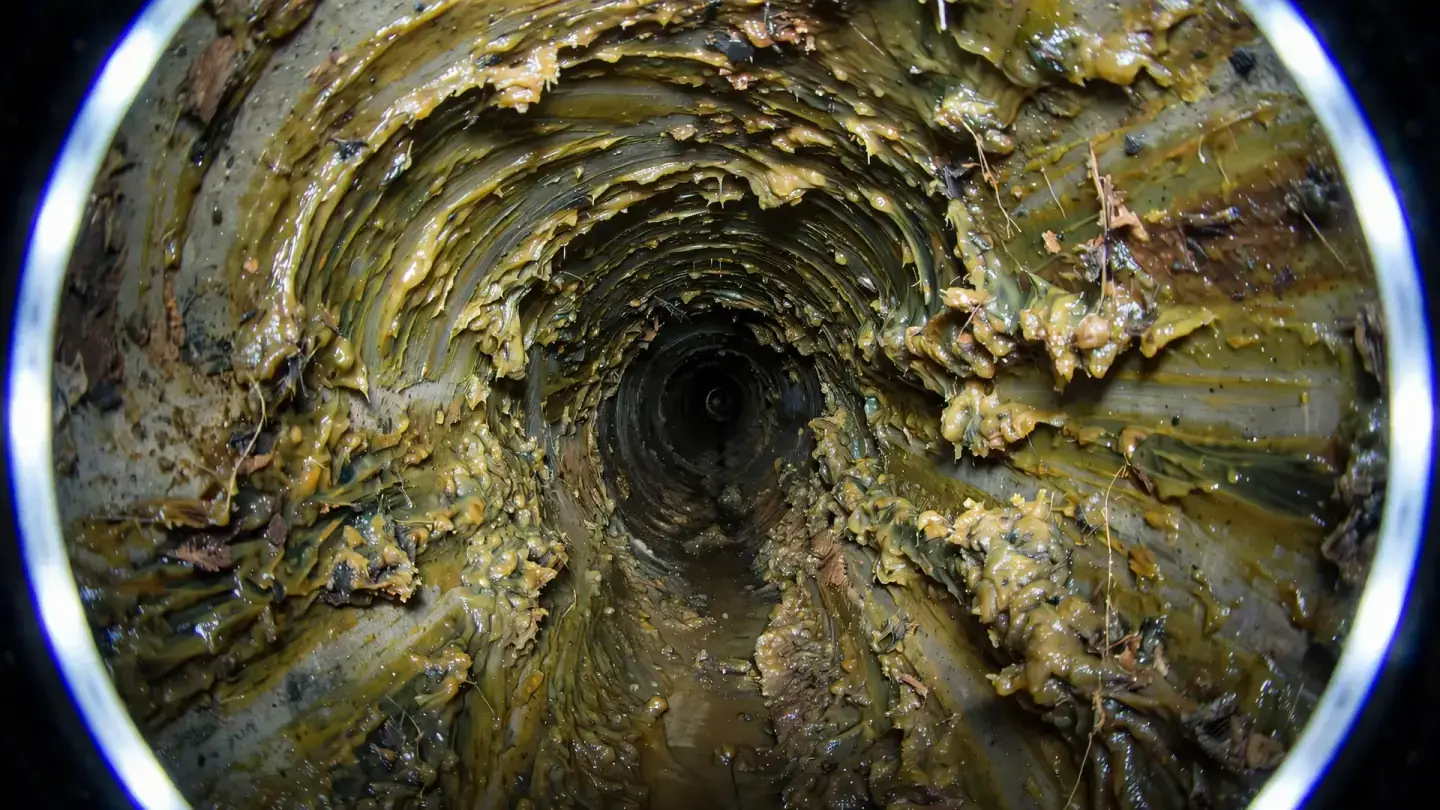
Grease leaves the pan as a warm liquid and travels a short way before meeting cooler pipe. In older buildings with cast-iron stacks along exterior walls, that happens quickly, especially in winter. The fat congeals on the pipe wall, catches food particles, and builds up layer by layer [3]. Running hot water or adding dish soap only moves the problem a little further down the line.
This is serious enough that Somerville runs a fats, oils and grease program requiring food preparation businesses to install and maintain grease traps or interceptors, with yearly approval [1]. Households are not under that rule, but the same chemistry applies in your kitchen. Pour cooled grease into a can, let it set, and throw it out. For a line already coated, hydro jetting scrubs the walls clean.
Problem two
Wipes, paper towels and other things that never break down
Toilet paper is designed to come apart in water within moments. Wipes, paper towels, cotton swabs and similar products hold together much longer. In a house drain, they snag on rough cast iron, root hairs in a clay lateral or the edge of a joint, and they knot together with whatever else comes along.
Grease, roots and debris in sewers are among the blockages behind basement backups, according to the EPA [4]. Wipes are especially troublesome in buildings where three units flush into one main, and they are a frequent find when a contractor clears a toilet through toilet drain clearing.
Problem three
Is it safe to mix chemical drain cleaners?
Chemical drain cleaners come in different types, some strongly alkaline, some acidic, some oxidizing. Poured one after the other, they can boil, spatter or give off toxic gas [2]. Even used alone, a product that does not clear the clog leaves a caustic pool sitting in the pipe, and the next person to plunge or open the trap may be splashed.
Never mix them, and if you have already used one, tell the contractor on the call which product it was and when you poured it. That simple detail protects whoever does the work.
Problem four
Coffee grounds, rice and the gritty kitchen sludge
Coffee grounds do not dissolve. They sink, settle in the bottom of horizontal pipes and bind with grease into a dense layer. Rice and pasta swell. Eggshell fragments act like sand. A garbage disposal grinds all of this smaller but does not make it disappear, so the sludge still reaches the stack.
Diagnosis
How a contractor figures out what went down the drain
- 1
Asking about household habits
Expect friendly questions about cooking, wipes and any chemicals poured recently. Honest answers help them choose the right tool.
- 2
Clearing the trap and branch
The sink or toilet is cleared first, and what comes up on the cable is often a direct answer: grease, wipes or grounds.
- 3
Following the line to the stack
If the clog is deeper, the contractor works from a cleanout toward the stack or main.
- 4
Camera to see the pipe walls
A drain camera inspection shows how much buildup is left and whether jetting would help.
Cleaning or repair
When a habit-caused clog turns into a pipe problem
Grease, wipes and grounds are cleaning problems; cabling or jetting usually restores full flow. Years of heavy grease and caustic cleaners can, however, contribute to wear inside an old cast-iron pipe. If a camera shows a pipe that has thinned or cracked, replacing that section is plumbing work for a licensed plumber under a Massachusetts permit, while the clearing itself is not.
Prevention
Everyday routines for a clog-free Somerville kitchen
- Keep an empty can by the stove for cooled grease and toss it when full.
- Wipe greasy pans with a paper towel before washing them.
- Use strainers in every sink and hair catchers in every tub and shower.
- Keep a small trash bin in each bathroom so wipes have somewhere to go.
- Never stack drain chemicals; if one does not work, call instead of adding another.
- For a building with a history of kitchen clogs, look into preventative drain maintenance.
On the call
Honest details that make clearing a habit clog easier
- Which drain is slow or stopped, and on which floor.
- Whether any chemical drain cleaner was used, which one, and when.
- Whether wipes, grease or grounds may have gone down recently.
- Whether other units share the line and are affected too.
- Whether water is standing in the fixture right now.
FAQ
What not to pour down drains: everyday questions
Is it fine to pour grease down the drain with hot water?
No, hot water only carries the grease further down the pipe, where it cools and sticks to the walls. Over time that coating catches food and narrows the line until it blocks. Let grease cool in a can or jar and throw it away, and wipe greasy pans with paper before washing. See kitchen drain cleaning for what happens when grease has already built up.
Are flushable wipes safe for an older house?
No, wipes do not break down like toilet paper and often catch on rough spots and joints in old cast-iron and clay pipe. They build up with paper and grease into stubborn clogs, and they also cause problems in the public sewer system. Put wipes, paper towels and hygiene products in a bin. The toilet drain clearing page covers what happens when they get stuck.
Why shouldn't I mix two drain cleaners?
Mixing drain cleaners, especially acid and caustic products or bleach with ammonia, can create heat, splashing and toxic gas. If one product fails, the drain is left full of dangerous chemicals. Read labels, never combine products, and tell the contractor if any chemical is in the drain. Mechanical clearing is usually safer and more effective on a real blockage.
Are coffee grounds really a problem?
Yes, coffee grounds do not dissolve; they settle in traps and bends and combine with grease into a dense sludge. A few grounds rinsed from a mug are unlikely to matter, but emptying a filter into the sink regularly will. Put grounds in the trash or compost. Rice, pasta, eggshells and flour behave the same way in kitchen drains.
Does a garbage disposal mean I can put food down the sink?
Only small amounts of soft scraps; a disposal grinds food but does not stop it settling and clogging the pipe further down. Fibrous, starchy or greasy foods are the worst offenders. Scrape plates into the trash first and run plenty of cold water while the disposal works. If the sink already drains slowly, the gurgling drains guide explains warning signs.
Do the city's grease rules apply to my apartment?
Somerville's fats, oils and grease program mainly regulates food service businesses, but grease from homes still blocks pipes and sewers. Residents are encouraged to keep grease out of drains and to dispose of it in the trash. In shared buildings, one unit's grease affects everyone on the stack, as explained in the triple-decker shared stack guide.
What is safe to pour down a slow drain?
Hot water from the tap and a little dish soap are generally safe, but a truly slow drain usually needs mechanical clearing. A plunger or a hand snake can help a single fixture. Avoid boiling water on plastic pipe or porcelain that may crack. If several drains are slow, see clogged drain repair, and the guides page has related tips.