Key facts: Union Square
- Union Square is Somerville's earliest and largest commercial district, with a tavern recorded by 1770 [1].
- Boynton Yards was created in 1874 by filling swampy ground with material taken from the top of Prospect Hill [1].
- The Green Line's Union Square station opened on March 21, 2022 [1][3].
- Since June 30, 2022, Somerville food preparation establishments need yearly approval under the city's grease program [2].
Buildings in the square
What Union Square buildings are like behind the shopfronts
Union Square grew where several roads met, and it has been a place of trade for a very long time: there was a tavern here by 1770, and the Fitchburg Railroad came through in 1843 [1]. The square is still Somerville's oldest and largest commercial area, with restaurants, bars and food markets serving many different cuisines [1].
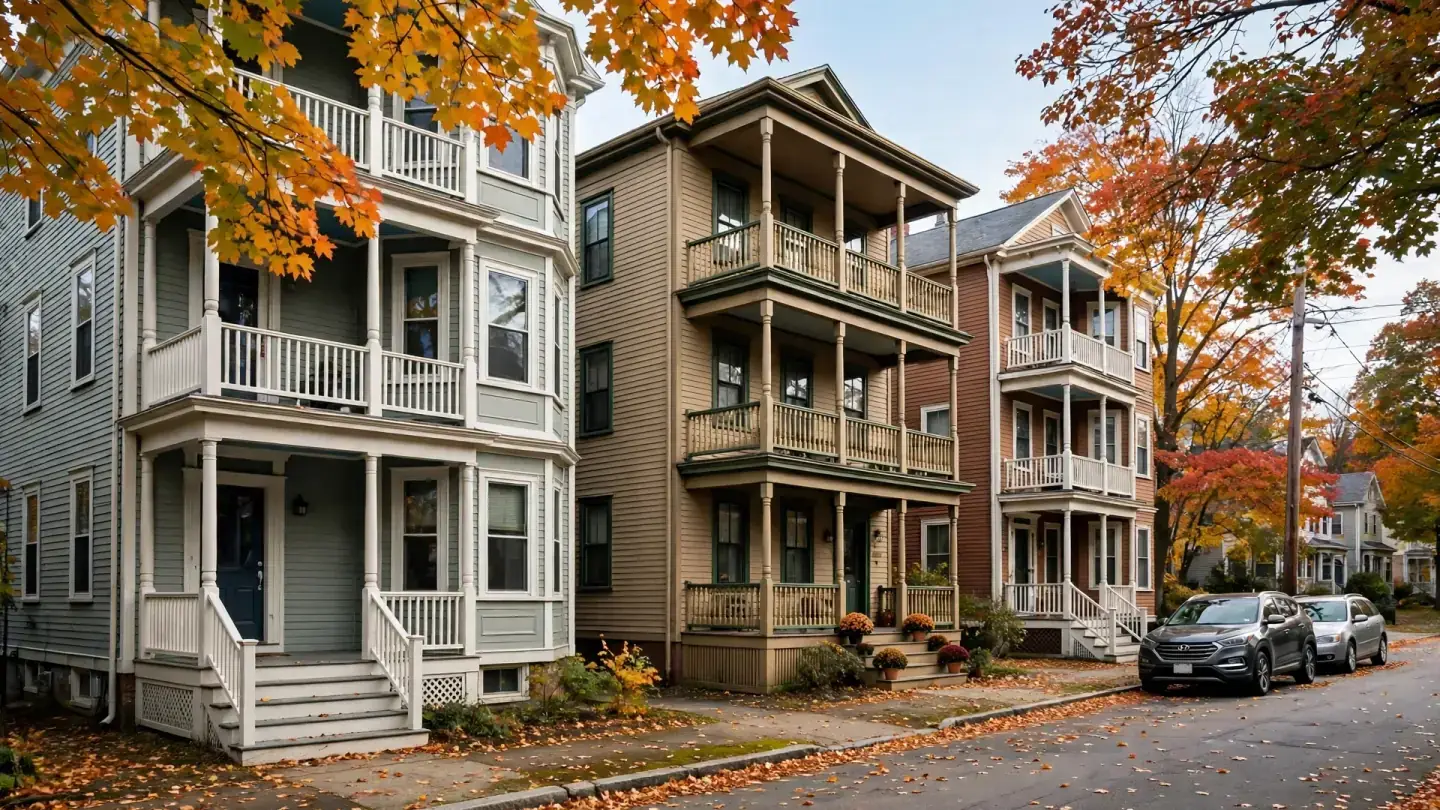
The building stock reflects that history. Around the main intersection, two- and three-storey brick and wood-frame blocks hold shops or restaurants at street level and apartments above. A few steps away, the side streets turn residential, with two-families and triple-deckers on small lots. Toward Boynton Yards and the rail line, older industrial buildings sit alongside new mid-rise apartment and lab buildings that have gone up in the last decade.
That means a single Union Square block can have three very different drainage setups. A mixed-use building may run its restaurant kitchen, its upstairs bathrooms and its apartment kitchens into one building drain. A side-street house follows the familiar stacked pattern of a Somerville multi-family. And a new building on the edge of the square has modern plastic piping, but connects to a street system that is much older.
Most of Somerville's sewers were laid between the late 1800s and the early 1900s as a combined system, carrying both wastewater and storm runoff [5]. The pipes under the square belong to that generation, which is worth remembering when a heavy storm and a busy dinner service arrive on the same evening.
What contractors run into
Drain trouble Union Square buildings commonly see
Grease buildup below Union Square restaurant kitchens
Kitchens that wash pans and plates all day send warm fat into the line, where it cools, hardens and narrows the pipe further down.
Apartment drains tied into commercial lines
Mixed-use buildings of this era commonly have upstairs flats and the ground-floor business sharing one building drain, so one user's problem reaches the other.
Floor drains in Union Square cellars and walk-ins
Commercial basements usually have floor drains near coolers, mop sinks and prep areas; dried traps and grease can make them smell or overflow.
Old connections from filled Boynton Yards ground
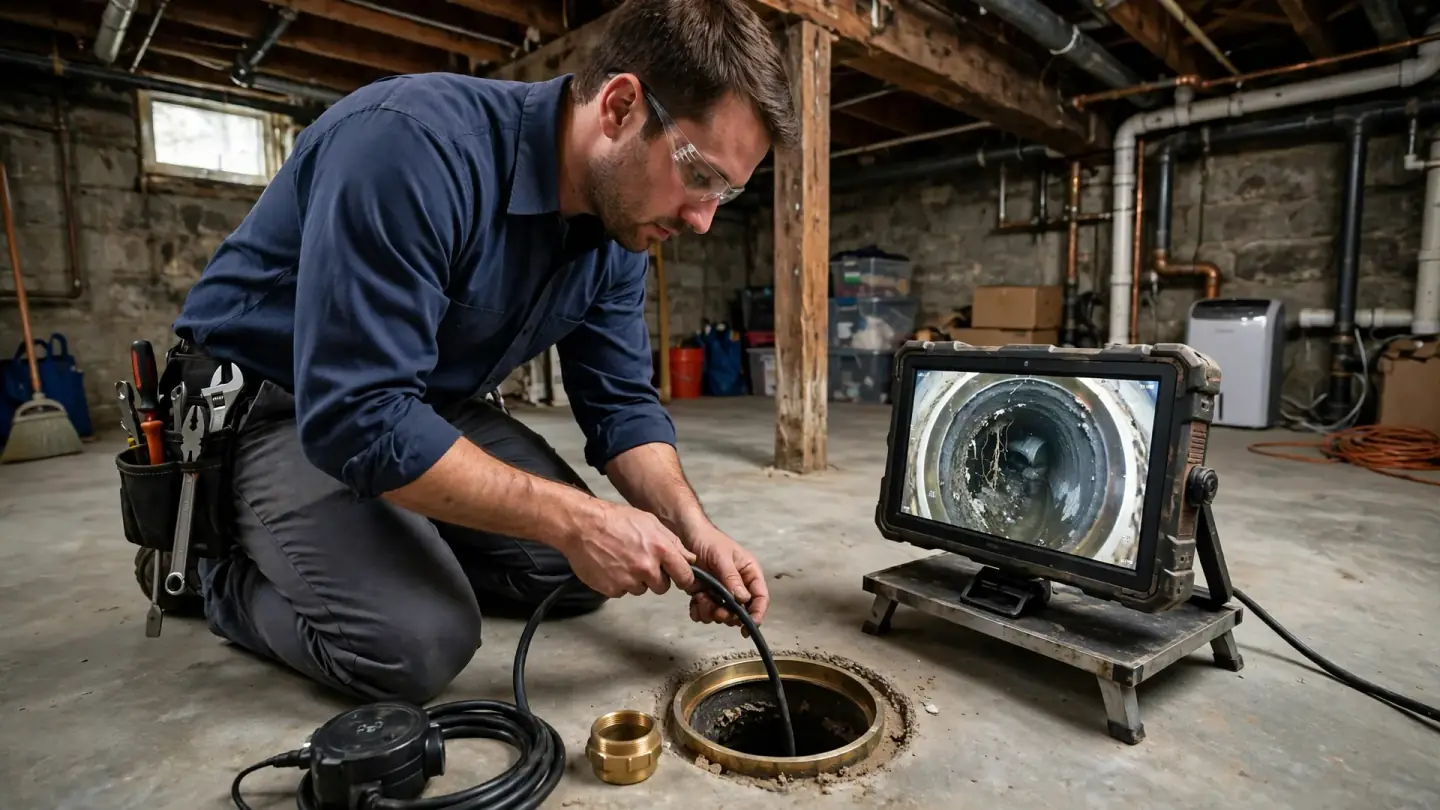
Buildings on made land near the old yards can have long, low connections to the street, where settling and sediment are worth checking with a camera.
Restaurants and grease
What do Somerville's grease rules mean for Union Square restaurants?
Grease is the single biggest drain issue in a square full of kitchens. Fat, oil and grease leave a fryer or a sauté pan as a liquid, then cool in the pipe and stick to the wall. Over time food scraps and soap combine with it into a hard layer that keeps growing. A grease trap or interceptor slows the water down so the fat floats and stays behind, but only if it is sized properly and emptied on schedule [6].
Somerville takes this seriously. The city requires food preparation establishments to have fat, oil and grease management devices, and since June 30, 2022 those establishments need an annual approval under the city's program; Inspectional Services can issue tickets for not complying [2]. For a restaurant owner in Union Square, that means grease control is a regulatory matter as well as a plumbing one.
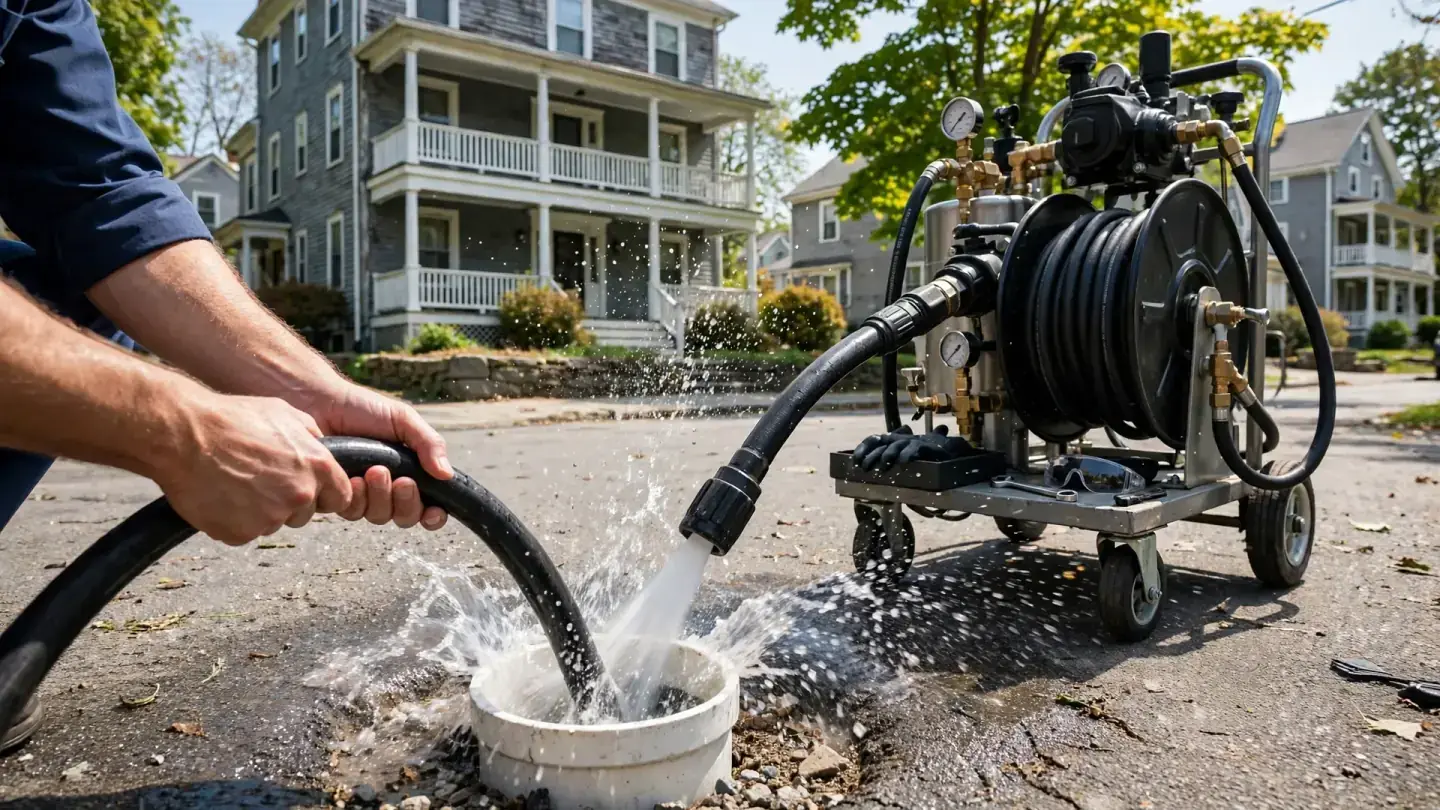
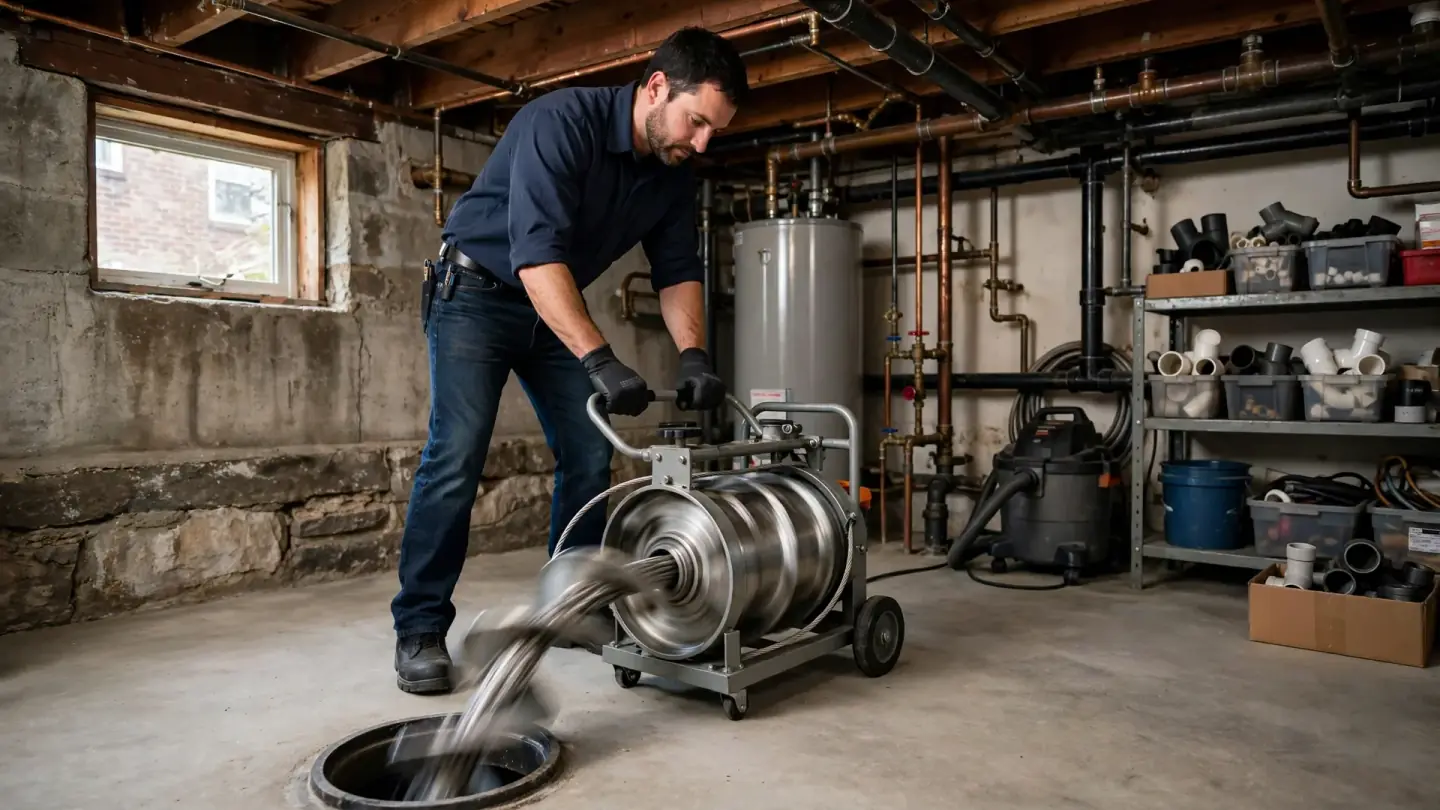
A drain contractor can clear a grease-choked line with a cable machine or, for heavy buildup along a long run, with hydro jetting. Cleaning the line does not replace pumping the interceptor, though. If a kitchen drain keeps slowing down, it is worth asking whether the trap is being serviced often enough for the volume of cooking, and whether staff are scraping plates into the bin before washing.
Businesses looking for ongoing help can read about commercial drain cleaning and preventative drain maintenance, which are the usual ways to keep a restaurant line open between interceptor visits.
Flats over shops
Why does an apartment over a Union Square shop get drain trouble?
Apartments over a shop or restaurant are part of what makes Union Square lively, and they come with a plumbing arrangement worth understanding. The upstairs kitchens and bathrooms drain down through the building, and at the bottom the stack often joins the same building drain that the commercial space uses. When grease from the restaurant narrows that shared line, the tenants upstairs feel it too.
The reverse also happens. Wipes, paper towels or cooking fat from an apartment can catch in the same horizontal run and cause a backup into the restaurant's floor drain or mop sink, which is the last thing a kitchen wants in the middle of service. Because the line is shared, the building owner usually needs to coordinate any work, and it helps to know which fixtures are on which branch.
If you rent above a business and notice a slow tub or a sour smell in the bathroom, report it to the owner early. A sewer smell in the basement of a mixed-use building can come from a dried trap in a rarely used commercial drain, not just from a blockage.
Filled land
Boynton Yards: Union Square's made ground and its drains
Just south of the square, Boynton Yards was created in 1874 by filling swampy land with earth taken from the top of Prospect Hill [1]. The area went on to host meatpacking and manufacturing and is now home to food producers and laboratory buildings [1].
Land that was once swamp behaves differently from the glacial hills elsewhere in Somerville. Filled ground can settle unevenly over time, and pipes laid through it can develop low spots where water and sediment collect. Building connections in a low-lying area also sit closer to the level of the street sewer, which leaves less fall to carry waste away.
None of that means a Union Square building on filled land will have drain trouble. It does mean that a recurring backup in that part of the square deserves a drain camera inspection rather than repeated snaking, so that a sag or an old industrial connection can be identified and dealt with properly.
Green Line change
The Green Line at Union Square and newer buildings
The Green Line Extension reached Union Square on March 21, 2022, giving the square its first rapid transit station [1][3]. The station has helped spur new apartment and commercial buildings around it, and older properties nearby continue to be renovated.
New construction brings modern plumbing, but it does not change the age of the street system that everything connects to. Renovations in older buildings near the square often add bathrooms, laundry and larger kitchens to drains that were never planned for them. When a building changes use, for example from retail to a restaurant, the drainage load can rise sharply, and the grease rules above start to apply.
Permits and boundaries
Permits, grease approvals and city lines in Union Square
- Snaking or jetting a Union Square lineClearing a stoppage is exempt from the Massachusetts plumbing permit requirement under 248 CMR 3.05 [4].
- Replacing pipe or adding an interceptorReplacing a section of drain, adding a cleanout or installing a grease interceptor is plumbing work that needs a licensed plumber and a permit from Somerville's plumbing inspector in Inspectional Services [4].
- Grease program approval for food businessesFood preparation establishments in Somerville need annual approval under the city's fat, oil and grease program, and Inspectional Services can ticket non-compliance [2].
- Properties on the Cambridge side of the squareUnion Square is close to the Cambridge line; an address in Cambridge is handled by Cambridge's own plumbing inspector, not Somerville's.
Planning a visit
Planning a drain visit around Union Square traffic and service hours
Union Square is busy. Loading space on the main streets is limited, side streets are narrow and lined with resident parking, and deliveries compete for the same curb. When you call, explain where a van could stop and how far it is from the cleanout or the basement door.
For restaurants, timing matters most. A kitchen line is easiest to work on before prep starts or after close, when no one is washing dishes. Have the location of the grease interceptor, the cleanouts and any floor drains ready, and make sure someone with keys to the basement or back room will be there.
For apartments above shops, coordinate with the business. If the shared building drain needs work, the restaurant may need to stop running water for a while, and upstairs tenants should pause showers and laundry as well. The building owner is usually the person who brings everyone together.
Side streets
Union Square side-street houses away from the restaurants
Walk a block or two from the main intersection and Union Square becomes a residential neighborhood of two-families and triple-deckers, many climbing the lower slopes of Prospect Hill. These houses have the stacked layout common across Somerville: kitchens and bathrooms above one another, a stack through the building and a building drain across a shared basement.
Their drain problems look more like those of any older Somerville multi-family than those of the restaurants nearby. Grease from home cooking, wipes and hair are the usual culprits, and a clog at the base of the stack shows up first in the lowest fixture. The guide to gurgling drains is a good starting point if you are hearing noises before anything actually backs up.
FAQ
Union Square drain questions from businesses and tenants
Does clearing a Union Square restaurant drain replace pumping the grease trap?
No, clearing the line and servicing the grease trap are separate jobs. Clearing opens the pipe past the trap, but the trap or interceptor still needs emptying on its own schedule under the city's grease program. If the line keeps clogging, ask whether the trap is being serviced often enough for the kitchen's volume.
Why does my upstairs apartment smell like sewer near the square?
Often a dried-out floor drain or rarely used mop sink downstairs is letting sewer gas in. In mixed-use buildings, a partly blocked shared line can also push gas up through traps. Tell the building owner so both can be checked, and see the sewer smell guide for simple checks.
Is drain cleaning in Union Square handled differently for businesses?
The methods are similar, but timing and grease change the job. Restaurants need work planned around service, and long grease-lined runs often call for hydro jetting rather than a cable. Ask the contractor on the call about working outside business hours and about Somerville's grease program requirements.
Who do I call if the Union Square street sewer seems blocked?
Report a suspected public sewer problem to the City of Somerville through 311; the Water and Sewer Department looks after city sewers. A drain contractor can first confirm that your own building drain is clear, which helps the city know the trouble is really out in the street.
Do buildings on the Boynton Yards fill need special attention for drains?
Not automatically, but filled land can settle over the decades. That can leave low spots or shifted joints in older building drains. If a building there keeps backing up, a camera inspection helps find the cause instead of clearing the same clog again and again.
Can a Union Square bakery or cafe share a grease problem with its neighbors?
Yes, when several businesses and apartments feed one older building drain. Grease from one kitchen cools and coats the pipe that everyone uses, and the slowest point is often far from the source. The owner can set up commercial drain cleaning on a schedule that suits all the tenants.
How does Union Square compare with quieter Somerville neighborhoods?
It is the city's oldest commercial center, so it has far more restaurant kitchens and mixed-use buildings than residential areas. Side streets still hold two- and three-families with the usual shared stacks. The Somerville neighborhoods overview compares it with places like Spring Hill, where roots and long laterals matter more.