Key facts: Hydro Jetting
- Jetting nozzles use rear-facing water jets to propel the hose and scour the pipe wall, unlike a cable that only bores a path [1].
- Fats, oils and grease cool and harden inside drains; Somerville requires grease management devices at food preparation establishments [2].
- Clay sewer pipe is joined in short lengths, and roots enter at those joints [3].
- Older cast-iron drains corrode and build scale over time, which can leave the wall thin in spots [4].
Water instead of steel
How hydro jetting scours a Somerville drain line from the inside
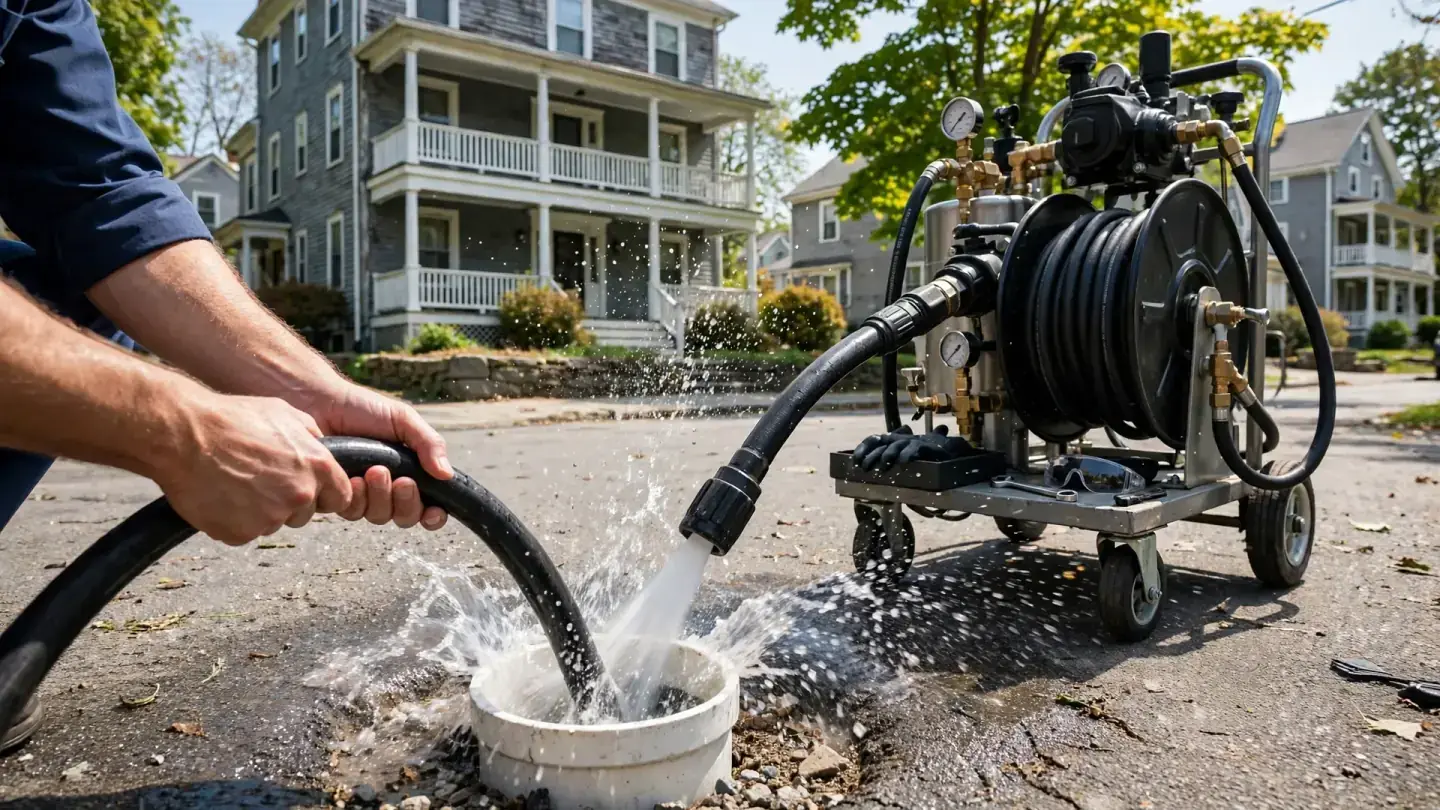
A jetter is a pump, a water supply, a long hose on a reel and a nozzle. The nozzle is the clever part. Most of its openings face backward, so the water leaving it pushes the head forward down the pipe and sprays the wall behind it in a ring. One small forward jet may help cut into a soft blockage. As the hose is pulled back slowly, the rear jets sweep grease, sludge, soap scum and fine roots toward the downstream end, where they wash out to the sewer.
That is the key difference from a cable machine, which bores a path through a clog [1]. A cable can open a grease plug in minutes, but the coating on the rest of the pipe stays put and starts catching food scraps again within weeks. Jetting removes the coating along the whole run, so the pipe is back to its full diameter rather than holding a narrow channel through the middle.
Nozzles vary. A general cleaning nozzle handles grease and sludge. A rotating nozzle spins its jets to work harder on hardened deposits. A root-cutting nozzle or a separate mechanical cutter is used where roots have grown thick. Pressure and flow are set by the contractor for the pipe size and material, and that setting is where judgment matters most in old buildings.
Jetting usually goes in through a cleanout. In Somerville that might be a basement cleanout on the building drain, a cleanout under a kitchen sink, or an exterior access for a commercial kitchen line. The contractor on the call will ask what access you have.
When jetting comes up
When is hydro jetting the right choice for a drain?
These patterns suggest a coated or root-lined pipe rather than a single object stuck in it.
Kitchen drain that clogs again weeks after snaking
A cable opened a path but left grease on the wall. The guide on what not to pour down drains explains how the coating builds.
Read moreFine roots returning in a clay lateral
Hairlike roots regrow quickly after cabling. Jetting can flush the fine growth more completely, as described in tree roots in clay sewer laterals.
Read moreGurgling on a long horizontal run
Sludge along the bottom of a long pipe slows flow and traps air. See gurgling drains for the other causes to rule out.
Read moreRestaurant or shared-kitchen line slowing between cleanings
Commercial kitchens send a steady load of grease even with a grease interceptor in place. Jetting on a schedule is common for these lines.
Read more
The jetting visit
Step by step: a camera-checked hydro jetting job in an older building
- 1
Opening the line if it is fully stopped
A jetter needs water to flow away. If the line is completely backed up, a cable is often run first to open a path so the jetting water has somewhere to go.
- 2
Looking at the pipe before any pressure goes in
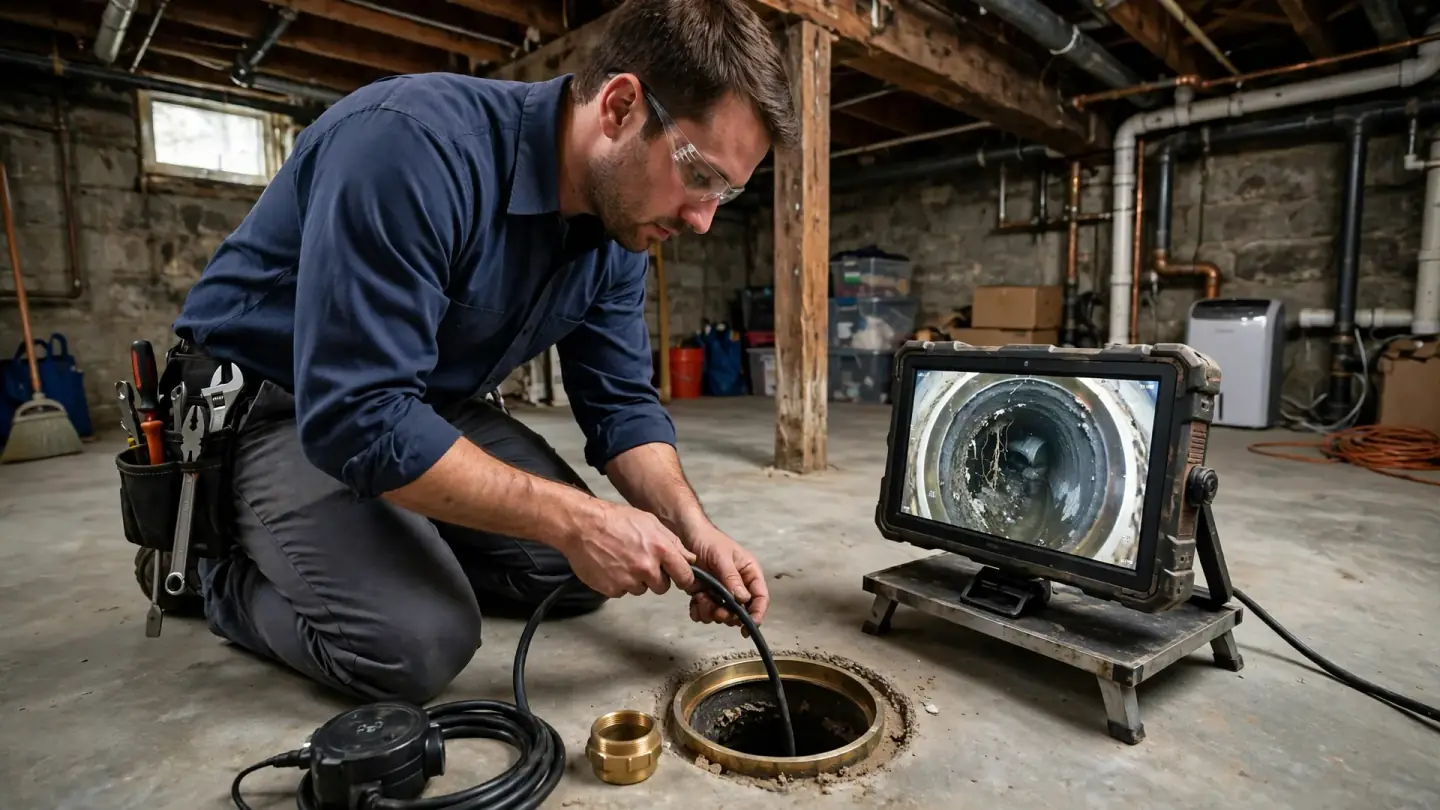
A camera is run through the line to check material, joints and wall condition. A drain camera inspection at this stage is what tells the contractor whether jetting is safe here.
- 3
Choosing the nozzle and setting the pressure
Pipe diameter, material and what was seen on camera decide the nozzle and the pressure. Thin cast iron and old clay get gentler settings, or no jetting at all.
- 4
Working the hose out and drawing it back slowly
The nozzle travels to the far end of the section and is pulled back in steady passes. Debris washes downstream toward the street sewer.
- 5
Running the camera again after cleaning
The second look confirms the coating is gone and checks whether cleaning exposed a crack, a broken joint or a sag that the buildup had hidden.
- 6
Explaining what was found and what it suggests
You hear what came out, how the pipe looks underneath, and whether the result points to a maintenance schedule, a habit change in the kitchen or a repair conversation.
Water or cable
Is hydro jetting better than snaking for old pipes?
Neither method is right for every line. Pipe material and condition decide more than the clog does.
| Line condition | Water jetting | Sectional cable | Usual choice |
|---|---|---|---|
| Grease-coated kitchen line, sound pipe | Removes coating along the whole run | Opens a path, coating stays | Jetting |
| Fine roots in a clay lateral with intact joints | Flushes fine growth well | Cuts roots, leaves fragments | Either, often both |
| Heavy, woody roots | May need a cutting nozzle | Root-cutting head is effective | Cable first |
| Thin or heavily scaled old cast iron | Risk of opening a weak spot | Gentle descaling with care | Camera, then cautious cable or repair planning |
| Cracked or offset clay joints | Water can wash soil through the gap | Can catch on the offset | Camera and repair discussion |
| Wipes or a solid object | Not the right tool | Bores through or retrieves | Cable |
Homeowner limits
What you can do about grease and roots yourself, and why jetting stays with the pros
Prevention is mostly in your hands. The jetting itself is not.
- Wipe pans before washing themPaper towel in the trash takes most of the grease out of the equation. It is the single most useful habit for a kitchen line on a shared stack.
- Run plenty of hot water after the dishwasherIt will not dissolve old buildup, but it helps carry the day's soap and fats further down before they cool and stick.
- Keep a record of when the line was last cleanedKnowing the interval between backups lets a contractor suggest a jetting schedule that stays ahead of the problem.
- Do not rent a jetter for an old houseRental units can deliver enough pressure to damage thin cast iron or old clay, and a hose stuck in a broken pipe is a hard retrieval.
- Do not use a pressure washer in a drainA surface washer and its nozzles are built for decks and siding. In a drain line it can kick back, spray contaminated water and damage pipe.
- Skip the enzyme-plus-chemical combinationsMixing products in a drain can react, and none of them clears an established grease coating from a long run of pipe.
Somerville specifics
Jetting old Somerville pipe: grease rules, combined sewers and permits
Union Square, Davis Square and the stretch along Broadway are lined with restaurants, bakeries and markets, and their kitchen lines carry a lot of grease. Somerville requires food preparation establishments to have grease management devices, and since mid-2022 those devices need annual approval, with Inspectional Services able to ticket businesses that fall short [2]. Even with an interceptor in place, the pipe downstream can slowly coat, which is why scheduled jetting is common for these kitchens. The commercial drain cleaning page covers that side in more detail.
Whatever is jetted out of your line goes into the city sewer. Most of Somerville is on a combined system, where wastewater and stormwater share the pipes and normally flow on to the MWRA's Deer Island plant for treatment [5]. That is one more reason to keep grease out at the sink rather than relying on cleaning to flush it away: a grease mass moved downstream becomes someone else's blockage, and grease buildup in sewers is a known cause of overflows.
Jetting a clogged line is the clearing of a stoppage, which Massachusetts plumbing rules exempt from a permit [6]. If the after-cleaning camera run shows a cracked or collapsed section, replacing it is a different matter: that is work for a Massachusetts-licensed plumber under a permit from Somerville's plumbing inspector, and any digging in the yard needs a Dig Safe call to 811 beforehand.
Clean or repair
When jetting the line is enough and when the pipe underneath needs fixing
Jetting is usually enough when the camera shows sound pipe with a coating on it. Once the grease or fine roots are gone, the line flows at full size and can stay that way for a long time with sensible kitchen habits. Lines with modest root intrusion through otherwise tight joints often do well on a regular jetting schedule, which a preventative drain maintenance plan can organize.
It is not enough when the cleaning reveals the problem was holding the pipe together. Old cast iron sometimes looks fine until the scale comes off and the camera shows a channel worn through the bottom. Clay laterals can show joints that have separated far enough to let soil in. In those cases, jetting has done its job by revealing the defect, and the next step is a repair plan. Jetting is also the usual preparation before a liner is installed, because a liner needs a clean host pipe.
For a grease backup that will not wait, emergency hydro jetting explains what to expect; call to check emergency availability. Hydro jetting in Somerville is usually planned work, and planned work gives time for the camera look first.
Jetting questions
Questions about hydro jetting in Somerville homes and kitchens
Can hydro jetting damage an old cast-iron drain?
It can if the pipe is already thin or heavily corroded. That is why a camera look comes first. On sound pipe at sensible pressure, jetting cleans without harm; on weak pipe, the contractor should choose a gentler method. Ask to see the footage before jetting starts.
Is jetting better than snaking for a kitchen sink line?
For a grease-coated line, usually. Snaking opens a path through the middle and leaves the coating. Jetting removes it along the whole run, so the line tends to stay clear longer. For a single sink trap a cable often does the job; jetting earns its place when grease coats a long run.
Will water jetting remove tree roots from a clay lateral permanently?
It removes the roots inside the pipe, but the open joint they grew through remains. Fine roots usually come back over time, so lines with roots often go on a cleaning schedule or get repaired. Roots usually grow back, so regular cleaning or a repair at the joint is part of the plan.
Why do contractors want to run a camera after jetting too?
Buildup can hide a crack, a sag or a separated joint. The second look confirms the pipe is clean and checks whether cleaning uncovered a defect that needs attention. Footage after cleaning confirms the pipe is clear and shows any defects the buildup was hiding.
Does a triple-decker need jetting from every unit's kitchen?
Not usually. If the shared stack and building drain are the trouble, jetting from a basement cleanout covers them. Individual kitchen branches are jetted only if they are coated too. Usually the shared riser is jetted from one access point that reaches all the lines feeding it.
How long does hydro jetting a drain line take?
A typical residential jetting job takes part of a visit, including the camera check before and after. Long runs, heavy grease, roots or awkward access can stretch it out. In a triple-decker, several stacks may be done on one visit. The contractor you're connected with can estimate once they see the line.
Is hydro jetting messy inside the house?
It should not be if the contractor sets up properly. Water goes in through a cleanout or access point and leaves through the drain, and the area around the opening is protected. Clear space near the cleanout before they arrive. Related options are on the services hub and the camera inspection page.