
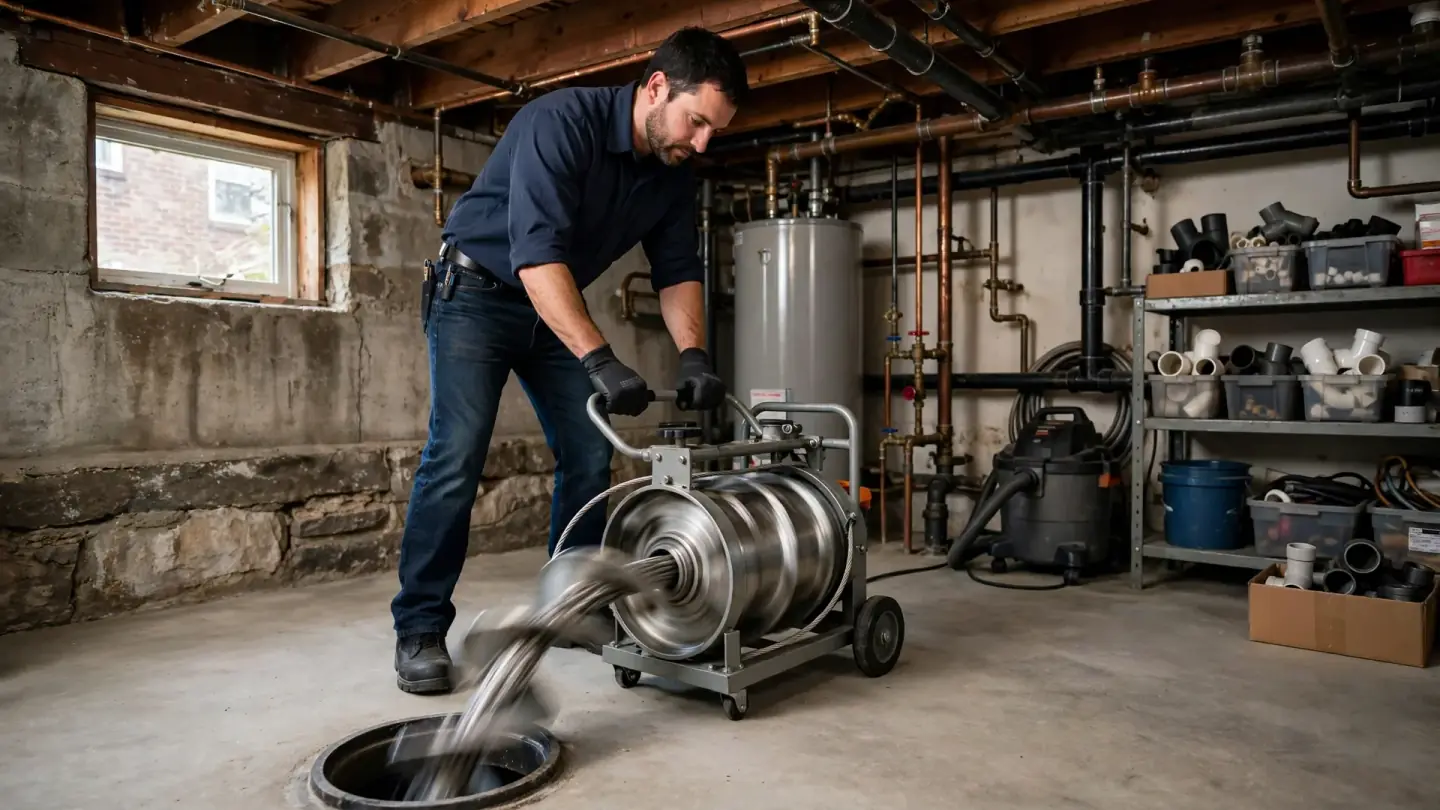
Key facts: Finding your sewer cleanout
- A drain-waste-vent system includes cleanouts, capped openings that give access for clearing blockages [1].
- A plumber's snake is fed through such an access point to break up a blockage in the line [2].
- Installing a new cleanout alters drain piping, which is permit work for a licensed plumber in Massachusetts [3].
- Massachusetts requires a Dig Safe call before excavating, even on private property [4].
Short answer
Where is the sewer cleanout in an older Somerville house?
Start in the cellar and find the largest drain pipe, the one the stacks feed into. Follow it toward the street side of the house. Near the point where it disappears into the foundation wall or the floor, look for a fitting with a round threaded plug, a square nut on top, or a removable cap. That is the main cleanout in most houses of this age [1].
Some buildings have more than one. You may find a cleanout at the base of each stack, a capped fitting on a trap set in the floor, or an outdoor cleanout near the front walk on newer or renovated properties. Others have none that is easy to reach, which is useful to learn now rather than on the night the floor drain is filling.
Spotting it
What a cleanout looks like and what to do once you find it
| What you see | Likely cause | What to do |
|---|---|---|
| Brass or iron plug with a square nut on the main drain | Original main cleanout | Note it; leave it closed |
| Two capped openings set into the cellar floor near the front wall | A house trap with cleanout plugs | Point it out to the contractor |
| White plastic cap on a short pipe in the yard | Newer outdoor cleanout on the lateral | Keep it clear of mulch and snow |
| Fitting at the foot of a stack with a threaded plug | Stack-base cleanout | Mention which stack it serves |
| Plug painted over or seized solid | Cleanout unused for decades | Ask whether it can be freed or replaced |
Safe checks
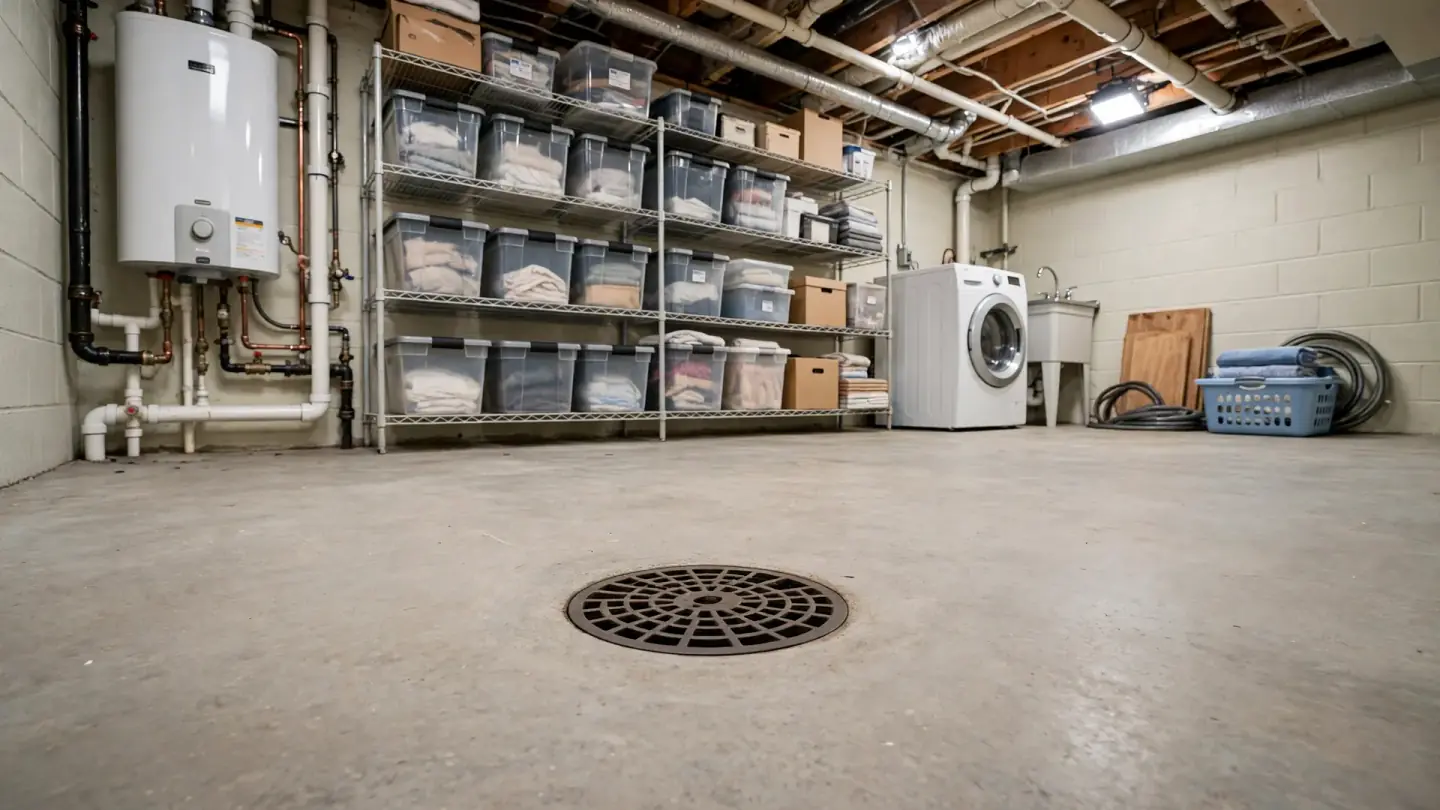
A safe way to search a cellar for the sewer access point
- Search on a dry dayLook while everything is working. A backed-up line puts pressure behind the cap, and that is not the moment to be learning the layout.
- Move storage away from the front wallBoxes, shelving and paneling often hide the cleanout. Leave a clear space around it.
- Take a photo and mark itA photo on your phone, plus a note for other owners or tenants, saves time when someone else has to describe it on a call.
- Do not loosen the plugOld plugs can be seized, and forcing them can crack the fitting. Opening a cleanout is a job for the contractor.
Why it matters
Why opening a cleanout during a backup can make things worse
When the main line is blocked, every drop that went down the drains is sitting in the pipe above the clog. The cleanout is often the lowest opening, so loosening its plug releases that water all at once, onto the floor and onto whoever is kneeling there. Contractors open a full line slowly, with buckets, a wet vacuum and a plan for where the water goes.
If sewage is already rising, stop using water and read the emergency basement sewer backup page instead of reaching for a wrench.
House traps
The old house trap set into some Somerville cellar floors
Many older New England houses have a house trap, a U-shaped fitting on the building drain near the front wall with two capped openings at floor level. It was meant to keep street sewer gas out of the building. It also gives a contractor a convenient access point, though it can catch debris and become a clog point of its own.
If you see two round plugs side by side in the floor, mention them on the call. A contractor will usually know which side faces the street and which faces the house.
No cleanout
When an old building has no usable cleanout at all
Some buildings have a cleanout that is buried behind a finished wall, set in concrete, or rusted beyond use. A contractor can often still reach the line by pulling a toilet or going through a roof vent, though that is slower and messier for a main line clog.
Adding a proper cleanout is a sensible upgrade after a backup. It alters drain piping, so it is permit work for a Massachusetts-licensed plumber [3][5]. An outdoor cleanout that requires digging also needs a Dig Safe request before excavation [4].
On site
How a contractor uses the cleanout to reach a main line clog
- 1
Confirming which line the cleanout serves
Main drain, single stack or a house trap each leads in a different direction.
- 2
Relieving pressure carefully
The plug is cracked open a little at a time so trapped water can be caught.
- 3
Feeding the cable toward the street
A sectional or drum machine runs out through the lateral until the blockage gives way [2].
- 4
Running a camera if needed
The same opening lets a sewer line inspection show roots, scale or a sag.
- 5
Resealing the plug
A fresh plug or tape keeps sewer gas from escaping once the work is done.
Prevention
Keeping the cleanout ready for the day you need it
- Keep a clear space around itLeave room for a machine and buckets near the cleanout.
- Watch an outdoor cap through winterShovel and mark it so it is not buried under snow or struck by a plow.
- Ask about a seized plug during routine workIf a contractor is already there for main sewer line cleaning, ask whether the plug should be replaced.
On the call
Cleanout details that help the drain contractor plan the visit
- Where it is and how to reach itCellar wall, floor, yard, behind a panel, or not found.
- What kind of fitting it isPlug with a square nut, plastic cap, or a pair of floor plugs.
- Whether water is standing above itThat tells the contractor to expect a full line under pressure.
- Which fixtures are backing upThe pattern of symptoms is explained further in signs your main sewer line is clogged.
Cleanout questions
Spoken questions about finding a sewer cleanout
What does a sewer cleanout cap look like?
Usually a round threaded plug with a square nut on top, set in a fitting on the main drain. Outdoors it is often a white or black plastic cap on a short pipe sticking out of the ground.
Can I open the sewer cleanout myself when the basement is backing up?
It is safer not to. A blocked line holds water under pressure behind the plug, and opening it can release sewage all at once. Stop using water and let the contractor open it with the right setup.
What if my house doesn't have a sewer cleanout?
A contractor can often reach the line through a toilet flange or roof vent. After the clog is cleared, ask a licensed plumber about adding a cleanout, which needs a permit in Massachusetts.
Is the two-plug fitting in my cellar floor a cleanout?
Probably. Two round plugs side by side near the front wall usually mark a house trap on the building drain. It gives access to the line, and it can collect debris of its own.
Why does the drain contractor ask where my cleanout is?
It decides how they reach the clog and what equipment to bring. A clear, known cleanout usually means less mess and a quicker path to the main line.
Do I need to call Dig Safe to add an outdoor cleanout?
Yes, if the job involves digging. Massachusetts law requires the area to be pre-marked and a Dig Safe request made before excavation, even on private property.