Key facts: Backwater valves explained
- Most of Somerville is served by combined sewers that carry wastewater and stormwater in the same pipes [1].
- During heavy rain, combined sewers can fill beyond capacity and overflow [2].
- Installing or altering plumbing in Massachusetts requires a permit issued to a licensed plumber; clearing a stoppage does not [3].
- Backflow prevention devices are designed to stop water flowing in the unintended direction [4].
Short answer
What does a backwater valve actually do in a basement?
Inside the valve body is a hinged flap. Water leaving the house pushes the flap open and passes through. When the street sewer fills up and water starts moving toward the house instead, the flap swings shut and seals against that reverse flow [4]. Some models add a float that lifts the flap closed as water rises.
That matters in Somerville because the street sewers in most of the city were built as combined pipes that take rain runoff as well as household waste [1]. In a big storm they can run full [2], and a basement floor drain is often the lowest opening the surging water can reach. A properly placed valve stands between the two. It does not clean pipes or prevent clogs, and it only helps with water coming from the street side.
Fit check
Basement water problems a backwater valve can and cannot solve
| What you see | Likely cause | What to do |
|---|---|---|
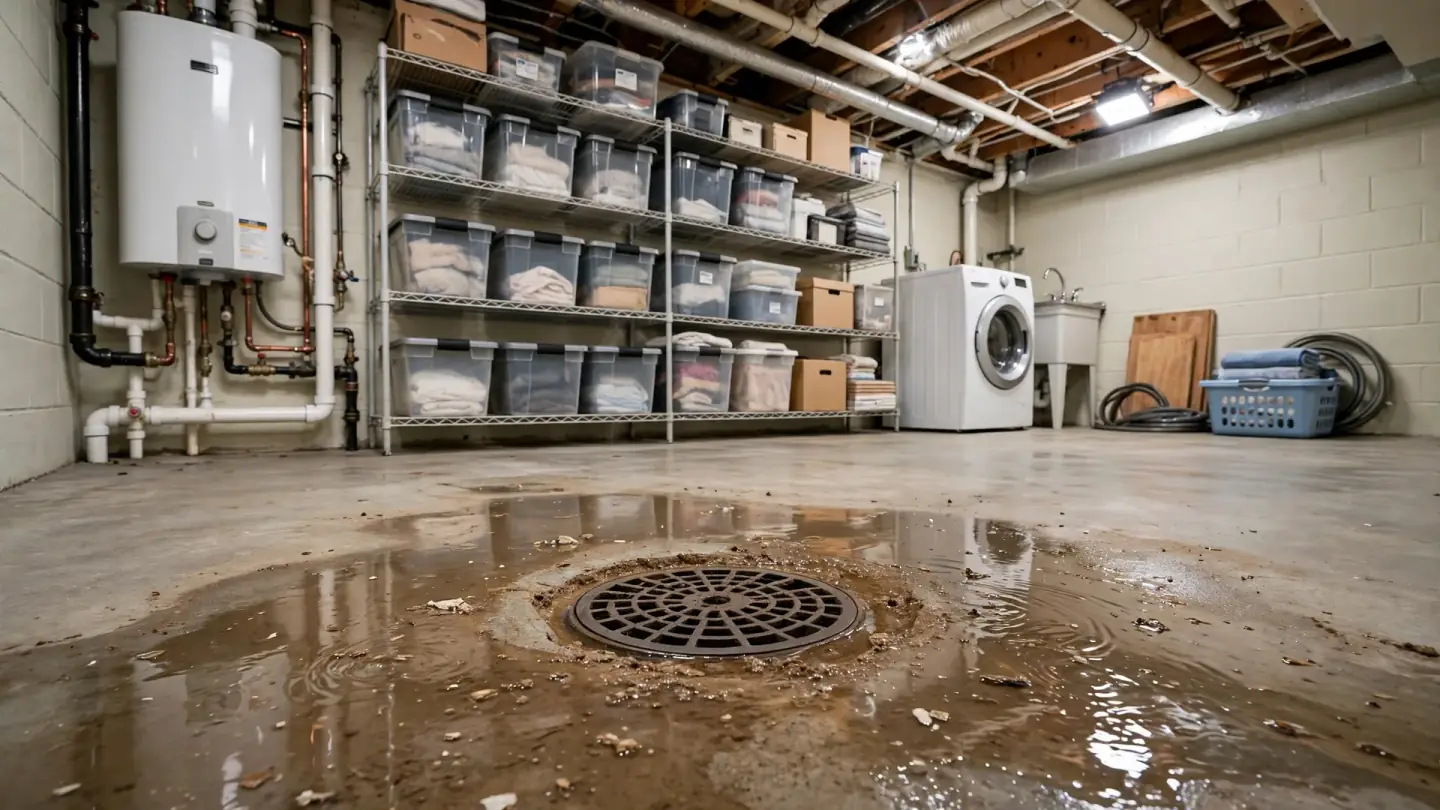
| Floor drain rises only during downpours, neighbors affected too | Combined street sewer running full | Ask a licensed plumber whether a valve suits your drain |
| Floor drain rises whenever upstairs fixtures run on a dry day | Blockage in your own building drain or lateral | Have the line cleared; a valve will not help |
| Existing valve, but water still came up in a storm | Flap held open by debris or never serviced | Have the valve opened, cleaned and checked |
| After a valve was fitted, upstairs drains slowed during a storm | Valve closed and house waste has nowhere to go | Hold off on water use until the storm passes |
| Water seeps through walls or the slab, not from the drain | Groundwater, not sewer backflow | Talk to a waterproofing specialist instead |
Safe checks
How to tell whether your Somerville basement already has a backwater valve
- Look for an access cover near the front wallValves are often in the building drain between the house and the street, under a removable cover or in a small pit in the floor.
- Check closing paperwork or past permitsA valve fitted by a plumber should have been done under a permit, so the city's inspection records may show it.
- Notice the floor drain in light rainIf water rose before and stays down now, a valve may be working, but only an inspection confirms it.
- Leave the cover closed during a stormOpening a valve body while the sewer is surcharged can release sewage into the basement.
How storms push water in
Why a full combined sewer reaches into Somerville cellars
Much of the city's sewer network dates from the late nineteenth and early twentieth centuries [1]. On dry days, flow moves toward the regional system and the MWRA's Deer Island treatment plant. In a heavy storm, runoff from streets and roofs joins the same pipes. When the main fills, the water surface in it can stand higher than the lowest drain in a nearby basement, and water follows the lateral backward into the house. The city's long-term plan aims to cut overflows through storage and sewer separation in some neighborhoods [1], but that work is gradual. The sewer backup during heavy rain guide walks through what to do during the storm itself.
Valve types
Inline flaps, full-port valves and fixture-level checks
Valves come in several designs. A normally open full-port valve keeps the flap up out of the flow until reverse water lifts it closed, which lets solids pass freely. Simpler flap valves rest closed and are pushed open by outgoing water. Some houses protect only the floor drain with a small check plug, which can help but does nothing for a basement toilet or laundry. Which one suits a building depends on the pipe size, what fixtures sit below street level, and how much room there is to dig. These are questions for the licensed plumber on site.
Rules
Do I need a permit to install a backwater valve in Massachusetts?
Yes. Under the state plumbing regulations, plumbing may not be installed or altered until the local inspector issues a permit, and permits go to licensed plumbers [3]. Clearing a clog is exempt, but cutting into a building drain to set a valve is not. In Somerville that means a licensed plumber pulls the permit through the city's Inspectional Services and the work is inspected. If digging outside the foundation is involved, the Dig Safe process applies before excavation [5]. This site does not know of any Somerville program that pays toward a valve, so ask the city directly if you want to check.
Assessment
How a plumber decides whether a backwater valve fits your building
- 1
Confirming the backups are storm-driven
They ask about rain, neighbors and timing, since a private clog needs main sewer line cleaning, not a valve.
- 2
Cleaning and filming the building drain
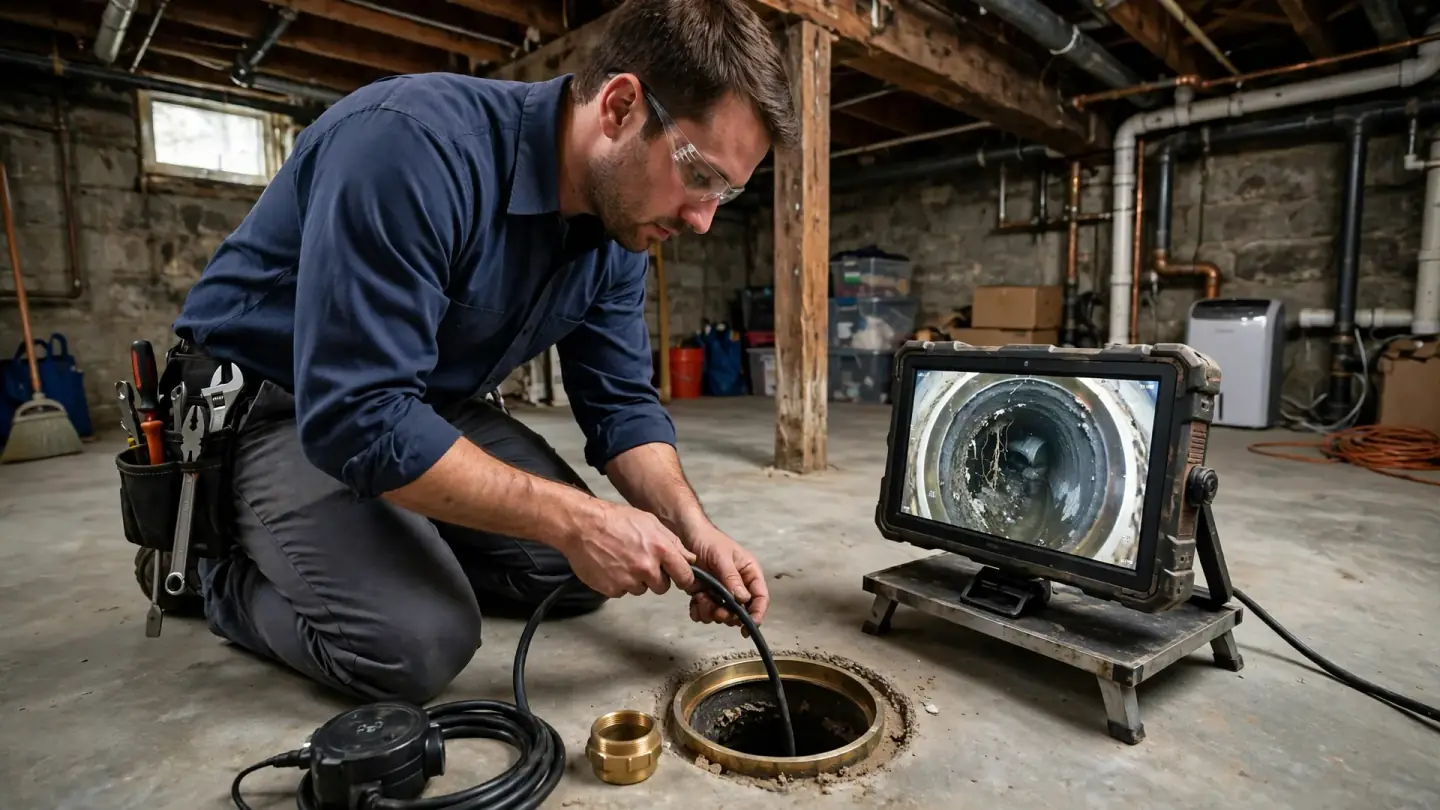
A sewer line inspection shows pipe material, condition and the best spot to cut in.
- 3
Mapping which fixtures sit below street level
Only fixtures downstream of the valve are protected, so the layout decides where it goes.
- 4
Planning access for future servicing
A valve needs a reachable cover so the flap can be cleaned and checked later.
- 5
Pulling the permit and scheduling inspection
The licensed plumber handles the permit before the floor is opened.
Upkeep
Keeping a backwater valve ready for the next storm
- Have the flap checked each yearGrease, wipes or grit can wedge it open so it cannot close when needed.
- Keep the access cover clearStorage boxes over the cover make servicing harder and hide leaks.
- Go easy on water during heavy rainWhen the valve shuts, waste from upstairs collects behind it until the storm eases.
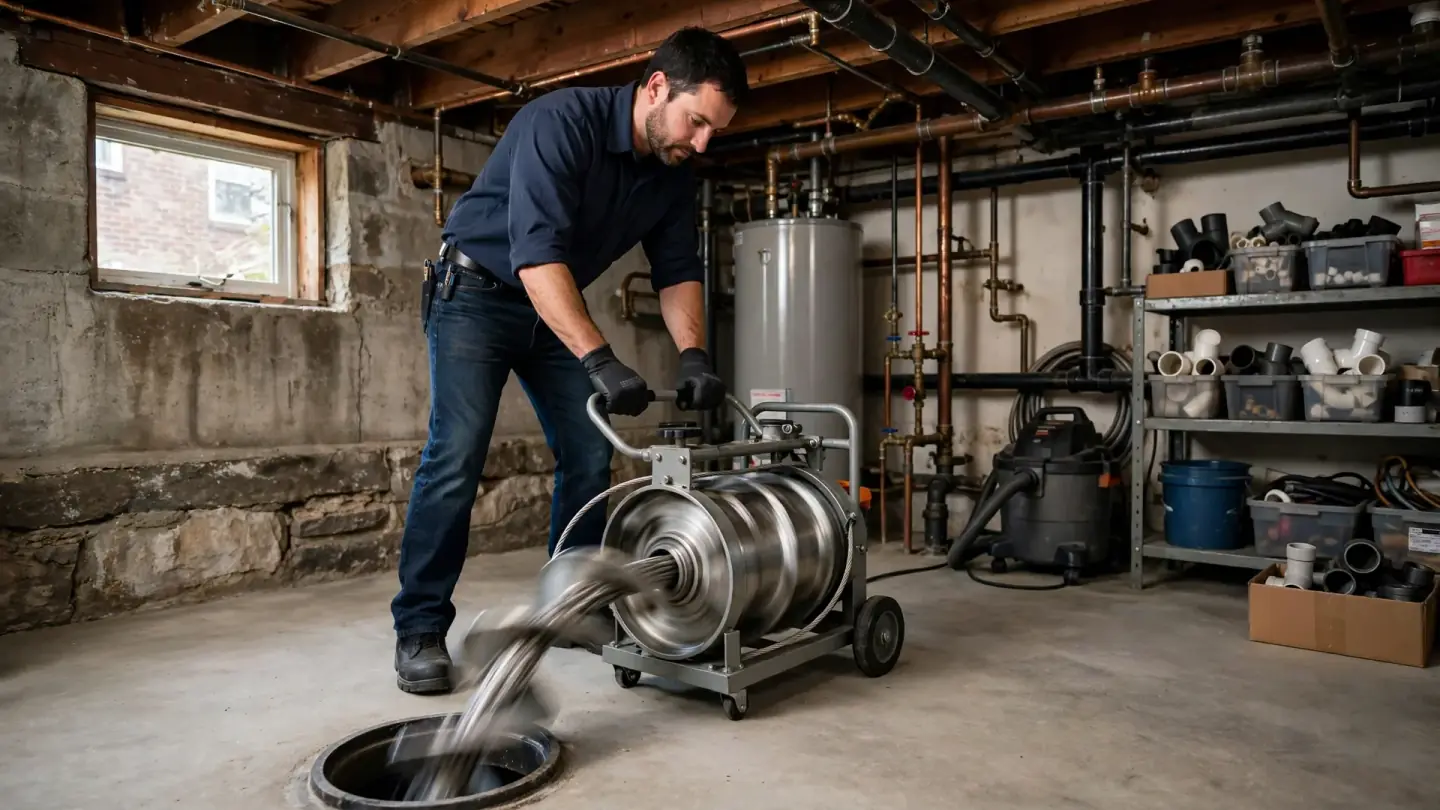
- Keep the line itself cleanDebris in the drain is what usually jams valves, so schedule hydro jetting or cabling if clogs recur.
Before you call
What to tell the plumber about your storm backups
- When water risesDuring rain only, or also on dry days with fixtures running.
- Which fixtures are in the basementFloor drain, laundry, toilet, shower or utility sink.
- Whether neighbors were affectedStreet-wide problems point to the public sewer and should also go to 311 [6].
- Where the cleanout isThe guide on finding your sewer cleanout can help.
Valve questions
Backwater valve questions Somerville homeowners ask
Will a backwater valve stop my basement from flooding in a big storm?
It can stop sewer water coming back through the drains, which is the most common storm backup on a combined sewer. It does nothing for groundwater seeping through walls or the floor slab.
Can I install a backwater valve myself in Massachusetts?
No. Cutting it into the building drain is plumbing work that needs a permit, and permits are issued to licensed plumbers. Clearing clogs is exempt, but valve installation is not.
Where does a backwater valve go in an older Somerville house?
Usually in the main building drain near the front foundation wall, after the last fixture you want protected and before the pipe leaves for the street. The exact spot depends on the layout.
Why did my drains stop working when the backwater valve closed?
Because the valve blocks flow in both senses while it is shut. Waste from the house collects behind it until the street sewer drops. Limit water use during storms.
How often should a backwater valve be cleaned?
Many plumbers suggest a check at least once a year and after any major backup. A flap jammed by grease or debris will not close when the sewer surges.
Does the city of Somerville help with backwater valves?
This site has not confirmed any city program for valves. Ask the Water and Sewer Department or call 311 to check what is currently offered for your street.