

Key facts: Gurgling drains
- A drain-waste-vent system admits air through roof vents so water can flow freely and trap seals stay intact [1].
- A trap holds a small plug of water that blocks sewer gas; suction in the pipe can pull that water out [2].
- Most of Somerville drains into a combined sewer that carries both stormwater and wastewater [3].
- Clearing a stoppage is not permit work in Massachusetts, but altering vent or drain piping is [4].
Short answer
Why does my sink gurgle when I flush the toilet?
When a toilet flushes, a slug of water drops down the drain and pushes air ahead of it while pulling air behind it. A clear vent supplies that air from the roof. If the vent is restricted, or if the drain below is partly clogged so water cannot get away, the pipe pulls air from wherever it can, usually through the nearest sink or tub trap [1][2]. That is the gurgle.
A single gurgle once in a while is not worth worrying about. Gurgling drains that get louder, happen with every flush, or come with slow draining usually mean a building drain or stack is narrowing. In that case it is worth having the line cleared through clogged drain repair before the gurgle turns into a backup.
Listening guide
Where the gurgle comes from and what it tends to mean
| What you see | Likely cause | What to do |
|---|---|---|
| Tub gurgles when the toilet next to it flushes | Partial clog in the shared bathroom branch | Arrange a bathroom line clearing |
| Kitchen sink gurgles while the washer drains | Restriction in the kitchen line or main | Slow the laundry and have the line cleared |
| Every fixture gurgles and the cellar drain is damp | Main building drain partly blocked | Limit water use and call about the main line |
| Gurgling plus a sewer smell after a flush | Trap seals being pulled dry by suction | Refill traps and ask about the vent |
| Gurgling only during heavy rain | Combined sewer running full outside | Watch the cellar drain and report backups to 311 |
Safe checks
Gentle tests that narrow down a gurgling fixture
- Find the triggerNotice which action causes the sound: a flush, a draining tub, the washer, or a neighbor's water use. The trigger usually points to the shared pipe.
- Fill a still trapIf a guest bathroom or floor drain has been unused, run water in it for a minute. A refilled trap can stop both gurgling and odor.
- Check more than one floorIn a two-family or triple-decker, ask whether fixtures in other units gurgle too. Gurgling in every unit suggests a vent or main line issue.
- Leave the roof to someone elseVent openings on old Somerville roofs are steep and often slippery. Mention the possibility on the call rather than climbing up.
Cause one
A partly clogged branch line under the bathroom floor
In many older homes the toilet, tub and sink in one bathroom drain through short cast-iron or lead branches into the stack. Hair, soap residue and paper build up where those pipes join. As the opening shrinks, water from the toilet fills the branch completely and draws air back through the tub's trap with a loud glug.
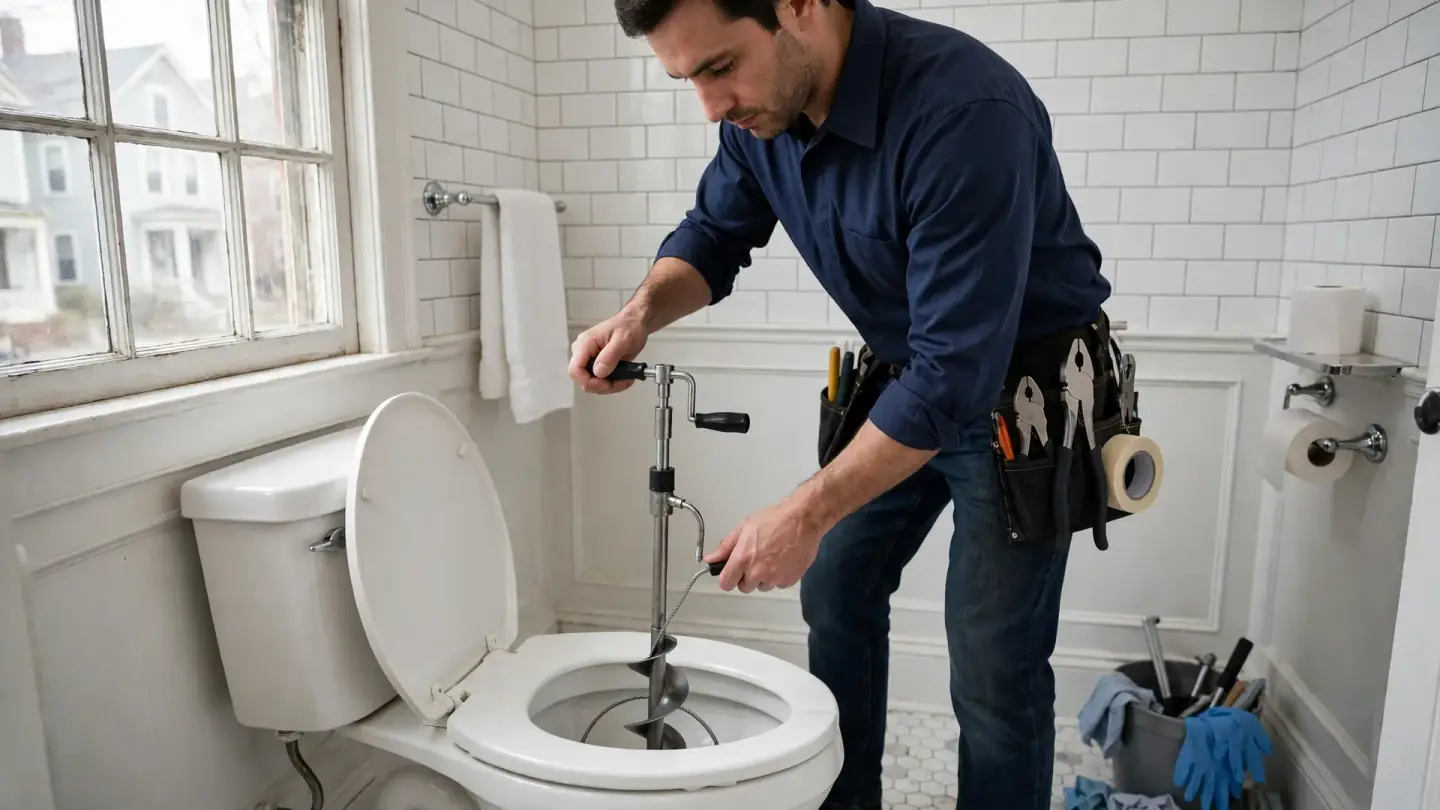
This is one of the most common reasons for a tub that gurgles, and it is usually solved with a cable run through the tub or toilet. If the bathroom keeps draining slowly afterward, bathroom drain cleaning can include a camera look at the branch.
Cause two
A restricted roof vent starving the stack of air
The vent is the other half of every drain. Its job is to let air in and let sewer gas out above the roofline [1]. Leaves, a nest, or frost closing the opening on a bitter January morning can all restrict it. Without enough air, falling water creates suction, and that suction pulls water out of traps on the way past, which is why vent trouble often brings odors along with the gurgle [2].
Vent problems tend to affect several fixtures at once and do not improve when the drain is cabled from below. Changes to vent piping are plumbing work under a permit in Massachusetts [4].
Cause three
The main line narrowing toward the street
When the lateral to the street is restricted by grease, scale or roots, every fixture in the house is affected. The gurgling is often worst at the lowest fixtures, and the cellar floor drain may start to show a damp ring. In Somerville's combined sewer, heavy storms can also slow outflow for a while [3][5], but gurgling on dry days points back to your own line. A main sewer line cleaning is the usual next step.
Diagnosis
How a contractor tells a vent problem from a drain clog
- 1
Asking what triggers the sound
The contractor will ask which fixtures gurgle and what sets them off, which usually narrows it to a branch, a stack or the main.
- 2
Running water in sequence
Fixtures are run one at a time, top floor first, while someone listens at the others.
- 3
Clearing the suspect line
A cable goes down the fixture or cleanout closest to the suspected clog, and the gurgle test is repeated afterward.
- 4
Checking the vent if the noise persists
If cleaning the drain does not quiet things, the vent is checked, sometimes by running a cable down from the roof.
- 5
Camera when the cause is unclear
A drain camera inspection shows whether the branch or main has scale, a sag or a break.
Cleaning or repair
Can a gurgling drain be fixed by just clearing it?
If the gurgle goes away once the line is cleared and the fixtures drain quickly again, that was the whole job. Clearing a stoppage is excluded from permit requirements under the state plumbing code [4].
If the camera shows a missing vent, a sag that holds water, or a cracked cast-iron fitting, the fix becomes plumbing work for a licensed plumber with a permit [4]. Some older Somerville buildings were altered many times, and a renovated bathroom with too little venting is a common reason gurgling returns.
Prevention
Keeping drains quiet in a busy multi-family building
- Use hair catchers in tubs and showers in every unit.
- Keep grease, coffee grounds and food scraps out of the kitchen sink.
- Run water in rarely used fixtures every few weeks so traps stay full.
- Pay attention to new gurgling; a slow line is far easier to clear than a backed-up one.
- Consider preventative drain maintenance for a building whose lines gurgle every season.
On the call
Useful details about your gurgling fixtures
- Which fixtures gurgle and what triggers them.
- Whether drains are also slow, and whether the cellar floor drain is damp.
- Whether other units in the building hear the same thing.
- Whether you notice a sewer smell along with the sound.
- Any recent bathroom or kitchen renovation that changed the pipes.
FAQ
Gurgling drain questions people ask
Is a gurgling drain an emergency?
Usually not, but it is a warning that a drain or vent is partly blocked and could back up later. If the gurgle comes with slow drains, smells or water rising in other fixtures, act sooner. A single gurgle after a large flush is often harmless. Repeated gurgling, especially in a shared building, is worth a contractor's look before it becomes a clogged drain.
Why does my kitchen sink gurgle when the washing machine drains?
The washer's large surge of water is pulling air through the sink trap because the shared drain cannot carry it freely. This usually points to a partial blockage where the two lines meet, or to a vent problem. Watch for water rising in the sink when the washer pumps out. Clearing the shared line usually stops it, as described on kitchen drain cleaning.
Could the gurgle be coming from a neighbor's unit?
Yes, in a two-family or triple-decker, water draining from another unit down a shared stack can make your fixtures gurgle. If the stack is partly blocked or poorly vented, their drainage pulls air from your traps. Ask whether neighbors notice the same sounds. The triple-decker shared stack guide explains how those stacks connect.
Can I fix a gurgling drain with a chemical cleaner?
Rarely, because gurgling is often caused by a vent problem or a blockage further down that chemicals do not reach. Chemical cleaners can also harm older pipes and are dangerous if they splash back. A plunger may help a single fixture, but repeated gurgling needs the line or vent checked. The what not to pour down drains guide explains why mixing products is risky.
Why did the gurgling start after we renovated the bathroom?
New fixtures connected without proper venting, or debris left in the pipes during the work, are common causes. A changed slope or an extra fixture on an old branch can also affect flow. Ask whoever did the work how the new drains were vented. A drain camera inspection can show debris or poor connections inside the line.
Why does my toilet gurgle by itself when nobody is using it?
A toilet that gurgles on its own usually means water draining elsewhere is pulling air through its trap, or a vent or sewer line is partly blocked. Wind across a roof vent can also make faint sounds. If the bowl's water level drops or bubbles, a blockage is likely. See toilet drain clearing for how a contractor checks the toilet and branch.
Is it normal for every drain in the house to gurgle?
No, gurgling throughout the house usually means the main line or the main vent is partly blocked. Because every fixture connects to the same building drain and stack, a restriction there affects them all. Watch the basement floor drain for water rising. The basement floor drain guide explains what happens next, and other guides are on the guides page.